Tag Archives: fitness

Invest in your health

Making smart investments that pay off over time is a key to creating wealth and sustaining financial wellbeing as we age. Warren Buffett is widely regarded as a successful investor and financial leader. His careful investment strategies have allowed him to amass an impressive personal fortune and lead to him be considered one of the foremost experts on investing.

For these reasons, Buffett’s business and financial advice is respected and followed by many people to achieve wealth and financial security. This same strategy can be applied to health with the same good results. Here is how following Buffett’s investing strategy can help you achieve good health now and maintain it long into the future. Just like saving for retirement, you will be glad you have plenty of good health in the bank when you get older.

This is the topic of my Health & Fitness column in the Aiken Standard this week. Since I am not an expert in the world of finance and investing, I did run this by a colleague from the School of Business to make sure I was on the right track!

couple jogging on beach


Make smart, not popular, choices.  Many of Buffett’s investments have been in industries or companies that others have overlooked in favor of more trendy options. However popular, these investments may not be smart choices in the long run. Similarly, new exercise trends and popular dietary supplements may seem appealing for weight loss, but the results are often disappointing. Sometimes the best approach for health is something much less exciting: making smart diet choices and daily exercise will almost always pay off for years to come.

Plan for the long-term success, not quick results.  Investments promising that you will get rich overnight are appealing. While you may make money initially, in the long run you may not have anything to show for it or you may end up losing money. Many fad diets and exercise trends are the health equivalent of get rich quick schemes. For example, they may promote weight loss right away, but fall short when it comes to keeping the weight off. Some popular high-intensity training programs can lead to rapid increases in fitness and strength. But for some people they can lead to injury or, at the very least, a negative experience that may turn them off from exercise in the future. Just as Warren Buffett makes investment decisions that will promote long-term income, you should make diet and exercise choices that will pay off for years to come. Even though the health “income” may accumulate more slowly, it is more likely to be lasting.

Diversify your investments.  Buffett’s strategy has been to invest in multiple industries. This allows him to maximize income and insulates his portfolio from losses in any one area. Similarly, you should diversify your health investments. Instead of focusing only on your diet or just on exercise, include both diet and exercise in your health portfolio. That way you will get the benefits of both treatments and maximize your return on investment. This works because the health benefits of good nutrition and physical activity are additive. In fact, in some cases the activity is essential for the diet to be effective, and vice versa.

Your goal should be to make smart investments in your health by choosing diet and activity strategies that you can live with and that will pay off long into the future. Applying Warren Buffett’s investment strategies can help guide you toward making these prudent decisions.

But a healthy, happy life involves more than good nutrition and exercise. You need to take time for yourself and do things you enjoy. Fortunately, there is another Buffett we can take inspiration from: Jimmy Buffett. Sometimes, escaping to Margaritaville is just what the doctor ordered!


drparrsays blog footer

Getting back in shape

It’s been a long spring and summer! The COVID-19 pandemic has disrupted most normal activities including, for many people, regular exercise. The closure and recent limited reopening of most fitness facilities has made maintaining exercise habits difficult. While some people used this as an opportunity to become more active, many more fell out of their normal exercise routine.

Athletes have long known that even a short break from training results in significant decreases in fitness and performance. You may have noticed this yourself after taking time off.  Research shows that taking time off from exercise can also have a negative impact on your health.

Let’s explore how and why this happens, and what you can do to prevent it.

Exhausted after workout


When you start an exercise program your body adapts in ways that improve your strength and endurance.

Your aerobic fitness and endurance are enhanced by both cardiac and muscle adaptations. Your heart actually gets larger and stronger to pump more blood to your muscles. Within the muscles there is an increase in the number of capillaries, the small blood vessels that deliver blood to the muscle, and mitochondria, the part of the cell that produces ATP, the energy used by your muscles. Together, these adaptations allow the muscle to produce more ATP without fatigue, allowing you to exercise a higher intensity for a longer time without fatigue.

If you do resistance training (and you should!), you get stronger and your muscles get bigger, called hypertrophy. Lifting weights causes microscopic damage in the muscle, which leads to inflammation and soreness. This sounds bad, but your muscles respond by rebuilding stronger, allowing you to generate more force and causing the muscle to grow in size.

These adaptations are also a major reason that exercise makes you healthier, too. Your blood pressure, blood glucose, and blood cholesterol are all improved because of how your heart, blood vessels, and muscles respond to exercise. Additionally, exercise results in changes to certain hormones and how your body stores and uses or stores glucose and fat. The end result is that exercise has far-reaching beneficial effects on your health that simply can’t be matched by any other intervention, including medications.

When you stop exercising for a period of time you start to lose these adaptations. This causes both your fitness and health to decline. And it happens quickly, in as little as two weeks!

Research shows that regularly active adults who suddenly limit their usual activity for two weeks experience significantly impaired blood glucose control, increased fat storage, and lower fitness. It is important to note that in both studies these changes do not fully return to baseline after resuming normal activity for an additional two weeks. This means that the benefits of exercise are lost quickly and took a longer time to return to normal.

This is also true for aerobic fitness and muscular strength. Research done on athletes who stop training, perhaps due to an injury, shows that fitness declines rapidly with the first two weeks. Worse, it can take many more weeks to regain those fitness losses. You may not be a competitive athlete, but the same principle applies to you when you take time off from exercise.

Make it your goal to maintain some level of activity, even when you are on vacation. Time off can mean doing less, but it doesn’t have to mean doing nothing. Even a little exercise can help you maintain your fitness, keep you healthy, and make it easier when you return to the gym.


drparrsays blog footer

Go ride your bike!

This is a great time to go for a bike ride. Aside from being a great way to get around, bicycling can improve physical, mental, and social health, and has environmental and economic benefits.This is the topic of my Health & Fitness column in the Aiken Standard this week.

Bike ride

Continue reading

Working (out) from home.

Right now, you are probably focused on staying healthy by washing your hands and keeping your distance from other people, especially if they are sick. But there is more you can and should do, including being active every day. Regular exercise, along with good nutrition and getting enough sleep, can strengthen your immune system, reduce stress, and help you stay fit. 

Now that most people are spending more time at home and almost all gyms and other fitness facilities are closed, your exercise routine has likely been disrupted. The good news is, you can still get a good workout at home.

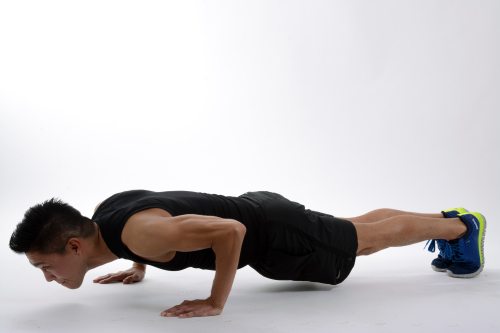
adult-athlete-body-exercise-176782.jpg

Continue reading

Start saving in your fitness bank for when you need it most.

Saving money for emergencies is good advice and important for maintaining quality of life in the event of a lost job or other financial crisis. While this may seem like common sense, many people have been caught without enough savings when they needed it and found it difficult to meet basic needs.

This principle can also be applied to fitness. When you are healthy, you can maintain a high level of fitness. This makes your day-to-day activities easier and serves as a reserve or “bank” to draw on when you need it. Your good fitness now can get you through a health crisis just like saving money can help you through a financial crisis. This health crisis could come in the form of an injury or illness that keeps you from being active for several days or a hospitalization that keeps you in bed for a week, a month, or longer. This is the topic of my Health & Fitness column in the Aiken Standard this week.

Patient walking in hospital


The problem with periods of inactivity, like bed rest or hospitalization, is that there are severe physiological effects that occur within days and get worse over time. You may have noticed this as weakness and fatigue after spending a few days in bed with a cold. Muscle strength declines with each day of bed rest, and can be 50% lower following as little as three weeks. That reduction in strength could limit a person who was already deconditioned to a point where he or she would have difficulty completing the most basic activities of daily living.

A person who was fit and strong when they went into the hospital would certainly be better off when released. And older adults fare worse than younger individuals. According to one study, the decline in strength seen in older men in just 10 days was equivalent to the change measured after 28 days in men 30 years younger.

It’s not just the muscles that are affected, the bones get weaker, too. In fact, 12 weeks of bed rest can reduce bone density by as much as 50%, exposing patients to a greater risk of fracture. This is due to the reduced stress on the bone from not standing and walking as well as the lack of muscle activity. Two of the most effective ways to build bone density are putting stress on bones through weight-bearing activity and the action of the muscles pulling on the bones from resistance training. Because bed rest eliminates both of these stresses, bone density declines rapidly.

One unique study from the 1960s had healthy young men complete three weeks of bed rest. They all experienced a rapid decline (over 20%) in their aerobic fitness, but recovered quickly after the experiment ended. These individuals also had their fitness tested again 30 years later. It turns out that the decline in fitness in those young men in three weeks of bed rest was greater than the decline in fitness that occurred over 30 years of aging!

The good news is that most patients are encouraged to move around as much as possible. Some receive in-patient physical therapy or rehab, even after major surgery, to help lessen the effects of prolonged bed rest. It is important to take advantage of these opportunities if you, or a loved one, are hospitalized.

There are many reasons to exercise and be fit, but an important reason may be to develop a fitness “bank” you can draw on if you become injured or hospitalized. Since the effects of bed rest are seen in people of all ages, everyone can benefit from a good fitness foundation. Just like putting money in the bank, doing a little now can have great benefits later when you need it most.

Finally, some smart advice: First, achieve and maintain a high level of fitness now, just as you would save money for a rainy day. You never know when you will need it. Second, if you are hospitalized, take advantage of opportunities to move, whether that is limited to moving from bed to a chair or if it includes short walks or even inpatient exercise–if the medical staff approves, of course. While many well-meaning friends and family members will tell you to rest and not move, true bed rest is almost the worse thing you can do.

For example, inpatient cardiac rehabilitation targets patients who are recovering from heart attacks and even open heart surgery. The goal is to get these patients up and moving as quickly as possible to prevent long-term consequences of bed rest.


drparrsays blog footer


Exercise and sleep: Why getting fit requires getting your ZZZs.

If you are serious about exercise, you take steps to maximize your workouts in order to meet your fitness goals. Obviously, what you do for exercise matters. You probably also appreciate that nutrition is important, so you pay attention to what you eat. But there is another important step to achieving your fitness goals you may not be aware of—sleep. This is the topic of my Health & Fitness column in the Aiken Standard this week.

sleeping-woman-1489600204BQ8

Continue reading

Why kids (and adults) should tri!

Triathlons are often regarded as the ultimate test of endurance. Combining swimming, cycling, and running, a triathlon requires a high level of fitness, endurance, and dedication. This is especially true for the Ironman triathlon, consisting of a 2.4 mile swim, 112 mile bike ride, and 26.2 mile run. The best athletes in the world take about eight hours to complete this event!


An Ironman is out of reach for most people, but almost everyone can benefit from training like a triathlete. Incorporating aquatic exercise, cycling, and running (or walking) in an exercise program leads to significant health and fitness benefits, the development and maintenance of important motor skills, and variety that can make exercise more enjoyable.


This is especially true for children. Participating in diverse activities is important for developing strength, endurance, balance, and coordination. Swimming, bicycling, and running are good ways to meet physical activity guidelines and develop a love for exercise. Children can benefit from the fitness and motor skills they develop from these activities when they play sports and adults can maintain fitness, prevent injury, and improve health and wellbeing.

The benefits of training like a triathlete for children and adults is the topic of my Health & Fitness column in the Aiken Standard this week.

triathlon swim

Continue reading

Get out of debt—health debt—in 2019.

Getting out of debt is a worthwhile goal and a common New Year’s resolution. This almost always means financial debt, which is a burden for millions of Americans. Many individuals and families have gotten themselves into debt by spending too much and not saving enough. For most, this situation has been years in the making, has no simple solution, and will have an impact lasting years into the future. Reducing this debt is essential for achieving financial health.

This is not the only type of debt we face—many people are also in health debt. Poor eating habits and increasingly sedentary lifestyles have led to an obesity epidemic. The problem is widespread, since most Americans are overweight, fewer than half of US adults meet minimum recommendations for physical activity, and about one in six adults smoke. Alone and especially in combination, these poor health habits are the major causes of the most common, and preventable, diseases including diabetes, heart disease, and some cancers.

Even if we have not been diagnosed with diabetes or heart disease or other health problems, our lifestyle has put us on that path. Small changes in what we eat or how active we are have added up over the years to create a condition of poor health. And our overall health and potential complications get worse year after year, so the longer we are overweight and inactive, the worse our health is likely to be in the future. That is our health debt. This is the topic of my Health & Fitness column in the Aiken Standard this week.

Continue reading

Keeping up with fitness trends for 2019

There seems to always be something new in the fitness world. Whether it is a new piece of equipment in the gym, a new exercise class, or a new way to perform traditional exercises, the fitness industry is constantly evolving. Some of these become popular enough that they are considered “trends,” attracting attention from fitness experts and exercise novices alike.

Each year the American College of Sports Medicine (ACSM) surveys health and fitness professionals to identify exercise trends for the upcoming year. The 2019 report was published this month, so it is a good time to catch up on the leading fitness trends to look for in the upcoming year.

Continue reading

Happy Walktober! Celebrate by going for a walk outdoors.


Now that cooler fall weather is finally here (at least in our area), being active outdoors is more enjoyable. October is a great time to get outdoors and go for a walk! That is the spirit of Walktober, an initiative adopted by health organizations, companies, and communities around the globe.

Walking is a great way to be active to help you control your weight, increase your fitness, and improve your health. The most common form of exercise for most people is walking, and for good reason: walking doesn’t require any special equipment (beyond comfortable shoes) or skills, and you can do it almost anywhere.

You can meet basic physical activity recommendations by walking briskly for 30 minutes most days of the week. Even this amount of walking can lead to a lower risk of diabetes, heart disease, and some cancers as well as improved mental health, cognitive function, and greater feelings of wellbeing.

father and son walking in woods

Continue reading