Tag Archives: nutrition

Santa’s fitness report, just in time for Christmas.

Right now Santa is making the final preparations for his big night, from checking his list of good boys and girls to packing the toys in the sleigh and giving the reindeer a pep talk. As we can only imagine, a trip around the world in one night is quite a physical feat, so, like an athlete preparing for the Olympics, Santa has certainly been training all year for this  event.

Of course, Santa keeps his training regimen a secret. In my Health & Fitness column in the Aiken Standard this week I make an educated guess as what he does to prepare in the “offseason” and how this training helps him maintain good health despite his less-than-athletic physique. Santa’s training likely includes a combination of endurance, strength, and flexibility exercises.

Endurance training, probably a combination of both high-intensity interval training and long-duration, lower intensity training, leads to a high maximal aerobic capacity and fatigue resistanceProof for this is the fact that he flies away from each home with a hearty “ho, ho, ho.” If he were out of shape, he would be too short of breath to speak, much less give such a robust farewell!

Resistance training gives him the strength to repeatedly carry his heavy sack of gifts  up and down chimneys. In addition to traditional weight lifting, Santa probably also engages in plyometric training, which involves explosive movements that develop muscle power.

Stretching and exercises like yoga promote good flexibility so he can squeeze through narrow spaces and move quickly without pulling a muscle.

Santa certainly knows that proper training is only part of the answer, so he certainly focuses on sports nutrition, too. Many athletes use specialized sports drinks and foods that provide fluid, carbohydrates, and protein during long events. Santa relies on the cookies and milk you leave for him to provide the nutrients his muscles need to delay fatigue.

We can also learn an important health lesson from Santa. Even though he is overweight, through regular exercise, Santa has reduced his risk of health problems and maintained his fitness at a level that allows him to complete his necessary activities. Like Santa, all of us can benefit from being physically active, whether we are overweight or not.

Happy holidays!

Go Nuts (again)!

My Health & Fitness column in the Aiken Standard this week is about the health benefits of nuts. It is  a follow-up to a blog post I wrote a few weeks ago. This isn’t new, of course, since nut consumption has been recommended as a part of a healthy diet for years.

What is new is a recent study in the New England Journal of Medicine that shows that nut consumption was associated with a reduced risk of death from heart disease, stroke, and some cancers. The people who ate nuts every day got the biggest benefits.

That doesn’t mean that simply adding nuts to an unhealthy lifestyle will have some magical influence on health. In fact, the people in the study who ate the most nuts were also likely to do other healthy things like eat more fruits and vegetables, exercise, and not smoke.

The most practical advice is to eat nuts as a replacement for other snacks or to add nuts to salads and other dishes. While specific types of nuts have different health benefits, the recent study suggests that all nuts, including peanuts, are beneficial.

The mystery of how you can feel hungry shortly after eating breakfast explained.

Have you ever noticed that sometimes you can feel hungry—really hungry—midway through the morning, even after eating breakfast? Isn’t eating breakfast supposed to get you through the morning without feeling hungry?

The answer to these questions gets into why we eat and what regulates feelings of hunger. This is the topic of my Health & Fitness column in the Aiken Standard this week.

First of all, much of the time we want to eat we really aren’t hungry. Hunger is a physiological drive to seek food and is generally experienced as a negative sensation. It is a survival stimulus that got our caveman ancestors out of the cave to seek food, despite the threat of saber-tooth tigers. Hunger is a signal that energy and nutrients are needed and nearly any food will meet this need. In our world now, we rarely need such a powerful stimulus for us to seek food, and most people eat even though they aren’t truly hungry.

What we experience more often is appetite, a psychological sensation that motivates us to eat, usually in response to some sensory input. For example, the smell of fresh-baked cookies makes most people want to eat, even after a meal. In this case, it is the idea of food that triggers the sensation, not a physiological need for nutrients. Additionally, appetite is usually specific to a certain food we crave, like cookies.

One of the problems we face is that we often confuse appetite (wanting something to eat) with hunger (needing something to eat). This can lead to overeating.

It turns out that the foods we eat help determine how much we will eat in a meal and  contribute to our feelings of hunger later. A meal that contains a combination of foods providing carbohydrates, protein, fat, and fiber tend to make us feel full sooner, so we may eat less in that meal. By contrast, eating foods that contain primarily carbohydrates, especially refined grains and sugar, don’t have the same effect, and we can take in more calories before our brain gets the signal that we are full. This is called satiation.

That isn’t all. What you eat for one meal can influence how quickly you will feel ready to eat again later. This effect is called satiety. A meal that contains mostly refined carbohydrates can lead to feelings of hunger shortly after a meal. This why you can feel hungry midway through the morning after a breakfast consisting of a donut and juice.

One recommendation to help people eat less to lose weight is to eat foods that are high in fiber such as whole grains, fruits, and vegetables, since these foods tend to make us feel full sooner. Meals that contain a combination of nutrients, especially protein, can also help us go longer between meals.

So instead of a donut and juice for breakfast, try a piece of fruit (fiber!) and something containing protein, like an egg or yogurt.

Realistic advice for a healthy Thanksgiving.

Let’s face it…Thanksgiving isn’t the healthiest of holidays. It usually involves some combination of food, relaxing, watching the parade or a football game, and more food. Then it’s time for leftover turkey sandwiches and more pie.

I’m sure you have seen the  recommendations about how to make Thanksgiving a bit more healthy which usually include avoiding high-fat and high-calorie foods, limiting your portion sizes, and skipping dessert. While this is good advice, it isn’t realistic. After all, Thanksgiving is a day for food and family, not counting calories.

I think a better approach is to accept that you will overeat on Thanksgiving and not worry about the food so much. Instead, focus on including activity in your day. Going for a walk before dinner can help reduce the effect the meal has on your blood lipids and going for a walk after dinner gets you out of the house and away from the food.

The end result is that a little activity can make your Thanksgiving a bit healthier. And if you make going for a walk (or two) every day a habit, the health benefits will extend into the New Year.

This is the topic of my Health & Fitness column in the Aiken Standard this week. Go ahead, check it out.

Go Nuts!

A new study suggests that going nuts is good for your health. Published in the New England Journal of Medicine this week, the study shows that regular nut consumption is associated with a lower risk of death from many leading causes of death, including heart disease and cancer. (If you aren’t motivated to read a journal article, this video will give you the key points from the study.)

The reduction of risk was greater with more frequent nut consumption. For example, the risk of death from all causes was 11% lower among men and women who consumed nuts once per week and 20% lower among those who consumed nuts seven or more times per week. 

This is level of nut consumption could be met by a common recommendation to consume 1–1.5 ounces of nuts as a snack every day.

One thing to keep in mind is that the health benefits of nut consumption might be due to other positive lifestyle factors that go along with greater nut consumption. Indeed, the authors noted that, “As compared with participants who consumed nuts less frequently, those who consumed nuts more frequently were leaner, less likely to smoke, more likely to exercise, and more likely to use multi-vitamin supplements; they also consumed more fruits and vegetables and drank more alcohol.” Although these other factors were controlled for in the study, common sense suggests that the reduction in risk is due to a combination of beneficial health behaviors.

This is an important point. A person who eats in unhealthy diet, is sedentary, and smokes is unlikely to realize the  health benefits of increasing nut consumption. Achieving the full benefits of nut consumption also certainly means adopting other healthy behaviors.

This is good news! Eating more nuts is a relatively easy dietary change to make. And as this study shows, it can lead to a reduced risk of death from some common diseases. So…go nuts!

Could you be The Biggest Loser?

My Health & Fitness column in the Aiken Standard this week is about the popular television show The Biggest Loser. In the column I address the question, could a viewer at home duplicate the weight loss results of the contestants on the show?

In my column I include data on average weight loss of the winners of the past 14 season, which I found here.

I also cited the results of a  study examining the contributions to weight loss experienced by Biggest Loser contestants. It is interesting reading.


Your DIY health care plan.

The new health care law, the Affordable Care Act, has been the center of controversy for some time. Claims that it is unconstitutional (it’s not), concerns about how it will affect employer-offered health care coverage, and recent reports of problems with the registration website, have led to confusion and frustration among citizens. The confusion is so great that some people don’t even know whether or not they support the A.C.A.!

In addition to expand access to affordable health care, the Affordable Care Act should also make it easier for people to get preventive care. However, it is not clear (at least to me) exactly how effective that will be. Furthermore, there still appears to be an interest in repealing the law in the future.

Given this uncertainty, it makes sense for us to take steps now to improve our health now and stay healthy in the future. The good news is that a few simple lifestyle modifications, including being active, eating a healthy diet, managing stress, and quitting smoking, will go a long way towards promoting good health, regardless of what happens with the Affordable Care Act.

You can read more in my Health & Fitness column this week in the Aiken Standard.

Dad appreciates the healthy Halloween treats. The kids…not so much!

We took our kids trick-or-treating in our neighborhood this evening. Predictably, they got lots of candy. Lots.

But some people gave other treats, too. Like little toys, glow sticks, and stickers. To be honest, the kids were almost as excited about those things as they were to get candy. Almost.

One of our neighbors tried to impress me by having the healthiest Halloween treats I have seen: mini packages of Fig Newtons, individually wrapped prunes, and dark chocolate Hershey Kisses (because dark chocolate is healthier, right?).

Healthy halloween treats

It worked. I was impressed. The kids…not so much!

From awareness to action: Steps to prevent breast cancer.

This is the last week of Breast Cancer Awareness Month. Through national and local education efforts we should be aware of the impact that breast cancer has on women and their families as well as steps to diagnose and treat this serious condition. We may also have contributed to events from bake sales to road races to support programs that aim to enhance research and treatment for women (and a few men, too) who are dealing with breast cancer.

Now that the pink ribbons are coming down and the NFL players are taking off their pink socks, it is time to focus on something that didn’t get as much attention over the past month: the prevention of breast cancer. This  is the topic of my Health & Fitness column in the Aiken Standard this week.

It turns out that there is a lot that women, especially young women, can do to prevent breast cancer. The good news is that these steps, including not smoking, eating a healthy diet, and getting regular exercise, can also reduce the risk of many other types of cancer as well as other serious health problems such as diabetes and heart disease.

The even better news is that these health behaviors can reduce the risk of breast cancer even in women who have a strong family history or other genetic predictors. Furthermore, these lifestyle factors, especially regular exercise, can help women better tolerate treatment and reduce the chance for cancer recurrence.

Unfortunately, breast cancer prevention doesn’t seem to get the same attention as diagnosis and treatment. In fact, a listing of topics on the National Breast Cancer Foundation Breast Cancer Awareness Month web page includes Early Detection, Diagnosis, Stages, Types, Treatment, but not prevention! This isn’t to say that detection and treatment aren’t important, but preventing breast cancer—something that would benefit ALL women—should be part of the conversation.

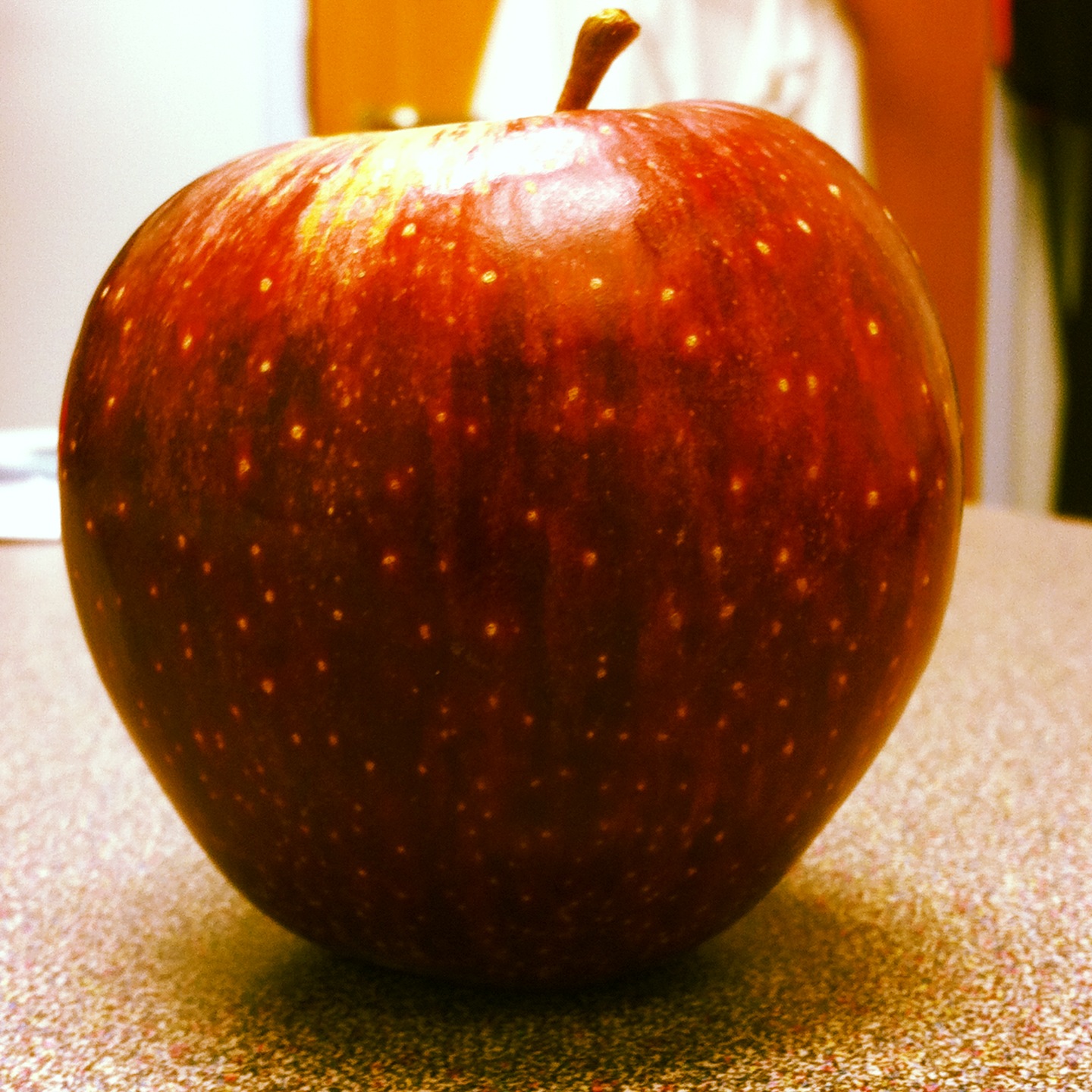
Today I am celebrating Food Day with…an apple!

Specifically, this apple.

2013-10-24 15.59.46
This past weekend my family was visiting the upstate and we took the kids to pick apples at Bryson’s Apple Orchard. Not only did we get a bunch of delicious apples, but the kids got to learn a little about where apples come from. As kids tend to do, they ate as they picked, and noticed immediately that the fresh-picked apples were much tastier than the ones from the grocery store. They even got to meet “Farmer Bryson,” who appreciated our business and the kids’ enthusiasm.
And this is the point of Food Day: learning where food comes from, eating fresh foods, and supporting local farmers. I tried to explain this to my kids while we were driving home from the farm, but they were more interested in eating the apples they had just picked!