Fat but fit, Santa is ready to go!

He may not look it, but Santa probably hits the gym regularly to work on the strength, endurance, and flexibility he needs for his job. Since Santa tends to keep to himself, he hasn’t come to my lab for a fitness test. But I tried to make a good guess as to what he does in the “offseason” to stay in shape in my Health & Fitness column in the Aiken Standard.

It’s a good thing he keeps himself in shape, too. Since he is overweight, good fitness is essential for reducing his risk of, among other things, a heart attack or stroke. In fact, Santa is probably healthier than some people who have a “normal” weight, but don’t exercise.

He should watch his weight, though. An ABC News report suggests that Santa is getting fatter!

The 8th Wonder

The 8th Wonder is a burger from  the Clinton Station Diner in Clinton, NJ.

8th_wonder

Predictably, they don’t provide nutrition information. But assuming they use lean (80%/20%) ground beef, 50 lbs. is about 55,000 calories! I have no idea how many calories are in a bun large enough for a burger of that size or how many pounds of cheese would be required, but it is safe to say that the deluxe version is a 60,000+ calorie burger.

At $335.95, that is almost 180 calories per dollar. Compared to a Big Mac at about 150 calories per dollar, the 8th Wonder is a bargain!

Thanks to Josh Sellner, a former student and outstanding personal trainer, for sharing this with me. I’m sure he would want me to mention that he opted for the Olympus burger–only 50 lbs!

An unexpected consequence of childhood obesity

My Health & Fitness column in the Aiken Standard this week is about an unexpected consequence of childhood obesity. Much of the discussion of childhood — and adult — obesity is centered on the health effects. Since obesity is a leading cause of type 2 diabetes, high blood pressure, and heart disease, there are serious consequences of being overfat.

The problem is even more severe in young people. Because of childhood obesity, pediatricians are now treating kids in their early teens for type 2 diabetes. Adults who have type 2 diabetes tend to have heart attacks at a relatively young age and are likely to die early. Does this mean that teenagers who have type 2 diabetes will suffer heart attacks in their 20s and 30s? Many physicians and researchers think so, but the truth is that we just don’t know…yet.

Kids who are obese also tend to be less physically active than their peers. This leads to a condition of low fitness, making participation in sports more difficult, which leads to more inactivity, which can lead to weight gain… I think you get the idea. And children who are at a “healthy” weight may be unfit due to not getting enough exercise. So there is now this situation in which young people are likely to be unfit, obese, or both.

Aside from the health issues, there is an unexpected consequence of childhood obesity: many potential military recruits do not meet weight and/or fitness entrance requirements. It is entirely possible that the obesity epidemic could have national security consequences!

You can read more about the problems associated with obesity and poor fitness among military recruits here.

Where to begin?

Let’s say you smoke, don’t exercise, and need to lose weight. Or maybe you are overweight and mostly sedentary. Let’s also say that you are only willing to change one of these health behaviors. Where should you begin?

This is the topic of my Health & Fitness column in the Aiken Standard this week. Check it out…the answer may surprise you.

Incidentally, many people are in the situation described above and many more need to change two of these behaviors, most commonly losing weight and becoming more active. And many people find making these changes to be overwhelming, so they try to start with one. But which one?

Start planning now for successful New Years resolutions!

What is your New Years resolution? If it is something that involves making  a lifestyle change—such as quitting smoking, starting an exercise program, or losing weight—you should start planning now. For starters, you will need to set a quit (or start) date, the day you will really begin. But you will have to do some work to get ready.

You can read more ideas to help you get ready to make your New Years resolutions successful in my Health & Fitness column in the Aiken Standard this week. If you start now, you will be ready to go on January 1.


Saving for a rainy day

My Health & Fitness column in the Aiken Standard this week is about saving. Having savings in the bank gives you opportunities—a vacation or a big purchase, for example—you might not have without the extra money. But the real reason for saving is to help you get by if you find yourself in trouble financially. In this economic crisis, people with sufficient savings were able to stay in their homes while others without adequate savings couldn’t pay the mortgage and faced foreclosure.

But I’m not a financial expert, to the real topic of my column is about saving fitness. When you are physically fit, you essentially have a “bank” of strength and endurance that you can draw on when you need it. That could mean that you are able to go on a long bike ride or hike that your less fit friends would have to miss.

But the real reason you need fitness savings is for when you are sick or hospitalized. Bed rest, even a few days, can reduce muscle mass, strength, and endurance. Long-term bed rest can reduce physical functioning that basic activities of daily living are challenging.

I cited a couple of studies in my article. The study that showed that three weeks of bed rest had a greater effect on  fitness than 30 years of aging is here. The study that showed that the loss of strength in 10 days of bed rest in older patients was equivalent to the same loss of strength in 28 days in younger patients is here.

Finally, some smart advice: First, achieve and maintain a high level of fitness now, just as you would save money for a rainy day. You never know when you will need it. Second, if you are hospitalized, take advantage of opportunities to move, whether that is limited to moving from bed to a chair or if it includes short walks or even inpatient exercise–if the medical staff approves, of course. While many well-meaning friends and family members will tell you to rest and not move, true bed rest is almost the worse thing you can do.

For example, inpatient cardiac rehabilitation targets patients who are recovering from heart attacks and even open heart surgery. The goal is to get these patients up and moving as quickly as possible to prevent long-term consequences of bed rest.

Your pants may be making you fat!

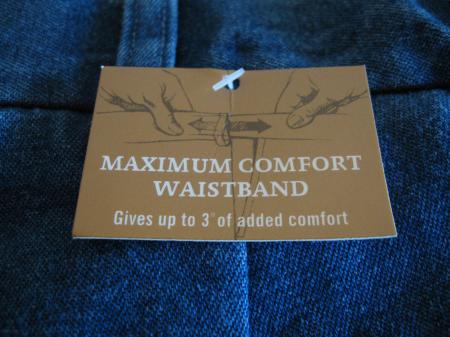
It’s true! Many men’s pants—women’s too, I’m told—have an expandable waist with up to 2–3″ of stretch for “comfort” or to “move with you.” Move with you? Are you James Bond?

What this really means is that these pants allow you to expand your waist and still wear the same size pants. That way you can still tell yourself that you wear the same pants size you did in college.

Read more about this, and other ways we miss signals that we are gaining weight, in my Health & Fitness column in the Aiken Standard today.

Maybe we have been asking the wrong question. Instead of, “Do these pants make me look fat?” we should ask “Will these pants actually make me fat?”

These pants WILL make you fat!

“Comfort” must be pants-code for fat!


What you need to know about diabetes

November is American Diabetes Month, which is the topic of my Health & Fitness column in the Aiken Standard this week. I tried to cover the basics of diabetes including the causes, health effects, and prevention and treatment of this serious disease.

If you have diabetes you should take treatment seriously. Uncontrolled diabetes can lead to serious complications. While your doctor may prescribe medications (insulin or others), a healthy diet and regular exercise are essential for controlling your blood glucose.

If you don’t have diabetes or if you have been diagnosed with prediabetes, know that adopting a healthy diet, getting regular exercise, and maintaining a healthy body weight are the best ways to reduce your risk of diabetes…and many other chronic diseases, too!

If you want to learn more about diabetes, a great place to start is American Diabetes Association.

You can review the evidence for diet and exercise as ways to prevent and treat diabetes in these position papers from the American College of Sports Medicine and the American Diabetes Association:

Exercise and Type 2 Diabetes: American College of Sports Medicine and the American Diabetes Association: Joint Position Statement. <em>Medicine & Science in Sports & Exercise</em> December 2010 – Volume 42 – Issue 12 – pp 2282-2303 [doi: 10.1249/MSS.0b013e3181eeb61c]
Nutrition Recommendations and Interventions for Diabetes. A position statement of the American Diabetes Association. <em>Diabetes Care</em> January 2008 vol. 31 no. Supplement 1 S61-S78. [doi: 10.2337/dc08-S061]
Aside

From USA Today earlier this week: Smoking bans cut number of heart attacks, strokes

No real surprise here, but it’s always nice to see more data to show that smoking bans are working to improve health.

Links to the studies cited in the article:

Crystal E. Tan and Stanton A. Glantz. Association Between Smoke-Free Legislation and Hospitalizations for Cardiac, Cerebrovascular, and Respiratory Diseases: A Meta-Analysis. Circulation. 2012;126:2177-2183.

Hurt RD, Weston SA, Ebbert JO, et al. Myocardial Infarction and Sudden Cardiac Death in Olmsted County, Minnesota, Before and After Smoke-Free Workplace Laws. Arch Intern Med. 2012;():1-7. doi:10.1001/2013.jamainternmed.46.

Today is Food Day 2012

Today is Food Day, with the goal to improve the health and quality of life for everyone by promoting healthy eating, supporting local farms, making sure everyone has access to healthy food, and reducing the influence of food corporations that produce and advertise unhealthy food, particularly to children. Food Day is the topic of my weekly Health & Fitness column in the Aiken Standard.

Here is an example of the wide impact that our food choices have on our health, the environment, and the health of others:

Say your next meal is lunch and you will have a burger. Sure you know that the beef comes from a cow, but do you know that the conditions in which the cow lived and what it ate have an effect on the quality of your burger, your chances of getting a food-borne illness, and the environment? Most of the meat we eat comes from animals that live on huge confined animal feeding operations (CAFOs) and are processed in plants that are hazardous to workers, the environment, and our health. At CAFOs cows eat primarily grain and the meat has higher levels of unhealthy fats and is more likely to be contaminated with potentially dangerous bacteria. Huge feedlots with as many as 50,000 cows have to use antibiotics to prevent the spread of disease and the tons of waste created leads to local air and water pollution. Because your burger likely came from the western U.S., there is an environmental cost of transportation across the country. And consider that the money you pay goes to the corporations that own the cows, farms, and processing plants, people who likely have no connection to you.

But what if your burger came from a cow on a farm in our area. Smaller farms tend to let cattle graze in fields and meat from grass-fed cattle have higher levels of healthy fat and a lower risk of contamination, in addition to tasting better. The relatively small amount of waste created is probably used as fertilizer on the farm and since the farm is local, the transportation costs, both in dollar and environmental terms, are lower. The money you pay goes to the owners and workers on the farm who most likely live, and pay taxes, in this area.

So, how will you celebrate Food Day? For starters, you could learn more about what you eat and take steps to eat more real food and less processed “food-like substances.” Here are some additional resources to help you learn more about the health, environmental, and economic issues related to Food Day:

A good place to start is the Food Day website.

The Center for Science in the Public Interest is the consumer advocacy organization behind Food Day and an excellent resource for nutrition and health information.

Michael Pollan is one of my favorite experts on food. He is the author of several books, all of which should be required reading for pretty much everyone (kids, too–he has kids versions of his books). Start with In Defense of Food, which offers this elegant bit of advice: Eat food. Not too much. Mostly vegetables.

Marion Nestle is an expert on nutrition and food policy, in particular the politics that surround these topics. Her book, Food Politics, explains the political and corporate factors that influence government decisions and policy regarding food and nutrition. What to Eat is a comprehensive guide to making smart choices for healthy eating.

Maybe you would prefer a movie instead. Food, Inc. is a 2008 documentary that examines the health and the environmental impacts of food production. The themes are similar to those in the book In Defense of Food, but this is a compelling movie whether you have read the book or not.