Tag Archives: water

You should be hydrating with water. Here’s why.

Even though summer is winding down, its still hot, so it’s a good time to talk about a health habit that’s easy to overlook but essential to daily well-being: staying hydrated. You’ve likely heard that drinking water is important, but most of us don’t give it the attention it deserves. Proper hydration supports everything from energy levels to brain function—and when it comes to staying hydrated, plain water is still the best.

This is the topic of my Health & Fitness column in the Aiken Standard this week.
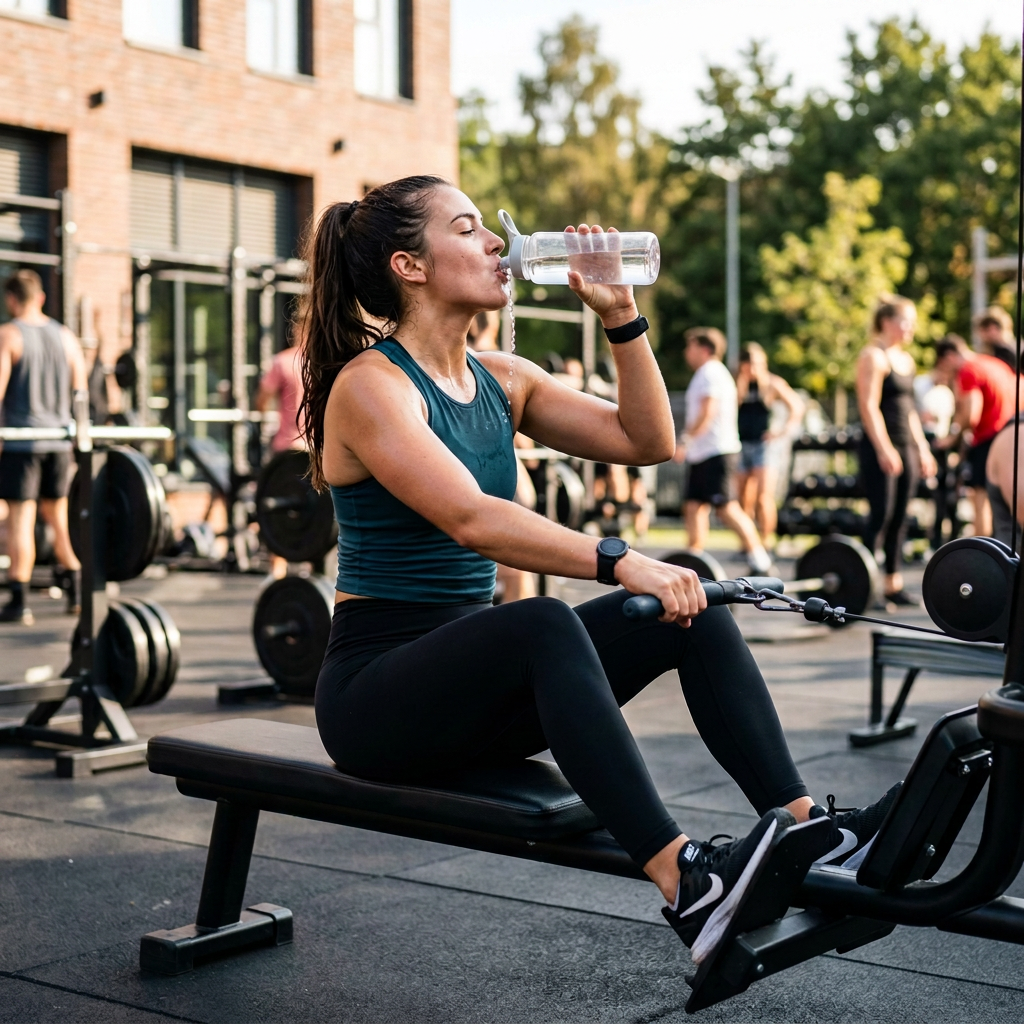
Woman drinking water while seated at an outdoor rowing machine

Our bodies are composed of roughly 60% water, and almost every system relies on it. Water helps regulate body temperature, cushions joints, protects organs, and carries nutrients throughout the body. Even mild dehydration—just a 1–2% loss of body weight from fluid—can impact mood, concentration, and physical performance. If you’ve ever felt sluggish, lightheaded, or unusually tired, there’s a chance you are dehydrated and simply needed more water.

While thirst is a natural signal, it’s not always the most reliable indicator. By the time you feel thirsty, you may already be slightly dehydrated. That’s why regular, consistent hydration is a smarter approach, especially for children, older adults, athletes, and people working in hot or physically demanding environments. So, what should you drink to stay hydrated?

In an age of seemingly endless beverage options—energy drinks, sports drinks, juices, sodas, and infused waters—it’s easy to get distracted by promises of vitamins, flavor, or performance. But the reality is, for most people, nothing beats water.

Water is calorie-free, sugar-free, and contains no artificial additives. It hydrates quickly and efficiently, making it the most effective and healthiest beverage choice. Unlike many commercial drinks, it doesn’t contribute to tooth decay, weight gain, or blood sugar spikes. It’s also affordable, widely available, and environmentally friendly, especially when consumed from reusable bottles.

Some people believe that sports drinks are better for hydration, especially during exercise. While those drinks can help during prolonged, intense workouts (think marathon running or other intense exercise), they’re unnecessary for the average person’s daily routine or an exercise session. Most sports drinks contain added sugars that the typical person doesn’t need and may even want to avoid.

Caffeinated beverages like coffee and tea can contribute to your daily fluid intake, but they also have diuretic effects that can cause you to lose fluids. Sugary sodas and fruit juices, while hydrating in theory, often contain more sugar than your body needs. In contrast, water works with your body, not against it.

Staying hydrated doesn’t mean guzzling gallons at once—it’s about consistency. The “eight glasses a day” rule is a helpful general guide, but individual needs vary based on activity level, age, climate, and health conditions. Looking for an easy way to track you hydration? Check your urine. Pale yellow usually means you’re well hydrated; dark yellow or amber suggests you need more fluids.

Making water a daily habit can be simple. Start your day with a glass of water, keep a refillable bottle nearby, and choose water with meals. Add a slice of lemon, cucumber, or fresh mint if you want some variety without the sugar. And remember, fruits and vegetables also help contribute to your fluid intake.

In a world of complicated health advice and ever-changing trends, water remains a timeless solution to a basic need. Prioritizing hydration—especially through water—is one of the simplest ways to support your energy, focus, and long-term health.

So, the next time you reach for a drink, skip the sugar and bubbles. Go for what your body really wants: a cold, refreshing glass of water.


drparrsays blog footer

Five Diet Tips Everyone Agrees With

If you pay attention to the news about nutrition and health, you probably notice that there is a lot of conflicting information about what you should eat. You may even feel like the information you read and hear is designed to confuse you. Even scientific research can yield conflicting results, challenging even the most knowledgeable professionals, myself included, to make sense of it. 

Instead of trying to resolve the conflicting information, I like to focus on the things that everyone seems to agree on. Despite the differences in opinions and interpretations of research, there are several recommendations that are widely supported and will almost certainly help you eat healthier. Here are five ways to improve your diet almost everyone agrees on.

Here are five ways to improve your diet almost everyone agrees on, from my Health & Fitness column in the Aiken Standard this week.

Group of people eating

Continue reading →

Let’s Agree to Agree About Food

March is National Nutrition Month, an annual event created by the Academy of Nutrition and Dietetics to focus on developing healthy eating and physical activity habits. The Academy of Nutrition and Dietetics represents Registered Dietician Nutritionists and other nutrition professionals and is an excellent source for information about food, nutrition, and health.

I will share some general advice about healthy eating here but remember that a Registered Dietician is your best resource for evaluating your diet and making changes to meet your individual needs for health and performance.

Here are five ways to improve your diet almost everyone agrees on, from my Health & Fitness column in the Aiken Standard this week.

Group of people eating

Continue reading →

Let’s Agree to Agree About Food

Eating a healthy diet is a goal for many people to help them treat or prevent disease, improve exercise performance, or maintain a healthy body weight. If you pay attention to news about food and nutrition you have probably noticed that there is a great deal of controversy about what constitutes a healthy diet. It’s easy to find lists of foods to avoid and things to eat every day. Unfortunately, lists from different sources may not be the same or, worse, a food that is on one “never eat” list is on another “always eat” list.

There is a different approach you could take to plan the foundation for a truly health way to eat. Instead of focusing on what is different, think about what recommendations are shared among most “healthy” diets. Here is some diet advice that almost everyone agrees on. This is the topic of my Health & Fitness column in the Aiken Standard this week.

Group of people eating

Continue reading →

Let’s Agree to Agree About Food

Eating a healthy diet is a goal for many people to help them treat or prevent disease, improve exercise performance, or maintain a healthy body weight. If you pay attention to news about food and nutrition you have probably noticed that there is a great deal of controversy about what constitutes a healthy diet. It’s easy to find lists of foods to avoid and things to eat every day. Unfortunately, lists from different sources may not be the same or, worse, a food that is on one “never eat” list is on another “always eat” list.

There is a different approach you could take to plan the foundation for a truly health way to eat. Instead of focusing on what is different, think about what recommendations are shared among most “healthy” diets. Here is some diet advice that almost everyone agrees on. This is the topic of my Health & Fitness column in the Aiken Standard this week.

Group of people eating

Continue reading →

What should you drink to recover after exercise?

It used to be that water was the preferred after-exercise drink. Nowadays, though, you are likely to find that recreational and competitive athletes of all ages consume a specialized recovery drink after a game or training session. These drinks and, sometimes bars, have become part of a post-workout routine recommended by coaches and personal trainers.


Most of these recovery beverages contain some combination of carbohydrates, protein, electrolytes, vitamins, and water, although the specific nutrients and relative amounts of each vary from brand to brand. Depending on the formulation, these supplements may help with rapid recovery from a bout of prolonged exercise, promote muscle growth following resistance training, or reduce muscle soreness after an intense workout.


While research supports consuming some of these nutrients, alone or in combination, in recovery, there are some considerations for determining which supplement, if any, may be right for you.

Sports drink

Continue reading →