Tag Archives: exercise

Yes, you can still go to the gym! Here’s how to do it safely.

The spread of coronavirus and COVID-19 is a very real and urgent health concern right now. But focusing on hand washing and social distancing doesn’t mean you should neglect other aspects of your health, including exercise.

Yes, you can still go to the gym! Here’s how to do it and reduce your risk of spreading coronavirus (and other viruses and bacteria, too).

  1. Wash your hands with soap and water before and after your workout. If that’s not an option, using an alcohol-based hand sanitizer (at least 60% alcohol) is okay, too.

  2. Use the provided disinfectant spray to wipe down equipment, including weights, before and after you use it. Many people are good about wiping sweat from benches, seats, and other equipment but skip cleaning barbells, dumbbells, and other hand-held gear. Make sure you spray and wipe thoroughly.

  3. As much as you can, keep your distance from other people. This may mean skipping group exercise classes for now. You can always find alternatives—a session on a bike on the fitness floor instead of a spin class, for example.

  4. If your gym closes or if you decide not to go, you can still get a good workout at home. If you need ideas, try one of the many mobile apps that will guide you through a workouts, some using nothing more than your body weight.
  5. This would be a great time to go for a walk, run, or bike ride outdoors. Even if you go with a friend, the risk of virus spread is lower outdoors, especially if you keep a few feet between you. Plus there are physical and psychological benefits to outdoor exercise beyond the activity itself.
  6. If you are sick, please stay home! You can still do light activity with mild symptoms, but it’s best to take the day off if you have a cough or fever.

drparrsays blog footer

Strike a recovery pose

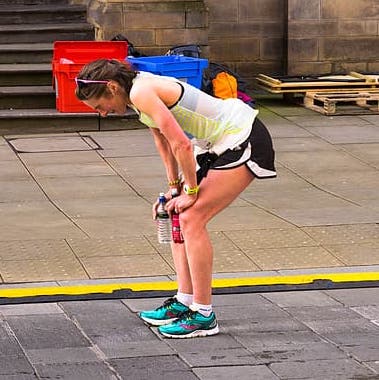
If you spend time in the gym or watch sports, you probably see athletes standing with their hands on their head or bent over with their hands on their knees during a break from a workout or game. Other than being an indicator of fatigue, these “poses” may actually speed recovery, allowing athletes to get back to action faster. Quick recovery is important for performance in athletes, especially if they have back-to-back events. It’s also important for the rest of us when we do workouts that have multiple sets, separated by brief recovery periods. This is the topic of my Health & Fitness column in the Aiken Standard this week.

woman-holding-knees-with-both-hands-while-on-a-pathway

Continue reading

Start saving in your fitness bank for when you need it most.

Saving money for emergencies is good advice and important for maintaining quality of life in the event of a lost job or other financial crisis. While this may seem like common sense, many people have been caught without enough savings when they needed it and found it difficult to meet basic needs.

This principle can also be applied to fitness. When you are healthy, you can maintain a high level of fitness. This makes your day-to-day activities easier and serves as a reserve or “bank” to draw on when you need it. Your good fitness now can get you through a health crisis just like saving money can help you through a financial crisis. This health crisis could come in the form of an injury or illness that keeps you from being active for several days or a hospitalization that keeps you in bed for a week, a month, or longer. This is the topic of my Health & Fitness column in the Aiken Standard this week.

Patient walking in hospital


The problem with periods of inactivity, like bed rest or hospitalization, is that there are severe physiological effects that occur within days and get worse over time. You may have noticed this as weakness and fatigue after spending a few days in bed with a cold. Muscle strength declines with each day of bed rest, and can be 50% lower following as little as three weeks. That reduction in strength could limit a person who was already deconditioned to a point where he or she would have difficulty completing the most basic activities of daily living.

A person who was fit and strong when they went into the hospital would certainly be better off when released. And older adults fare worse than younger individuals. According to one study, the decline in strength seen in older men in just 10 days was equivalent to the change measured after 28 days in men 30 years younger.

It’s not just the muscles that are affected, the bones get weaker, too. In fact, 12 weeks of bed rest can reduce bone density by as much as 50%, exposing patients to a greater risk of fracture. This is due to the reduced stress on the bone from not standing and walking as well as the lack of muscle activity. Two of the most effective ways to build bone density are putting stress on bones through weight-bearing activity and the action of the muscles pulling on the bones from resistance training. Because bed rest eliminates both of these stresses, bone density declines rapidly.

One unique study from the 1960s had healthy young men complete three weeks of bed rest. They all experienced a rapid decline (over 20%) in their aerobic fitness, but recovered quickly after the experiment ended. These individuals also had their fitness tested again 30 years later. It turns out that the decline in fitness in those young men in three weeks of bed rest was greater than the decline in fitness that occurred over 30 years of aging!

The good news is that most patients are encouraged to move around as much as possible. Some receive in-patient physical therapy or rehab, even after major surgery, to help lessen the effects of prolonged bed rest. It is important to take advantage of these opportunities if you, or a loved one, are hospitalized.

There are many reasons to exercise and be fit, but an important reason may be to develop a fitness “bank” you can draw on if you become injured or hospitalized. Since the effects of bed rest are seen in people of all ages, everyone can benefit from a good fitness foundation. Just like putting money in the bank, doing a little now can have great benefits later when you need it most.

Finally, some smart advice: First, achieve and maintain a high level of fitness now, just as you would save money for a rainy day. You never know when you will need it. Second, if you are hospitalized, take advantage of opportunities to move, whether that is limited to moving from bed to a chair or if it includes short walks or even inpatient exercise–if the medical staff approves, of course. While many well-meaning friends and family members will tell you to rest and not move, true bed rest is almost the worse thing you can do.

For example, inpatient cardiac rehabilitation targets patients who are recovering from heart attacks and even open heart surgery. The goal is to get these patients up and moving as quickly as possible to prevent long-term consequences of bed rest.


drparrsays blog footer


Be active, even when you’re not.

You probably know that exercise is good for your physical health. A lower risk of weight gain, diabetes, heart disease, and some cancers are among a long list of positive health effects of regular physical activity. But the rewards of exercise go beyond strengthening muscles and bones, burning fat, and improving heart health. Lesser known benefits include improved mental health, cognitive function, and greater feelings of wellbeing. This is the topic of my Health & Fitness column in the Aiken Standard this week.

woman-wearing-black-crew-neck-sleeveless-top-sitting-of-gray-1181577

Continue reading

Fight the flu with your feet!

It’s time to get a flu shot if you haven’t already. Getting vaccinated is the most important thing you can do to prevent seasonal influenza (flu). But did you know that regular exercise is important for a healthy immune system and can make your flu shot more effective? This is the topic of my Health & Fitness column in the Aiken Standard this week.

Flu vaccine


Exercise can have a positive effect on your immune system. People who participate in moderate exercise on a daily basis have fewer and less severe colds and have up to 50% fewer sick days than those who aren’t regularly active. Research in animals and humans shows that exercise increases the activity of certain immune cells called helper T cells. This makes the immune system response to viruses, like the cold and flu, more robust. The strongest evidence is seen when the exercise is moderate in intensity and duration, such as a 30–60 minute walk or jog.

More exercise isn’t always better, though. Very vigorous and prolonged exercise can have the opposite effect. Athletes who engage in long, intense training tend to be more susceptible to upper respiratory infections. Research shows that immune function is depressed in the weeks leading up to and after running a marathon, leading to an increased risk of becoming sick. The bottom line is that regular exercise improves your immune system, but very vigorous exercise may not.

Regular exercise also enhances the immune system response to the influenza vaccine. This means that the flu vaccine can be more effective in people who exercise. If you don’t exercise already, you can still benefit: One study showed that a single 45 minute exercise session can improve the immune response to the flu vaccine. You can get this benefit by going for a brisk walk before your flu shot.

There are other steps you can take to reduce your chance of getting sick this cold and flu season beyond getting a flu shot and regular exercise. You should avoid close contact with people who are sick since the flu can be spread through the air when an infected person coughs or sneezes. You can also protect yourself by not touching your eyes, nose, or mouth and by washing your hands frequently with soap and water or using an alcohol-based hand sanitizer.

Good nutrition is also important for optimal immune system function. Deficiencies of certain nutrients can have a negative effect on immune function, so eating a balanced diet is essential. That said, there is no support for “boosting” the immune system by taking high doses of vitamins, minerals, or other supplements, despite the claims made by supplement companies. In fact, the majority of nutritional supplements have not undergone appropriate testing and for those supplements that have been tested, the results are not consistent with the claims.

Poor sleep habits are associated with suppressed immunity and more frequent illness. Sleep deprivation can also reduce the positive immune response to a flu shot. High levels of stress increase susceptibility to colds and the flu and can lead to more sick days from work or school. Stress and poor sleep habits tend to occur together, creating a double negative effect on the immune system.

In order to have your best chance of staying healthy this year you should exercise every day, eat a healthy diet, manage your stress, and get enough sleep. Additionally, follow the traditional advice to get a flu shot, wash your hands frequently, stay away from people who are sick, and stay home yourself if you are ill.


drparrsays blog footer

How to stay healthy at work.

Many people are trying to create a healthier lifestyle by eating healthier, making time for exercise or other activity, and reducing stress. Frequently, the focus is on what they can do at home, from prepping meals to joining a gym or going to yoga class. But many people spend a major part of their day at work, where healthy options are often limited. From the box of donuts at a morning meeting to a quick fast food lunch, eating well at work can be difficult. And for people who have office jobs, it also likely means lots of time sitting at a desk.

Fortunately, there are things you can do to make your time at work a little less damaging to your health. Even better, these steps can also make you more productive and feel better throughout the day.

Parr at desk 2-11-16

Continue reading

Exercise and sleep: Why getting fit requires getting your ZZZs.

If you are serious about exercise, you take steps to maximize your workouts in order to meet your fitness goals. Obviously, what you do for exercise matters. You probably also appreciate that nutrition is important, so you pay attention to what you eat. But there is another important step to achieving your fitness goals you may not be aware of—sleep. This is the topic of my Health & Fitness column in the Aiken Standard this week.

sleeping-woman-1489600204BQ8

Continue reading

I took two weeks off from exercise, and today I’m really feeling it!

I have been traveling more than usual lately so I am out of my typical routine, including exercise. In fact, the last serious workout I did was two weeks ago!

I’m back at it this week, starting with an intense boot camp-style workout on Monday. And today, I’m really feeling it!

The soreness I am feeling today is called DOMS—Delayed Onset Muscle Soreness— and, despite how it feels, is actually a good thing.

Curious about what causes it and why it is important in muscle adaptations to exercise? Read more here: https://drparrsays.com/2018/01/08/no-pain-no-gain-pain-no-but-a-little-muscle-soreness-is-okay-even-good/


drparrsays blog footer

FITT-SPF: Fitness and fun in the sun.

People who exercise are probably familiar with FITT—frequency, intensity, time, and type—the basic principle behind almost all fitness programs. The FITT principle applies to everything from running to weightlifting to yoga. For people who exercise outdoors there are three more letters that are important to know, especially in the summer: SPF. This is the topic of my Health & Fitness column in the Aiken Standard this week.

woman running on beach

Continue reading

Chill out! Why less stress (and more sleep) is essential for good health.

Chronic stress can have serious emotional, psychological, and physiological effects that contribute to or exacerbate many health problems. In fact, the negative health effects of chronic stress are like those of eating a poor diet or not getting enough physical activity. That said, managing stress, including getting enough sleep, is often overlooked as a key component of good health.

The effects of stress and the importance of stress management is the topic of my Health & Fitness column in the Aiken Standard this week.

stress


The word “stress” is typically used to indicate both the feeling of being “under a lot of stress” as well as the things that cause that feeling. The events and situations that cause stress are properly called stressors, which lead to a stress responsethat includes consequences we feel as well as physiological changes we may not notice.

The immediate effect of a stressor is called the “fight or flight” response since it prepares the body to deal with a dangerous situation. A classic example of this is a caveman who encounters a saber-toothed tiger, clearly a stress-inducing event.

The sympathetic nervous system is immediately activated, which raises heart rate and blood pressure to pump more blood to the muscles. Additionally, stored fat and carbohydrate fuels are broken down as fuel for the muscles. The adrenal glands release catecholamines (adrenaline) and cortisol (the stress hormone) to prolong and enhance this effect. This coordinated response makes sure the caveman’s body is ready for action. After the danger passes, everything returns to normal.

This physiological response is appropriate for major events like saber-toothed tiger encounters, but not for less perilous stressors like being stuck in traffic, pressure at work or home, and other personal and family issues. But the body responds with the same increase in blood pressure and hormones to them all. Unlike a rare saber-toothed tiger encounter, these stressors tend to occur on a daily basis, leading to continuous stress response.

The increase in hormones can lead to high blood pressure, obesity, type 2 diabetes, and other chronic diseases. This is partly due to elevated levels of cortisol, a hormone that plays a role in storing fat and increasing appetite. While elevated cortisol during exercise (including running away from a saber-toothed tiger) is normal, chronic overproduction can have negative effects.

While it is impossible to avoid all stress in life, minimizing stressors and managing the way you respond to stress can have important benefits. To the extent that it is possible, avoiding stressful situations through better time management, setting realistic expectations for ourselves and with others, and learning to say “no” are common recommendations.

Learning how to deal with stressors to avoid the negative effects of stress is also important. Techniques that can be implemented in the heat of a stressful moment include taking a break from the situation, listening to calming music, and progressive relaxation. Even taking a deep breath can help.

Exercise has long been recognized as beneficial for reducing stress and the long-term effects of stress on your health. This includes doing something active during a stressful situation and exercising regularly to improve the way your body responds to stress. While all forms of exercise seem to work, much research and practice has focused on specific types of exercise including yoga and Tai Chi.

Other effective strategies traditionally include meditation and relaxation exercises. More and more research shows that getting enough sleep is also critical for reducing stress and the impact it has on your health. Eating a healthy diet can reduce the effects of stress as well.

The bottom line is that a healthy lifestyle includes stress management as well as a good diet and regular activity. Since all three are essential for good health, it would be wise to eat smart, move more, and chill out!


drparrsays blog footer