Tag Archives: exercise

Just do it — together!

It’s common to see people walking or running in pairs, and at the gym many people like to work out with a partner. Group exercise classes and boot camp programs are popular among novices and seasoned exercisers alike. Joining a team that trains together to walk or run in a race is a good plan for completing your first 5k or 10k event.

Having another person or a group of people to exercise with is a great way to increase your motivation and enjoyment. This makes it more likely you will stick with your exercise program, leading to better fitness and health. But there are additional benefits to exercising with others that may help you get started and continue your fitness program. This is the topic of my Health & Fitness column in the Aiken Standard this week.

Boot camp workout


Exercising with others provides a level of motivation and accountability that is important, especially for people who aren’t self-motivated. Knowing that you are meeting a friend for a walk or meeting a training partner at the gym makes it less likely that you will find an excuse to skip a workout. While guilt isn’t the best reason to exercise, for many people it is the one thing that will get them moving.

Did you know that exercising with others can also help you get a better workout? It’s true. When you are exercising with another person or a group you can get feedback on your technique. Doing exercises properly can reduce the risk of injury and improve your gains strength, endurance, and flexibility.

You can also get ideas for new exercises and training techniques that can make exercise more enjoyable and less monotonous. Many people find that having a friend to walk or run with makes the time seem to go by faster. The friendly “competition” that can come from a partner or group can push you to train harder, making the exercise more beneficial.

A group dynamic is an important component of many popular exercise classes and programs. At the gym, participants in classes from aerobics to Zumba and spin to yoga benefit from the support and motivation of exercising with others. And programs like boot camps, CrossFit, and F3 are popular largely because of the camaraderie of the other group members.

The benefits may be even greater if you exercise with someone who is more fit than you are. Research shows that when someone is exercising with a partner who they perceive to be more fit they will work out harder and longer than if they were exercising alone. You can benefit from finding a partner or group members who are in better shape than you are. Be careful, though, since exercising with people who are much fitter than you can have the opposite effect and you may get discouraged.

Your exercise partner doesn’t even have to be another person to be effective. Research shows that walking with a dog can improve your adherence to a walking program and lead to greater improvements in fitness compared to walking with a human companion. While a friend might make excuses to skip exercise, a dog will always look forward to a walk. Don’t worry if you don’t have a pet; one study used dogs at a local animal shelter as walking partners.

You can take advantage of the benefits of exercising with a partner easily by asking a friend to go for a walk. It’s something that will benefit you both and it will be a good opportunity to spend time together. No more excuses…get moving!

The effect of involving others in your behavior change process is also helpful for losing weight and quitting smoking. This is true even if the other person (or people) aren’t participating  with you—simply telling others about your plans to change can help make you more accountable and improve your chances for success.


Nutrition, exercise, and health information can be confusing. 
But it doesn't have to be that way.
What can I help you with?
 drbrianparr@gmail.com | http://twitter.com/drbrianparr


Exercise, when you need it most

Regular exercise is one of the most important things you can do for your health. A lower risk of weight gain, diabetes, heart disease, and some cancers are among a long list of positive health effects of exercise. Lesser known benefits include improved mental health, cognitive function, and greater feelings of wellbeing. Exercise is essential for development of children, maintaining health in adults, and can even reverse some of the effects of aging.

Despite these clear benefits, many people do not participate in regular exercise until they have a medical condition, like a heart attack or cancer, that motivates them to start.  This is the topic of my Health & Fitness column in the Aiken Standard this week.

usca-cardiac-rehab


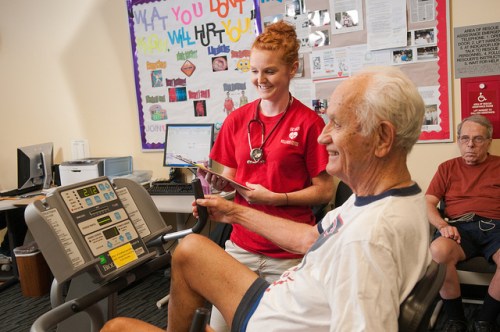
It is well-known that people who exercise have a lower risk of heart attack and improved survival if they do have one. While immediate treatment of a heart attack using medications and surgery is critical, the truth is that the long-term outcomes are largely based on what happens next. Traditionally, heart disease patients were told to rest and not stress their hearts, a belief that many still hold today. Now we know that exercise-based cardiac rehabilitation programs are key to improving heart health and preventing future complications.

Most cardiac rehabilitation programs include several phases that include monitored exercise, education about nutrition, weight control, stress management, proper medication use, and psychosocial wellbeing. The benefits of cardiac rehabilitation are well-established through research and practice. In fact, many patients credit cardiac rehabilitation with saving their lives, even if they had bypass surgery. Despite this, less than a third of patients who are eligible for cardiac rehabilitation actually attend a program.

Exercise is also known to reduce the risk of developing certain types of cancer, including breast, colon, bladder, lung, kidney, and endometrial cancers. This is due to the fact that exercise causes changes at the cellular and hormonal level that result in reduced inflammation and improved immune system function. Regular physical activity can also improve survival and reduce the risk of recurrence of cancer.

In addition to helping reduce the risk of cancer development and recurrence, regular exercise can help you handle cancer treatment better. To be sure, cancer treatment can lead to extreme physical consequences including loss of weight, muscle mass, strength, and endurance. At least some of this is due to more time resting and less time being active, the effects of which occur within days and get worse over time.

The fitter you are when you begin treatment, the fitter you will be at the end because you have “saved” more strength and endurance in your fitness bank. You simply have more you can lose before you get to a point at which you can’t complete your normal activities. And post-cancer exercise programs are becoming more common as a way to help women recover from cancer treatment and rebuild strength, endurance, and feelings of wellbeing.

Another benefit of cardiac rehabilitation and cancer exercise programs is the support from other heart attack and cancer survivors. Combined with support from medical professionals, family, and friends, these groups become an essential resource for information, comfort, and encouragement.

If you or someone you know has had a heart attack, heart surgery, or a cancer diagnosis, encourage them to ask their doctor about an appropriate exercise program—it is likely to be the best way to improve quality of life. In our area, there is a cardiac rehabilitation program based at the USC Aiken Wellness Center as well as at several hospitals in Augusta. There is also an exercise program for cancer survivors called Livestrong at the YMCAs in Aiken, North Augusta, and Augusta.


Nutrition, exercise, and health information can be confusing. 
But it doesn't have to be that way.
What can I help you with?
 drbrianparr@gmail.com | http://twitter.com/drbrianparr
Aside

Earlier this week I wrote about how exercise can reduce the impact of age on health, fitness, and physical function. In many cases, exercise can even reverse the effects of age, literally turning back time. Last week there was a good article … Continue reading

Improve your success by treating weight loss or exercise like a project

Almost everyone who starts a weight loss of exercise program does so with good intentions. Many get off to a good start and see beneficial results, at least initially. Unfortunately, long-term success is uncommon.

There are myriad reasons for this, but the way people manage their weight loss and exercise efforts is certainly among them. Think about it: when someone takes on a new diet or exercise program it is usually added to their typical routine. The problem with this approach  is that most people are busy, and there is little extra time in their day. As a consequence, the diet and exercise doesn’t get the time or attention is needs in order for people to be successful.

This is where the lessons of good project management can be helpful. In the workplace a major project is usually accomplished though defining the scope to the project, appropriate goal setting, allocation of resources (including time), and a mechanism to assess progress.

But many people who approach projects this way at work tend not to apply this process to health improvement projects at home. The result is poor planning, setting unrealistic goals, and failure to allocate appropriate resources, including time.

Especially time. Time to set goals, time to plan and prepare meals,  time to exercise, and, perhaps most important, time to assess and adjust the plan along the way.

Many of these problems could be avoided through the same good project management techniques that would be used at work. The idea of treating weight loss, exercise, and other health improvements as a project is the topic of my Health & Fitness column in the Aiken Standard this week.

to-do-list


Think about the last time you tried to do something that was good for your health. Maybe you were trying to lose weight, eat a healthier diet, or start an exercise program. If you are like many people, your attempt wasn’t successful, at least in the long term. In fact, more than two-thirds of adults who lose weight gain it back and about 50% of those who start exercising quit within six months. The problem isn’t so much getting started, it is sticking to the program.

The number one reason why people abandon their diet and exercise is time. Dedicating time for exercise and to plan and prepare healthy meals is challenging. Most people are busy—maybe too busy—with work, family, and other responsibilities, so health improvement tends to take a lower priority.

Perhaps part of the solution is to treat health improvement like you would a project at work, rather than an “extra” activity. Using project management strategies that are common in the workplace could help you dedicate adequate time and resources to your next diet and exercise program. Here are some examples of how you can utilize the methods of one program management model to improve your chances for success:

Initiation

Identify what you need to change, set goals, and determine what resources you will need. For example, if you want to lose weight you should have a goal weight and timeline in mind. You can, and should, set both short-term and long-term goals. Then, think about what knowledge or tools you will need to get started. You should also tell others about your plan and identify people who can provide support.

Planning

This is where you determine when and how you will put your plan into action. If you need information about what to eat or decide to join a gym to exercise, this is the time to put those components in place. Take out your calendar and make time for preparing meals and daily exercise. Make a weekly menu of meals and a grocery list before you go to the store. Set a start and end date for your project, decide how you will monitor your progress, the think about “what if” scenarios.

Execution

Once you have yourself organized, it is time to begin! Hopefully, this is a bit easier since you planned ahead, but keep in mind that you will continuously need to revisit and modify your plan. This is important because one reason why people don’t succeed is that they don’t allow flexibility in their plan; once things go awry, they give up.

Monitoring

As you proceed through your weight loss or exercise program it is helpful to get feedback on your progress. Keeping track of your weight is a simple way to monitor. You can also keep a record of what you eat or what you do for exercise to see how you are progressing. Tying progress to rewards is important for keeping you motivated, just make sure the rewards are consistent with your goals.

Closing

In the office, this is the end of your project and the time when you file everything away and move on to something else. Health improvement projects tend to be ongoing, so this is your chance to review what worked, what didn’t work, and what you need to do to maintain your good health habits. This would also be a good time to get rid of your clothes that are now too big—otherwise you may end up in them again someday!


Nutrition, exercise, and health information can be confusing. 
But it doesn't have to be that way.
What can I help you with?
 drbrianparr@gmail.com | http://twitter.com/drbrianparr

When it comes to weight loss, calories count (but don’t count calories)

When it comes to losing weight, calories count. Thanks to a host of wearable devices and mobile apps, counting calories has never been easier. This matters because losing weight almost always means cutting the calories that you eat and increasing the calories that you burn. This concept of “eat less, move more” is the foundation of nearly every effective weight loss program. This is the topic of my Health & Fitness column in the Aiken Standard this week.

fitbit


Modern wearable devices and mobile apps allow you to track your weight, what you eat, and your activity fairly accurately. Many apps can measure the intensity of exercise by using the GPS and accelerometer features of your phone itself or by syncing with a wearable bracelet or belt clip. Some include heart rate to make the estimates even more precise. Using this technology, you can count steps, measure how many miles you walk or run, and estimate how many calories you burn.

Other apps can help you track what you eat. Whether you are counting calories or concerned about the amount of protein you are eating, diet analysis apps can show you what you are really eating. Most require you to enter the foods you eat and the app calculates calories, nutrients, sugar, salt, and water intake based on standard databases. In order to get accurate results, it is important to estimate portion sizes accurately, something that is challenging even for experts. That said, these apps can be useful for tracking what you eat to help you learn about your eating patterns to develop healthier habits or meet specific goals, such as eliminating added sugar from your diet.

Activity trackers and exercise apps are especially popular for improving fitness and promoting weight loss. Both the physical activity that you do throughout the day and dedicated exercise are important for good health, physical fitness, and weight control. This technology can help you know what to do, when to do it, and how much you did at the end of the day.

Even if you aren’t concerned about exactly how many calories your burned in an exercise class or how many steps you took during the day, these devices can help you develop healthier habits. Many people are simply unaware of how sedentary they are during the day or are unrealistic about how intense their workouts really are. For many people, an accurate report of how many steps they took or how many calories they burned is helpful for gauging their success and identifying things they can improve.

While these tools can be helpful, it is important to emphasize the importance of developing healthy habits in order to improve fitness, lose weight, or keep it off. A focus on “micromanaging” steps or calories may cause you to lose sight of the “big picture” changes you want to make. For example, you should strive to be as active as you can throughout the day, even if you have already met your step or calorie goal.

Keep in mind that there are very few people who failed to meet their fitness or weight loss goal because they didn’t have the latest activity tracker or fitness app. Real success comes from making lifestyle changes to incorporate healthy eating and activity habits that you can maintain without constant reminders. While technology can help you make those changes, it does not replace the dedication needed to develop lasting eating and activity habits to promote good health.


Nutrition, exercise, and health information can be confusing. 
But it doesn't have to be that way.
What can I help you with?
 drbrianparr@gmail.com | http://twitter.com/drbrianparr

Honesty is the best policy when it comes to your health

Have you ever justified your weight by saying you are “big-boned”? What about your eating and exercise habits? How often do you really eat out? How many days did you actually get to the gym last month? Are you being honest with yourself when it comes to your health? And are you asking others to be honest with you?

Being honest about your health is the topic of my Health & Fitness column in the Aiken Standard this week.


Being honest with yourself is essential for initiating health behavior changes and setting good goals. For example, someone who tells themselves they need to lose “a few pounds” may really need to lose much more and may not take their weight loss as seriously as they should. Convincing yourself that you are doing more exercise than you really are may mean that you won’t see the fitness or weight loss results you were expecting.

This type of self-deception is easy to do. Take body weight for example. The current standard for determining if you are at a healthy weight is body mass index (BMI), calculated from your weight and height (kg/m2). It requires a bit of math, so using a mobile app or online calculator is a good idea.

A BMI between 18.5 and 24.9 is considered normal, 25-29.9 is overweight, and if your BMI is 30 or higher, you are classified as obese. To put this in perspective, a BMI of 30 is equivalent to about 25–30 pounds of excess fat.

Let’s say your BMI puts you in the obese category, suggesting you should lose weight. But then you think about an article you read about how BMI isn’t accurate because you can be considered obese if you have excess muscle, not fat. And then there was the story on the news suggesting that it is okay to be obese as long as you are physically fit. So, maybe you don’t need to worry about your weight!

See how easy it is to tell yourself that you don’t really need to lose weight? In reality, BMI is an accurate method of assessing your body fatness; the inaccuracies reported in the news almost always involve athletes or people with lots of muscle mass developed through physical labor. Be honest…is that really you? It’s also true that people who are fit and fat can be healthier than people who are thin and sedentary, but it requires a lot of exercise to reach that level of fitness. Again, are you really that fit?

Probably the best test is to take a good look in the mirror and be honest about what you see. Try to “pinch an inch” of fat around your belly. One inch isn’t necessarily a problem, but take notice if you can pinch a handful of fat. Measuring your waist circumference (or looking at your pants size) can give you the same information. People who have a high BMI because of extra muscle, like athletes, have thin waists. If your waist circumference is greater than 35 inches ( women) or 40 inches (men), you have excess fat.

This honesty also applies to others, including your doctor. Many physicians are reluctant to discuss weight and weight loss with their patients, and many patients don’t want to hear what they interpret as a personal attack. Don’t be one of those patients! Ask your doctor for an honest assessment about your weight and the impact it might have on your health.

This is a real problem. According to one report, only 39 percent of obese people surveyed had ever been told by a health care provider that they were obese.     To help combat this problem, the American Medical Association has developed resources to help physicians better communicate with patients about their weight.

Making changes to diet and activity habits is a difficult process, to be sure. Telling yourself that you don’t need to make them only delays getting started and can lead to poor health in the meantime. When it comes to your health, honesty is the best policy!


Nutrition, exercise, and health information can be confusing. 
But it doesn't have to be that way.
What can I help you with?
 drbrianparr@gmail.com | http://twitter.com/drbrianparr

Back to school: Make sure kids are ready to learn

Physical activity and good nutrition have long been recognized as essential for promoting good health in adults and children. More and more research suggests that these health behaviors can have beneficial effects beyond health, including how we perform both physically and mentally. The emphasis here is on children in school, but it applies to adults, too. This is the topic of my Health & Fitness column in the Aiken Standard this week, just in time for the first day of school here.

school lunch


Unfortunately, taking time for activity and good nutrition is seen as a luxury or a distraction to learning in most schools. Far from being a distraction, physical activity and healthy eating are prerequisites for learning and academic achievement. In short, these often ignored factors can help make sure children are ready to learn.

Regular physical activity is essential for good health, growth, and physical development, including maintaining a healthy body weight. This last point is important given the epidemic of childhood obesity and related health problems, including “adult” diseases like high blood pressure and type 2 diabetes.

Current recommendations call for all children to get at least 60 minutes of activity per day. This can include activity at school from physical education classes, recess, other classroom activities as well as games, sports, and unstructured play. Unfortunately, most kids don’t get nearly enough activity at school and many aren’t active at home.

Physical activity is also important for academic performance. Research shows that children who participated in an activity program had better executive control, which includes resisting distractions and maintaining focus, improved memory, and doing better switching between tasks. This is particularly relevant for children with ADHD, but the effects can be seen in all kids. These positive changes can maximize class time and lead to improvements in academic achievement, especially math and reading test scores.

Similarly, good nutrition is also essential for health, growth, development, and academic achievement. Eating a good breakfast improves cognitive function, alertness, and academic performance in students of all ages. It should be no surprise, then, that skipping breakfast impairs cognitive function and academic achievement. This is one reason that many schools offer breakfast to start the day or include a healthy mid-morning snack.

The same is true for lunch, too. A good lunch can support learning in the afternoon and gives a chance to teach kids about good nutrition by providing healthy food that, unfortunately, many children may not get at home.

Schools have a unique opportunity to use physical activity and nutrition to promote health, support academic achievement, and teach healthy habits. Since formal nutrition education is missing from most curriculums and PE programs are being reduced or cut completely, schools must be creative to incorporate these essential subjects.

A way around this problem is to make sure children get a chance to move and play, ideally multiple times during the day. This is what recess is for. Teachers can also incorporate activity and nutrition education in the classroom and get away from the idea that kids must be sitting still to learn. As research shows, quite the opposite is true!

Schools are often hesitant to teach about nutrition and activity because it is thought of as a responsibility of parents, not schools. But most parents don’t teach these good habits at home, which affects what happens at school. Despite the obvious benefits, it will probably take years of effort to change this view.

In the meantime, parents can encourage their kids to be active and make smarter food choices at home so they are ready to learn in school.


Nutrition, exercise, and health information can be confusing. 
But it doesn't have to be that way.
What can I help you with?
 drbrianparr@gmail.com | http://twitter.com/drbrianparr

Even more reason to go for a swim.

Earlier this week I wrote about the benefits of swimming for health, fitness, and weight loss. Even if you aren’t swimming laps, spending time playing in a pool, lake, or ocean can be a healthy way to stay cool in the summer heat.

A piece in the New York Times this week explains that swimming also has benefits for the brain as well. This isn’t surprising given that any type of exercise can enhance brain blood flow, boost levels of neurotransmitters, and improve cognitive function. But, as the author explains, swimming seems to have a more pronounced effect than exercise on dry land.

Even more reason to go for a swim!

Source: Pool of Thought – The New York Times


Nutrition, exercise, and health information can be confusing. 
But it doesn't have to be that way.
What can I help you with?
 drbrianparr@gmail.com | http://twitter.com/drbrianparr

Stay cool and get fit by going for a swim

It’s hot! Whether you are swimming laps or splashing in a lake, swimming is a great way to stay cool. Swimming is also an excellent exercise for improving your fitness and helping with weight loss.

This is the topic of my Health & Fitness column in the Aiken Standard this week. You can also find more information about the fitness and health benefits of swimming from something I wrote previously.

Swimmer


There is nothing that feels better on a hot summer day than going for a swim. But beyond being a fun way to cool down, swimming is a great way to get in shape. Swimming is also an excellent exercise for injury rehabilitation or for people with certain conditions like arthritis.

The fitness benefits of swimming are well established. Since swimming is a whole-body exercise it uses all of your major muscle groups, building strength, endurance, and aerobic fitness. Highly trained swimmers have VO2max values, considered the best measure of aerobic fitness, that are similar to runners and cyclists. If you have doubts about the fitness benefits of swimming, think about how muscular and lean Olympic swimmers are.

Depending on the stroke and speed, swimming ranges between 5 to 10 METs. (METs are units used to measure the intensity of activity; one MET is equivalent to sitting at rest) For example, doing the backstroke at a moderate speed is about 5 METs while swimming laps freestyle with vigorous effort is about 10 METs.

This range is similar to walking at 4 mph up to jogging at a 9 minute per mile pace. What if you are just spending time in the pool or lake rather than swimming laps? Swimming leisurely is 6 METs, still a decent workout.

Swimming is a great way to burn calories, too. Even at a moderate pace, swimming laps for 30 minutes can burn over 200 calories. The exact energy expenditure depends on the stroke (butterfly is highest, backstroke is lowest) and the speed, but for most people swimming will burn as many calories as spending the same amount of time exercising on land.

There are two major reasons for this. First, water is more dense than air, so you need to expend more energy to move your body through the water. Second, swimming is a whole-body exercise which requires more muscle activity compared to walking or jogging which mostly involve the legs.

You may be surprised to learn that novice swimmers expend more energy per lap than elite swimmers. For example, one study showed that competitive swimmers expend only 280 calories to swim a mile, while less experienced swimmers burn about 440 calories to cover the same distance. The reason for this is that experienced swimmers are more efficient, so they expend less energy.

Aquatic exercise is popular for both therapeutic and fitness purposes, especially for people who don’t tolerate exercise on land well. When you are submerged up to your waist, 50% of your weight is supported; when you are up to your chest, about 75% is supported. This reduces the impact of exercise in the water, perfect for people who have arthritis, osteoporosis, severe obesity, or who are recovering from injuries.

Exercise in the water doesn’t have to mean swimming laps. Water aerobics, aqua walking or jogging, and resistance training using foam “weights” or webbed gloves offer safe ways to increase strength and endurance for almost everyone. Most fitness facilities that have a pool offer group aquatic exercise classes and you can find instructions online for exercises that you can do in your own pool.

The hot summer weather makes swimming and other water exercise appealing. But even if you don’t use the time for exercise, spending time playing in the pool or lake can still burn as many calories as going for a walk and is a great way to have fun and cool down!

How to survive an alien invasion. And other more likely threats to your health.

The film Independence Day: Resurgence, the sequel to the 1996 film, opened in theaters last week. The movie is about an alien attack that threatens to destroy the earth. The film has all the makings of a summer blockbuster and will certainly have people talking about alien invaders. It may even prompt some to prepare for an alien attack. This is the topic of my Health & Fitness column in the Aiken Standard this week.

Alien invasion


All evidence suggests that an alien invasion is highly unlikely. Just in case, though, the Centers for Disease Control and Prevention (CDC) Office of Public Health Preparedness and Response has provided advice for surviving a host of disasters that are common in Hollywood blockbusters, including an alien attack. The intention is that preparing for epic disasters also means that you will be prepared for more realistic natural and man-made catastrophes.

I would like to share some health and fitness-related steps you can take to help you survive an alien invasion as well as other more likely threats to your health. After all, you are far more likely to suffer a heart attack than an alien attack, but it makes sense to prepare for both.

The first thing that is clear is that you need to be physically fit to escape or fight alien invaders. Roads and other transportation infrastructure tends to get destroyed in an extraterrestrial strike, so you may have to travel on foot and carry a heavy load of supplies, likely over long distances.

Building speed and endurance through prolonged aerobic exercise and high-intensity interval training can give you an advantage. Developing muscular strength through resistance training would certainly help, too. A comprehensive fitness program at a gym or at home can help you achieve these goals. Even going for a brisk walk everyday will help.

What you eat now can also help you prepare for the aftermath of an alien assault. Both running away from alien attackers and walking for days to a safer place requires that you have adequate stores of carbohydrate and fat. A high carbohydrate diet will increase your storage of muscle and liver glycogen, the primary fuels used for intense exercise so you will have more energy available to sprint and run.

Don’t overeat, though. Maintaining a healthy body weight is beneficial, too. The heavier you are, the more weight you have to carry in your escape, which is likely to slow you down.

Even though the possibility of an extraterrestrial apocalypse is remote, preparing now makes sense. Just as the CDC recommends that you be prepared for aliens in an effort to make sure you are ready for other more likely disaster scenarios, getting in shape to fight or flee attacking aliens also increases your chances of surviving more probable health threats.

Regular aerobic and strength exercise, maintaining a healthy body weight, and eating a healthy diet are the best ways by which you can reduce your risk of a host of health problems. The benefits of these healthy habits include a lower risk of heart disease, stroke, and some cancers along with prevention and treatment of high blood pressure, high cholesterol, and diabetes. These are exactly the type of risks you should be preparing for.

So, as you watch Independence Day: Resurgence think about what you can be doing now to prepare for both an alien invasion and more realistic threats to your health. Visit the CDC website to learn how to prepare for Hollywood-sized disaster scenarios as well as credible information about exercise, nutrition, and health. Then, get started on getting yourself in shape—the aliens will probably attack without warning!


Nutrition, exercise, and health information can be confusing. 
But it doesn't have to be that way.
What can I help you with?
 drbrianparr@gmail.com | http://twitter.com/drbrianparr