Living from chair to chair … to wheelchair?

You probably know that participating in regular physical activity is among the most important things you can do to improve your health. This activity can include exercise as well as just about anything else that gets you moving.

Parking further away at the store, walking the dog, even doing yard work are all recommended ways to be more active. The message, from me and others, is that every little bit of activity counts. Of course, doing more activity, including both higher intensity (traditional exercise) and longer duration (a longer walk) can bring greater health benefits.

What you may not know is that being sedentary, especially spending time sitting, is just as detrimental to your health as not being active. In fact, spending most of the day sitting can undo some of the benefits of exercising, as I explain in my Health & Fitness column in the Aiken Standard this week.

Obesity


It’s true—a person who doesn’t exercise but moves a lot during the day at work or home may be healthier than someone who exercises every day but spends much of the rest of their day sitting! (To be sure, that person is much better off than someone who doesn’t exercise and sits all day.)

You may also be surprised how much time most people, yourself included, spend sitting. While some people have jobs that keep them active, most occupations involve sitting much of the day.

The situation outside of work isn’t much better, between lengthy commutes in the car and hours of “screen time” at home.

This sedentary time comes at the expense of being active, especially doing vigorous activity that causes you to break a sweat, like exercise. And the extent to which we avoid vigorous activity is shocking!

One study used measurements of physical activity recorded continuously for several days in over 2,500 adults to determine how much time the typical American spends being active or sedentary. The results show that the average adult spends about 8 hours each day being sedentary (sitting, mostly), and about 6 hours being active. Almost all that activity time was light intensity activity, around 20–30 minutes was moderate-intensity (a brisk walk), and less than a minute of vigorous activity per day. Less than a minute!

As the author of this study noted, many people seem to be living from “one chair to another.”

Men were slightly more active than women, and overweight and obese men and women were less active than normal weight individuals. Obese women got just one hour of exercise per year. Obese men were not much better, with less than three hours of vigorous activity per year. These levels of physical activity are far below the recommended minimum of 150 minutes of moderate activity or 75 minutes of vigorous exercise per week.

The consequences of sitting so much instead of being active can be severe, including higher body fatness, poor physical function, and increased risk of chronic diseases including diabetes, heart disease, and some cancers.

Another study suggests that these consequences also include an increased risk of disability. In this study, older adults who were less active reported more difficulty completing self-care tasks including getting in and out of bed, eating, dressing, or walking. In fact, each additional hour of sedentary time increased the risk of this type of disability by almost 50%.

Most of us live a life that includes too much sedentary time, especially sitting, and too little activity. This has serious health consequences both now and as we age. But you can take steps (literally!) to become more active by sitting less, moving more, and making time each day to be active.



 

Reducing sugar and sweet.

Cutting back on sugar intake is a common goal to improve heath and promote weight loss. It is also a popular New Year’s resolution and many people have attempted to completely eliminate sugar on a 30-day (or longer) sugar challenge. There is good reason to do this: eating too much sugar is unhealthy! Excessive sugar intake causes hormonal changes and inflammation that can lead to obesity, diabetes, heart disease, and cancer. This is especially true when combined with a lack of physical activity. And your dentist wants you to know that sugar is also associated with dental caries.

If you are trying to lose weight or if your goal is to eat healthier in general, reducing or eliminating added sugar will help more than any other single dietary change. Many people do this by switching from sugary sodas, juices, and other beverages to flavored, artificially sweetened drinks. This is good because it lowers sugar intake, but it may not be the best approach.  This is the topic of my Health and Fitness column in the Aiken Standard this week.

berry-close-up-cooking-delicious-141815 copy

Photo by mali maeder from Pexels

There is some concern over potential health risks of excessive artificial sweetener consumption, including cancer, cardiovascular disease, kidney disease, mood, and behavior. It is important to know that research does not support a strong association between typical artificial sweetener consumption and these health problems. That said, if your goal is to eat less processed food, avoiding artificial sweeteners is an excellent idea.

A more realistic concern may be the effect that replacing sugar with an equally sweet alternative has on your eating behavior and food preferences. Sweetness is one of the most important tastes we respond to, driving our food choices and the amount we eat. It is easy to become accustomed to a certain level of sweetness in food and beverages that make unsweetened “natural” options less palatable.

For example, in an effort to move away from soda and other beverages, many people drink flavored, artificially sweetened water. These drinks taste good and have no calories, so they seem like a smart choice. And they are, if you only consider calories. But these drinks create an expectation that water should be flavored and sweet, so they move people away from a goal of making water the primary source of hydration. I know several adults who simply won’t drink plain water!

This is especially true for children when it comes to fruit. Kids may develop an expectation that strawberries should taste like strawberry-flavored fruit snacks or that orange juice should taste as sweet as a sugar-free fruit drink. Children who learn that fruit should taste sweeter than it really is may not like real fruit when they try it. To a kid accustomed to drinking orange-flavored drinks, even sugar-free, an actual orange may taste sour.

So, if you are already cutting back on sugar intake, keep it up. If you haven’t tried to reduce your sugar consumption, you should. The health benefits are worth it! Keep in mind that you should also make an effort to cut back on sweets, too.  

Take the sweet challenge by reducing your consumption of added sugars and sweeteners. One easy way to do this is to replace sweetened drinks with plain water, tea, and coffee.  You should also avoid processed foods and eat more “real” food. Vegetables, fruits, whole grains, meat, beans, and dairy are known to have health benefits and have no added sweetness. When you do eat packaged foods, pay attention to food labels and look for foods and beverages that have no added sugar or sweeteners.


drparrsays blog footer

No pain, no gain? Why muscle soreness occurs after exercise and what to do about it.

If you exercise, especially if you lift weights, you have probably heard the adage, “No pain, no gain.” This may serve as motivation for some people, but the belief that exercise results in pain might be a good reason not to work out for others. If you are one of those people, you should know that idea that exercise should hurt is simply wrong—muscle pain during or following exercise usually suggests an injury. However, some muscle soreness is unavoidable, especially if you are new to exercise. This is the topic of my Health & Fitness column in the Aiken Standard this week.

man-in-maroon-tank-top-763219

Photo by Genaro Servín from Pexels

Continue reading

Let’s Agree to Agree About Food

March is National Nutrition Month, an annual event created by the Academy of Nutrition and Dietetics to focus on developing healthy eating and physical activity habits. The Academy of Nutrition and Dietetics represents Registered Dietician Nutritionists and other nutrition professionals and is an excellent source for information about food, nutrition, and health.

I will share some general advice about healthy eating here but remember that a Registered Dietician is your best resource for evaluating your diet and making changes to meet your individual needs for health and performance.

Here are five ways to improve your diet almost everyone agrees on, from my Health & Fitness column in the Aiken Standard this week.

Group of people eating

Continue reading

How to be smart about cutting carbs

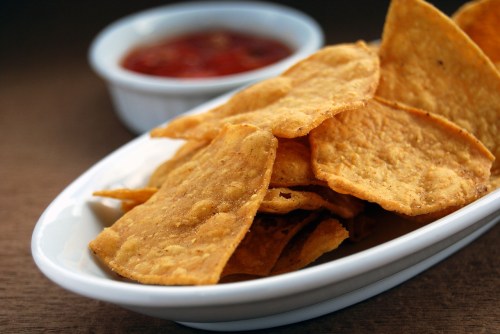
I had lunch with a friend at a casual Mexican place recently. He ordered a burrito without the tortilla (too many carbs), but ate a whole basket of corn chips. Many people make this same choice…cutting out carbohydrates in one way but eating more in another.

To be sure, most of us could easily eat less carbohydrates, but I think we are focusing on the wrong carbohydrate sources. Perhaps we shouldn’t focus on the tortilla as much as the chips that go with it.

I think of this in terms of “necessary” and “unnecessary” carbs. In the example above, the tortilla is a necessary part of the burrito, but the chips are an unnecessary addition. If people are interested in cutting out carbs, skipping the chips make more sense than forgoing the tortilla. This is the topic of my Health & Fitness column in the Aiken Standard this week.

Continue reading

Celebrate American Heart month by learning more about your heart.

February is American Heart Month, with a focus on encouraging all of us to make heart-healthy choices to reduce cardiovascular disease risk. I thought that sharing some information about the heart, how it works, and how to keep it healthy would be an appropriate way to celebrate. This is also the topic of my Health & Fitness column in the Aiken Standard this week.

19425560_694589314066343_8862663786935353344_n

Continue reading

Are those chocolate hearts you got for Valentine’s Day healthy?

Today is Valentine’s Day so you may have been the lucky recipient of a box of chocolates. Hopefully you enjoyed it! Of course, eating too many sweets, including chocolate, isn’t a good idea. But eating certain types of chocolate has been linked to some health benefits.

The idea that chocolate may be healthy is no doubt welcome news for chocoholics. But it may leave you wondering if eating chocolate really is healthy. The answer depends on what you mean by chocolate and what you mean by healthy.

chocolate hearts

Photo by RODNAE Productions from Pexels

Continue reading

This is your brain on football: The Super Bowl, concussions, and CTE.

Since the Super Bowl is this coming weekend, football is a trending topic sparking conversations about the game itself and the halftime show as well as the retirement of a famous quarterback and the renaming of the Washington football team. Football has also been in the news for another more serious reason—the association with traumatic brain injury. Over the years, it has been reported that several former NFL players suffered from brain injury as a result of concussions sustained over years of playing. Some players have even retired early in their careers in an attempt to avoid such injury. Far from being an NFL problem, the issue of sports-related concussion is something that should concern young athletes who play football and other sports, as well as coaches and parents. This is the topic of my Health & Fitness column in the Aiken Standard this week.

Concussion


Football, especially at the professional and college level, has long been known for violent collisions. An obvious concern is that players could sustain a career-ending injury and head injuries, including concussions, are particularly worrisome. In particular, repeated concussions can cause a degenerative brain disease called chronic traumatic encephalopathy, or CTE. The 2015 motion picture Concussion brought this issue to the attention of a wider audience, but many sports medicine professionals have been aware of this problem for years. A recent report suggests that CTE may be far more common than previously thought.

A concussion is caused by the brain moving forcibly inside the skull as the result of the head striking an object (another player or the ground) or simply the head moving violently without hitting anything. Because of this, concussions and sub-concussive injuries can occur even when an athlete doesn’t lose consciousness or appear to be injured. This can put athletes at increased risk for multiple injuries in a season—or even in a single game. This last part is critical, because much of the permanent damage comes from a second concussion sustained before the first has healed completely.

New rules banning helmet-to-helmet contact are part of an effort to reduce the risk of concussions. Off the field, players are subjected to special screening to detect concussions, assess recovery, and determine if it is safe to return to play. Improvements in equipment, including helmet technology that can monitor potentially concussive hits, may also help reduce the risks of serious injury.

Despite these efforts, some experts believe that football is simply too dangerous and have called for tackling to be banned. These concerns are more frequently expressed when it comes to youth football. The evidence that accumulated brain trauma sustained by young athletes can have immediate and lasting effects has led some communities, schools, and even whole states to consider banning tackling in youth football.

This is complicated by the fact that other sports also have a high risk of concussion, including hockey and soccer. In fact, heading has been banned in some competitive youth soccer leagues. And there is the fact that all sports have some risk of injury, including concussions. Furthermore, youth sports, including football, provide a great many young people with opportunities to be active, promote growth and development, enhance academic achievement, and have fun. The effect of banning tackling in football or heading in soccer on the health, social, and educational opportunities for young athletes is unknown and should be considered.

Whether policies like these are practical or not remains to be seen. In the meantime, there are steps we can take to make all sports safer for young athletes. We should make sure that coaches are educating players how to compete as safely as possible instead of emphasizing winning at all costs. We should also advocate for having certified athletic trainers at all games and practices to teach players safe techniques, assess and treat injuries, and ensure appropriate return to play. Most of all, we should be mindful of the risks of playing sports while encouraging kids of all ages to be active, play, and have fun!


drparrsays blog footer

Sports science in the 2022 Winter Olympics

The winter Olympics start later this week so we will soon be seeing some remarkable athletic performances. The competitors are among the fittest and most highly trained athletes in the world, both in terms of laboratory measures of fitness and in subjective evaluations of skill. Competing in the Olympics requires years of focused, intense training, and some good luck. This is the topic of my Health & Fitness column in the Aiken Standard this week.

Cross country skiing


First, let’s look at the fitness. This is most evident in the endurance events like cross-country skiing and speed skating. The key to performance in long-duration events like these is for the muscle to contract repeatedly and forcefully without fatigue. In order to do so, the muscle must have a steady supply of oxygen and nutrients. These nutrients are delivered through the blood, which is pumped by the heart. The muscle takes up and uses these nutrients to produce ATP, the form of energy used by the muscle.

After months and years of endurance training the heart gets bigger resulting in the ejection of more blood to the muscle. Within the muscle there is an increase in the number of capillaries, the small blood vessels that deliver blood to the muscle, and mitochondria, the part of the cell that produces most of the ATP. Together, these adaptations allow the muscle to produce more ATP without fatigue, allowing the athlete to sustain a higher intensity (skiing speed, for example) for a longer time without fatigue.

While all Olympic athletes are very physically fit, some events rely more heavily on skill, including figure skating and freestyle snow boarding. For example, in figure skating completing a triple axel involves leaping into the air, spinning three and a half times, and landing backwards. On a 4 mm wide blade. On ice. Or think about the triple cork 1440, a snowboarding trick that involves flipping three times in the air while doing four 360-degree turns.

The athletes who are able to successfully complete these maneuvers have practiced for years to develop the skill and confidence needed to perform them consistently in competition. These are some of the most obvious displays of athletic skill, but all events require good technique. The development of skill in addition to fitness is the main reason why athletes specialize in one area and you don’t see people competing in both downhill skiing and speed skating, for example.

Of course, there is a psychological aspect to Olympic performances. The motivation to put in the training time alone is remarkable. Even more impressive is the ability to focus on an event despite the distractions of the crowds, media, and pressure of competition. This combination of physical and mental preparation is rare—as rare as Olympic gold medalists!

But is training alone sufficient for Olympic-level performance? Could anyone who trains enough make it to the Olympics? The answer is no, because there is another important factor in athletic performance—luck. Luck refers to genetics, which determine potential for attributes like heart size and muscle characteristics. As much as 50% of performance in some events is attributed to genetics. One sports physiologist famously answered the question, “How do I become an Olympic champion?” with “pick different parents!”

Even though most of us will never become Olympic champions we can still experience many of the same benefits of training. All athletes train to develop strength, endurance, and flexibility, which is exactly what we should do, too. And those attributes will help us perform better at work (and play) and help us live a longer healthier life. It will also help us appreciate the training, dedication, and good luck that the athletes bring to the Olympic games.


drparrsays blog footer

Lose big by not winning! Why weight loss competitions probably won’t help you lose weight and what to do instead.

There are numerous community and workplace weight loss competitions and fitness challenges underway in our area right now. These programs are a popular way to start making health improvements with friends or coworkers. Many people find the competition aspect of these programs to be motivating. Even those who are reluctant to start a diet or exercise program are more likely to give it a try. But this raises the question, are “biggest loser” type weight loss programs effective at promoting lasting weight loss? This is the topic of my Health & Fitness column in the Aiken Standard this week.

weight in

Continue reading