Tag Archives: sugar

Know your nutrients: Carbohydrates

Nutrition and healthy eating are common themes in my writing, so it seems appropriate to provide more information about the major nutrients in our diets: carbohydrates, fats, and protein. These nutrients provide nearly all of the calories we eat and have a large impact on our health. Given the importance of these nutrients, there tends to be much confusion about the different forms they come in and how much of each we should eat.

In my Health & Fitness column in the Aiken Standard this week I  begin with carbohydrates. If this looks familiar, there is good reason: I have written about this topic in the past. Considering that I am asked basic questions about carbohydrates (and fat and protein) frequently, it is worth revisiting. Plus, it’s summer vacation so I am giving myself a bit of a break!
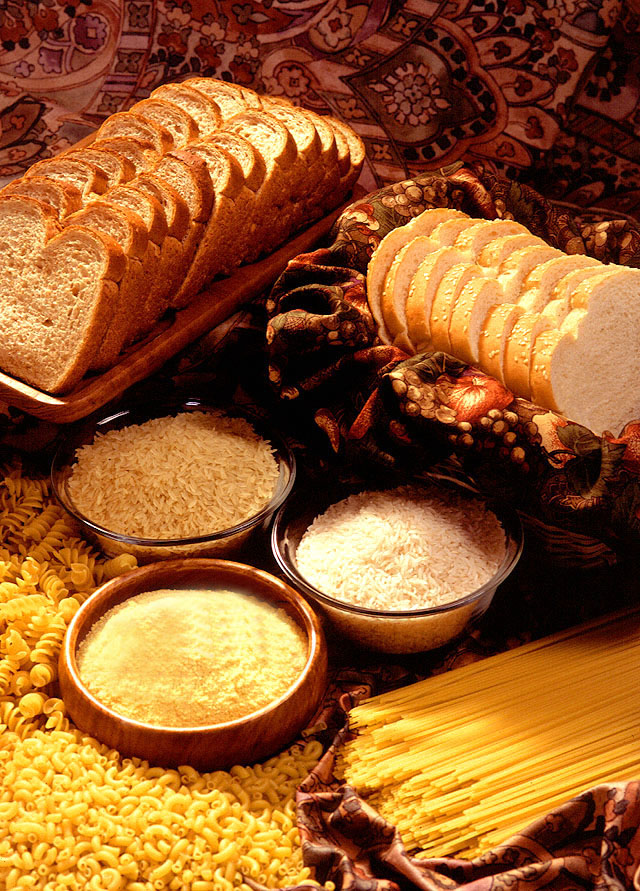


Starchy-foods

Carbohydrates are an important energy source in your diet. All carbohydrates contain four calories per gram. Grains, fruits, and vegetables are good sources of carbohydrates. Carbohydrates include starches, naturally occurring and added sugars, and fiber.

Carbohydrates are produced as a result of photosynthesis in plants and are stored as complex carbohydrates or starches in grains and many vegetables and as simple sugars in other vegetables and fruits. When you eat carbohydrates, your body breaks down the starches and converts the sugars to glucose, or blood sugar, which is used for energy.

The extent to which a food affects blood glucose is called the glycemic index, or GI. Refined carbohydrates, like white rice, pasta, and flour, and sugars typically have a high glycemic index, meaning they cause spikes in blood glucose. Whole grains, like whole wheat, whole oats, and brown rice, have more of a “low and slow” effect on blood glucose. This can help with blood glucose control and may affect appetite. For these reasons, low GI foods like complex carbohydrates from whole grains are called “good carbs,” in contrast to high GI refined grains and sugars, known as “bad carbs.” In reality, the glycemic index can provide a guide for selecting carbohydrates in the diet, but is no guarantee you are making healthy choices.

Carbohydrates also include fiber, the nondigestible portion of plants. Whole grains, fruits, and vegetables are rich sources of fiber while refined grains and sugars contain little, if any, fiber. Fiber comes in two forms, soluble and non-soluble. Non-soluble fiber, also called roughage, promotes good digestive health. Soluble fiber, like that found in oats, may help lower blood cholesterol. Studies show that diets higher in fiber tend to promote weight loss over time.

You should make an effort to reduce your intake of sugars, especially added sugars, in your diet. Even though all sugars have the same number of calories, foods and beverages containing added sugars should be avoided. Look for “corn syrup” and “high fructose corn syrup” on the label to identify added sugars. You may be surprised how much added sugar you consume! Fruits or 100% fruit juices are a healthy choice since they are rich in vitamins and minerals, even though they contain sugar.

Carbohydrates should be the major part of your diet. Current recommendations call for 45–65% of your daily calories to come from carbohydrates, so a person who eats 2000 calories per day should consume about 300 grams of carbohydrate. Sugars should be limited to less than 10% of calories, so the majority should be complex carbohydrates.

You can meet this goal by reducing your intake of sugars, especially added sugars, and refined grains while increasing your consumption of whole grains, fruits, and vegetables that are high in fiber. When comparing food labels, look for foods that contain whole grains (the first ingredient should be something like “whole wheat flour”) and higher levels of fiber. But be aware that some foods, like many breakfast cereals, contain whole grains but are also high in added sugar.

The best advice is to get the majority of your carbohydrates from real food, including vegetables, fruits, whole grains, and legumes, rather than from processed foods.


Nutrition, exercise, and health information can be confusing. 
But it doesn't have to be that way.
What can I help you with?
 drbrianparr@gmail.com | http://twitter.com/drbrianparr


100% natural flavors, 100% fake sugar.


Made from real ginger.

Ginger ale label

With plenty of fake sugar.

The attack of our toxic food environment. And how to fight back!

The term “toxic environment” was popularized by Kelly Brownell, an obesity and weight loss researcher, years ago to refer to conditions that promote the consumption of high-calorie, unhealthy food and encourage being physically inactive. This combination is thought to be a major factor that contributes to obesity and other chronic diseases, so understanding both aspects deserves our attention. Hy Health & Fitness column in the Aiken Standard this week  focuses on our toxic food environment. (Next week I will explore our toxic activity environment)


Fastfood One characteristic of the toxic environment is that food is available almost everywhere. Gas stations have evolved into convenience stares that happen to sell gas, tempting you as you enter to pay. Displays of candy, soda, and other snacks are present at nearly every checkout lane in nearly every store, even stores that have nothing to do with food. You can find vending machines that sell candy and soda most places you go, even hospitals and schools. Many workplaces have a common area where you can typically find a candy dish or a break room with vending machines. Even going to a meeting at work may mean sitting around a table with a plate of donuts in the center. Sure, you don’t have to buy a soda when you pay for gas or take a donut from the plate, but resisting can be difficult. The more you are around food, the more likely you are to eat it, even if you aren’t hungry. Whether your goal is to eat less food or to eat healthier food, the world we live in makes it difficult. It’s not just willpower, either. We are all susceptible to marketing, whether done by a store, restaurant, or a friend with a plate of freshly baked brownies. The power of marketing, combined with the fact that most of us don’t really understand food or nutrition, is difficult to overcome. It gets worse. It turns out that much of the food we are continually exposed to is of poor nutritional quality. Convenience foods such as candy, snacks, and drinks tend to be high in calories, mostly from added sugar and/or fat, and low in nutrients like vitamins, minerals, and fiber. Many restaurant meals, both fast food and casual dining, are similar in this way. Even prepackaged meals that you eat at home tend to be high in calories and low in healthy nutrients. So, not only are we almost always around food, much of that food is unhealthy. It also turns out that these unhealthy, calorie-dense foods come in portions that contain a shocking number of calories that can contribute to weight gain. Think about soda, for example. It used to be that you could buy a soda in a 12 oz. can or a 16 oz. bottle. Now 20 oz. bottles are common and even larger sizes are almost always an option. The same is true for candy and snacks, like chips. As portions increase, so do the calories we consume. To be fair, there isn’t necessarily anything wrong with having so many foods and drinks available to us. We don’t need to eat these foods, right? But, all too often, we do. And when the excess calories from all of this food are combined with a low level of physical activity, a “perfect storm” is created that almost always leads to weight gain. Changing our food environment is difficult, maybe even impossible. But we can change the way we interact with our environment. This includes being more mindful of what, when, and why we are eating. Being aware of internal signals like hunger and external forces like advertising and peer pressure can help us make smarter decisions within our toxic food environment.

Are fat-free and sugar-free foods healthy? Maybe not!

Have you ever felt confused by the health claims made about some foods? If so, you are not alone. Nutrition is isn’t always easy to understand and, unfortunately, misleading information on food labels only makes it worse.

There are a great many foods that seem as though they would be healthy choices for weight loss or good health in general. Surprisingly, some of these low-fat and low-sugar alternatives aren’t as healthy as you might think.

This is because, in many cases, the claims on the label only tell part of the story. This isn’t to say that the information is false, but it does require some interpretation to understand whether these foods are really a healthy choice.

My Health & Fitness column in the Aiken Standard this week includes two examples of label language that seems to indicate a healthier option, but may not necessarily be the case:

1. Fat-free

Cutting back on fat intake is a good way to reduce calories and is typically recommended for weight loss. It is also a major part of traditional recommendations to lower cholesterol and prevent heart disease, although recent research suggests this may not be so important.

In order to meet a demand for lower fat and lower calorie foods, manufacturers have long offered fat-free versions of popular items. Cookies, snack foods, and salad dressings are among the most popular fat-free foods, especially for people who are trying to lose weight.

However, the number of calories in the fat-free foods may be the same as the full-fat versions because manufacturers often add sugar to make these lower fat foods taste as good. This is often the case for cookies, cakes, and other fat-free baked goods.

In the end, these fat-free foods may not really be lower in calories. And common sense tells us that the best way to reduce calories is to eat fewer of these snack foods and dressings in the first place.

 2. Sugar-free

Reducing sugar intake is also a popular way to limit calories in many foods and beverages. Currently, sugar is viewed as a major contributor to obesity and poor health in general, so this also makes some foods appear to be healthier than they really are.

While it is true that sugar-free versions of desserts and snack foods do usually contain fewer calories, the alternative sweeteners used instead raise some concerns. While there is no good evidence that these sweeteners are harmful, they certainly don’t make these foods any healthier.

It is important to note that the concern is with foods that have added sugar, such as packaged or prepared desserts, baked goods, and snacks. Foods with naturally occurring sugars like fruits, fruit juices, milk, and some vegetables are not worth worrying about.

Again, the most reasonable approach to creating a healthy diet is to eat fewer foods with added sugar, not looking for foods that replace added sugar with artificial sweeteners.

The Bottom Line

The problem for most people isn’t that they are eating cookies with too much sugar or salad dressing with too much fat, it’s that they are eating too many cookies and using too much dressing in the first place. Lowering fat or sugar in these foods does little to make people healthier.

The only way to do that would be to limit the intake of these processed foods in favor of more “real” food. Indeed, fruits, vegetables, nuts, and natural oils (like olive oil) are widely thought to be healthful, certainly better than processed and modified alternatives.