Tag Archives: health

Trick or treat? More like getting tricked by treats! Watch out for candy and soda dressed up as healthy food.

Boo! Since Halloween is this week, it’s a good time to think about what makes this holiday so scary. It’s not the ghosts or zombies that come to your door in the evening seeking candy that you should be scared of, though. In fact, you don’t even need to wait until dark to get spooked. You are likely to see the scariest “costumes” on your breakfast table on Halloween morning—candy and soda dressed up as healthy food! Here are three common examples:
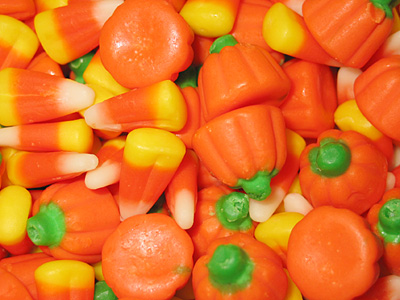
candy corn


Fro-yo dressed as healthy yogurt

Most people would consider yogurt to be a healthy breakfast. And it is, provided you aren’t getting tricked! Low-fat and fat-free flavored yogurt is almost always sweetened with sugar. This is true for the yogurt tubes that kids love and much of the Greek yogurt that is so popular. Sure, it contains protein and beneficial bacteria, but the added sugar makes it equivalent to frozen yogurt or ice cream in terms of calories and sugar. Some of these yogurts even come with toppings, like bits of chocolate, just like fro-yo!

A healthier alternative is plain yogurt with real fruit. Sure, it’s not as sweet, but you will be getting the benefits of eating yogurt without all the added sugar.

Soda dressed as fruit juice

Many “fruit” drinks contain less than 5% juice but plenty of added sugar, so they are essentially soda without bubbles. For example, the orange drinks like Hi-C or Sunny D are a popular substitute for orange juice, but they are far from a nutritional equivalent. The same is true for other drinks, including juice boxes and pouches, which are commonly part of breakfast, lunch, or snacks. Even scarier is the fact that these drinks are much sweeter than real fruit. Children may develop an expectation that oranges or orange juice should taste as sweet as soda and prefer the sugar-sweetened version over the real fruit.

A better choice is to make real fruit and fruit juice, not soda disguised as juice, a part of meals and snacks

Candy bars and cookies dressed as cereal and breakfast bars

Many popular breakfast foods targeted at children include sugar-sweetened cereals, pastries, and bars. Some breakfast bars and cereals that seem healthy are really candy bars in disguise. Some even skip the disguise and actually look like candy or dessert. Pop Tarts and some granola bars are covered in chocolate or frosting, and favorite cereals often contain marshmallows or are shaped like cookies. No surprise that these foods are as high in calories and sugar as cookies or some candy bars. Worse, a child who is used to breakfast or snack foods that taste like candy or cookies may resist real food when it is offered. Now that’s scary!

When you think you are eating something healthy but it’s really not—I call this Candy and Soda for Breakfast. And it’s not just breakfast, it happens at every meal.

While the focus here is on food for kids, it really isn’t much different for adults. Breakfast foods like donuts and pastries are almost always topped with icing and it would be difficult to distinguish many muffins from cupcakes. For many people, coffee isn’t just coffee anymore, but a drink that contains as much sugar and as many calories as a milkshake, sometimes with whipped cream on top. What’s really scary is that this is how many people eat every day.

The good news is that you can make your breakfast healthier without too much effort. While there is much debate about what constitutes a healthy breakfast, there is agreement about what it doesn’t include—lots of added sugar! Look for cereals that are low in added sugars and high in fiber. Include real fruit, fruit juice, and milk (or soy milk) whenever possible. If you have time, eggs are an excellent source of protein and healthy fats. Yogurt is good, too, but watch out for added sugars in flavored yogurt. Whole grain toast or a bagel with peanut butter makes a good alternative to Pop Tarts or breakfast bars.

As a general rule, steer clear of foods that look like dessert. Frosting, marshmallows, chocolate chips, and sprinkles simply aren’t part of a healthy meal!

If you are worried about the big bags of candy that get brought home on Halloween night, keep this in mind.  While eating a lot of candy is never healthy, a typical Halloween candy binge lasts a few days, after which time the candy is gone or the kids are literally sick of eating it.  The long-term effects on your kid’s health (and teeth) can be offset by a good diet, regular activity, and diligent brushing and flossing. The same applies to you, too, if you find yourself digging into the big bowl of candy that is inevitably left over.


drparrsays blog footer

Exercise for stress management and resilience

Many people in our area are still dealing with damage from Hurricane Helene and the overwhelming impact it is having on their lives. Hurricanes and other natural disasters can have a profound negative impact on our physical and mental health. From everyday pressures to the aftermath of natural disasters, finding effective coping mechanisms to deal with stress is crucial.

Exercise is a potent tool for stress relief and resilience, both in daily life and in the wake of catastrophic events. This is the topic of my Health & Fitness column in the Aiken Standard this week.

hurricane copy

Continue reading

Celebrate Walktober by going for a walk outdoors.

Now that cooler fall weather is here, being active outdoors is more enjoyable. October is a great time to get outdoors and go for a walk! That is the spirit of Walktober, an initiative adopted by health organizations, companies, and communities around the globe.

Walking is a great way to be active to help you control your weight, increase your fitness, and improve your health. The most common form of exercise for most people is walking, and for good reason: walking doesn’t require any special equipment (beyond comfortable shoes) or skills, and you can do it almost anywhere.

You can meet basic physical activity recommendations by walking briskly for 30 minutes most days of the week. Even this amount of walking can lead to a lower risk of diabetes, heart disease, and some cancers as well as improved mental health, cognitive function, and greater feelings of well being.

father and son walking in woods

Continue reading

The importance of youth sports for health and fitness.

Since May is National Physical Fitness and Sports Month, it’s a good time to think about the vital role of youth sports in promoting fitness and health. This is the topic of my Health & Fitness column in the Aiken Standard this week.

pexels-kampus-8813564

Continue reading

Don’t get juiced! Whole fruits and vegetables are healthiest.

Nutrition information is often confusing and conflicting, making healthy food choices a challenge. Fortunately, there are some recommendations that are consistent. Among these is eating more fruit and vegetables. Depending on how you consume these foods, you may be missing some of the nutrients that make them so healthy. This is the topic of my Health & Fitness column in the Aiken Standard this week.

Continue reading

Golf for fun, fitness, and health

Now that spring has arrived and the Masters just ended, lots of people in our area are talking about, and playing, golf. Over 25 million Americans played golf last year, making it one of the most popular sports to participate in. In fact, golf is the most popular sport played by adults over the age of 55.

Often perceived as a leisurely activity for retirees or business executives, golf offers a wide range of health benefits that make it an excellent form of physical activity for individuals of all ages. Playing golf can improve cardiovascular health, enhance muscle strength and endurance, increase flexibility, improve balance and coordination, and reduce stress levels. This is the topic of my Health & Fitness column in the Aiken Standard this week.

pexels-jopwell-1325681


According to one study, which measured heart rate in golfers not using an electric cart on a hilly cart, the intensity of a round of golf is consistent with moderate-intensity aerobic exercise. Considering that the average golfer plays for about three hours per round, this accounts for a substantial amount of recommended weekly physical activity. A golfer who walks the course could burn up to 1,000 calories over 18 holes. Of course, the activity level and health benefits are reduced when riding in a motorized cart, but even that level of activity is associated with health benefits.

Playing golf can improve muscle strength and endurance. Golf requires the use of multiple muscle groups, including the core, legs, arms, and shoulders. Swinging a golf club strengthens the muscles of the upper body, while walking uphill and downhill on the golf course strengthens the leg muscles. Carrying the golf bag on the shoulders or pushing a golf cart can further enhance the benefits of the exercise.

Golf can also enhance flexibility, which is crucial for maintaining a healthy range of motion and reducing the risk of injuries. The swinging motion of the golf club requires a full range of motion of the shoulders, back, hips, and wrists. Additionally, the walking and bending involved in playing golf also contribute to improving flexibility. Together, enhanced strength and flexibility  can aid in the prevention of back pain, joint stiffness, and muscle soreness.

Playing golf can also improve balance and coordination, which is essential for performing daily activities and maintaining stability. Golf requires a high level of hand-eye coordination, as well as coordination between the upper and lower body. The ability to maintain balance while swinging the golf club and walking on uneven terrain can help prevent falls and injuries, especially in older adults.

Lastly, playing golf can reduce stress levels and improve mental health. Most golfers play in a group, so golf offers social interaction in addition to activity. Furthermore, outdoor activity is known to have substantial benefits on mood and feelings of well-being, meaning that golf can be good for mental health as well as physical health.

In conclusion, golf is an excellent form of physical activity that offers numerous health benefits. The aerobic, strength, flexibility, balance, and coordination involved in playing golf can enhance overall fitness and reduce the risk of chronic diseases. Furthermore, golf can provide a peaceful and relaxing environment that can reduce stress levels and improve mental health. So, next time you think of golf, remember that it is not just a sport but also a way to stay fit and healthy.


drparrsays blog footer

Celebrate Walktober by going for a walk outdoors.

Now that cooler fall weather is finally here (at least in our area), being active outdoors is more enjoyable. October is a great time to get outdoors and go for a walk! That is the spirit of Walktober, an initiative adopted by health organizations, companies, and communities around the globe.

Walking is a great way to be active to help you control your weight, increase your fitness, and improve your health. The most common form of exercise for most people is walking, and for good reason: walking doesn’t require any special equipment (beyond comfortable shoes) or skills, and you can do it almost anywhere.

You can meet basic physical activity recommendations by walking briskly for 30 minutes most days of the week. Even this amount of walking can lead to a lower risk of diabetes, heart disease, and some cancers as well as improved mental health, cognitive function, and greater feelings of well being.

father and son walking in woods

Continue reading

Healthy Back to School for the Whole Family

This week marks the beginning of another school year for many children in our area. Students, parents, and teachers are starting another year filled with opportunities for children to learn and grow through math and science, reading and writing, and art and music. 

But children should also learn about good nutrition and physical activity, since both good health and good education are essential for lifelong happiness and success. In most schools, though, most kids won’t experience much meaningful education about nutrition, activity, and health. 

To be clear, this is not the fault of teachers or individual school leaders, who are limited in what they can do by local, state, and federal requirements. These topics necessarily become “homework,” and the responsibility of parents and other caregivers. 

Here are a few suggestions from my Health & Fitness column in the Aiken Standard to help make everyone happier and healthier this school year.

Make sure everyone in the family is active every day. Physical activity is critical for good health for everyone. Importantly, it can improve your immune system, helping you fight viruses of all kinds. Beyond that, being active can help you perform better at work and school and make it easier to do things you enjoy in your leisure time. Adults should be active for a minimum of 30 minutes per day. Everything from taking the dog for a walk to a fitness class at the gym counts. For children, the goal is 60 minutes per day through PE class, sports, and play. As a bonus, you can do at least some of the activity together to make activity a family event!

Make healthy eating a family project. There is a lot of confusion about what makes a healthy diet, but there are a few guidelines almost everyone agrees on. First, eat more fruits and vegetables. At a minimum, eat at least five servings each day, but try for twice that. Second, limit added sugars and salt. This is tricky since salt, sugar, and other sweeteners are added to most processed foods. Eating too much sugar is known to contribute to obesity, heart disease, and some cancers, so this is among the smartest nutrition moves you can make. Salt, by itself, isn’t necessarily harmful, but less salt almost always means less processed food and more “real” food. Finally, be mindful of portion sizes. Super-sized servings and second (and third) helpings are the primary reason why people gain weight over time.

Plan to eat at least one meal together each day. Most experts agree that family dinners are important for promoting good communication and healthy eating habits. Given that our days are busy with work, school, and other activities, eating dinner together every night is unrealistic for many families. So, start with planning at least one family dinner at home each week. This is also a good opportunity to teach children about food and cooking, so it is even better if you prepare the meal together.

Make getting enough sleep a priority. Many American adults and children don’t get enough sleep. Many American adults and children don’t get enough sleep. Lack of sleep can affect children’s growth, development, and learning.  It can also have an impact on an adult’s productivity at work. The effect of chronic stress on health is well known and we should recognize a lack of sleep as a form of stress. A good goal for adults is 7–9 hours of sleep each night. School-aged children need 8–12 hours, with younger kids requiring more. As difficult as it may be, earlier bedtimes can benefit everyone in the family. Limiting screen time (TV, computer, tablet) before bed can help improve sleep, too.

Obviously, these ideas are easier read than done, especially for busy families. But moving more, eating better, and getting more sleep—especially if it is done together—can help your family enjoy a happier and healthier year.

That’s not coffee! It’s your morning milkshake.

Breakfast is often thought of as the most important meal of the day, for good reason. Eating a healthy breakfast provides energy to start the day and can be helpful for weight control. In children, a healthy breakfast is essential for proper growth and development and is linked to improved attention and learning in school. Unfortunately, many common breakfast foods are more like candy and soda than a healthy meal to start the day.

This is also true for breakfast drinks, including coffee drinks. Many popular coffee drinks are more similar to a milkshake than to actual coffee! This is the topic of my Health & Fitness column in the Aiken Standard this week.

Take, for example, the grande (16 oz) Mocha Frappuccino blended coffee drink from Starbucks. This drink has 410 calories, 15 grams of fat, 61 grams of sugar, and 5 grams of protein. To put this in perspective, 61 grams of sugar is more than most people should have in an entire day!

You could order this drink with nonfat milk and no whipped cream. That’s a good idea, but it will still have 270 calories, 1 gram of fat, and 59 g sugar. That’s still a lot of sugar!

Let’s compare that to a small (16 oz.) McCafe Mocha Frappé from McDonald’s, which is essentially a coffee milkshake. It has 500 calories, 20 grams of fat, 66 grams of sugar, and 8 grams of protein.

Sure, the calories and sugar in the coffee drink aren’t quite as outrageous as the milkshake, but it’s close. This is especially clear when you compare the coffee drink to actual coffee. A grande (16 oz.) Pike Place Roast from Starbucks has 5 calories and no fat or sugar. If you like cream and sugar in your coffee, that adds 5 grams of sugar, 3 grams of fat, and about 50 calories, still way less than either “coffee” drink.

If you don’t want plain coffee a better choice might be a grande Starbucks Cappuccino, which has 140 calories, 7 g fat, and 10 g sugar. Get one with nonfat milk and you cut out 60 calories from fat. If you are worried about how much sugar you consume and how many calories you drink (you probably should be!), this is a much better coffee drink choice than a milkshake!

This isn’t specific to Starbucks. A medium (16 oz.) iced coffee at Dunkin’ Donuts has 130 calories and 28 grams of sugar. And that doesn’t include a donut.

Does this mean you can’t enjoy a delicious coffee drink? Of course not. But don’t try to fool yourself by calling it coffee. Depending on what you order, it may essentially be a milkshake! I think we can all agree that is not part of a healthy breakfast.

I call this idea that unhealthy food makes its way onto our breakfast table Candy & Soda for Breakfast. Foods like donuts and pastries are often topped with icing and it would be difficult to distinguish many muffins from cupcakes. Many “fruit” drinks contain little to no juice but plenty of added sugar, so they are essentially soda without bubbles.

And it’s not just breakfast, either. Lunch, dinner, and snacks frequently include foods that look like a healthy choice—yogurt, nuts, and granola bars are a few examples—but really are candy and soda in disguise.


Golf for fun, fitness, and health

Now that spring has arrived and the Masters just ended, lots of people in our area are talking about, and playing, golf. Over 25 million Americans played golf last year, making it one of the most popular sports to participate in. In fact, golf is the most popular sport played by adults over the age of 55.

Often perceived as a leisurely activity for retirees or business executives, golf offers a wide range of health benefits that make it an excellent form of physical activity for individuals of all ages. Playing golf can improve cardiovascular health, enhance muscle strength and endurance, increase flexibility, improve balance and coordination, and reduce stress levels. This is the topic of my Health & Fitness column in the Aiken Standard this week.

pexels-jopwell-1325681


According to one study, which measured heart rate in golfers not using an electric cart on a hilly cart, the intensity of a round of golf is consistent with moderate-intensity aerobic exercise. Considering that the average golfer plays for about three hours per round, this accounts for a substantial amount of recommended weekly physical activity. A golfer who walks the course could burn up to 1,000 calories over 18 holes. Of course, the activity level and health benefits are reduced when riding in a motorized cart, but even that level of activity is associated with health benefits.

Playing golf can improve muscle strength and endurance. Golf requires the use of multiple muscle groups, including the core, legs, arms, and shoulders. Swinging a golf club strengthens the muscles of the upper body, while walking uphill and downhill on the golf course strengthens the leg muscles. Carrying the golf bag on the shoulders or pushing a golf cart can further enhance the benefits of the exercise.

Golf can also enhance flexibility, which is crucial for maintaining a healthy range of motion and reducing the risk of injuries. The swinging motion of the golf club requires a full range of motion of the shoulders, back, hips, and wrists. Additionally, the walking and bending involved in playing golf also contribute to improving flexibility. Together, enhanced strength and flexibility  can aid in the prevention of back pain, joint stiffness, and muscle soreness.

Playing golf can also improve balance and coordination, which is essential for performing daily activities and maintaining stability. Golf requires a high level of hand-eye coordination, as well as coordination between the upper and lower body. The ability to maintain balance while swinging the golf club and walking on uneven terrain can help prevent falls and injuries, especially in older adults.

Lastly, playing golf can reduce stress levels and improve mental health. Most golfers play in a group, so golf offers social interaction in addition to activity. Furthermore, outdoor activity is known to have substantial benefits on mood and feelings of well-being, meaning that golf can be good for mental health as well as physical health.

In conclusion, golf is an excellent form of physical activity that offers numerous health benefits. The aerobic, strength, flexibility, balance, and coordination involved in playing golf can enhance overall fitness and reduce the risk of chronic diseases. Furthermore, golf can provide a peaceful and relaxing environment that can reduce stress levels and improve mental health. So, next time you think of golf, remember that it is not just a sport but also a way to stay fit and healthy.


drparrsays blog footer