Tag Archives: fitness

Despite appearances, Santa is probably fit and healthy (thank goodness)!

Since Christmas is only a few days away our attention is naturally focused on one person: Santa Claus. Have you ever wondered how Santa gets in shape for his yearly sleigh ride to deliver gifts to good boys and girls around the globe? Like many elite athletes, Santa does not publicly discuss his training or his fitness. There are certainly no published studies that report his one repetition maximum strength or his maximal oxygen uptake. Given this lack of information, I attempted to make an educated guess about Santa’s training, fitness, and health in my Health & Fitness column in the Aiken Standard, something I do at this time each year.

santa


By all accounts, Santa is overweight. While we don’t know his body mass index, he would probably be considered obese. Furthermore, he appears to have a large waist circumference, indicating a high level of visceral fat. This suggests that Santa is a high risk for type 2 diabetes, high blood pressure, and heart disease. This combination can lead to a heart attack and, possibly, death at a relatively young age.

But Santa has avoided this fate, and seems to be living a healthy life. His secret, no doubt, is regular exercise. There is good evidence that maintaining a high level of physical fitness can reduce the risk of death in people who are obese (and everyone else). Like many athletes, Santa trains in the “offseason” to get ready for his annual Christmas Eve journey.

Santa’s training likely includes endurance, strength, and flexibility exercises. In order to visit every home around the world in one night, Santa moves quickly. This suggests that he has a high maximal aerobic capacity as well as good endurance. This is a result of both high-intensity interval training and long-duration, lower intensity training, similar to what a marathon runner might do. Evidence for his good aerobic fitness is shown by the fact that he flies away from each home with a hearty “ho, ho, ho.” If he were out of shape, he would be too short of breath to speak, much less give such a robust farewell.

Santa must also dedicate training time to improving his strength. His sack of gifts is certainly very heavy and he repeatedly carries it up and down chimneys. In addition to traditional weight lifting, Santa probably also engages in plyometric training, which involves explosive movements that develop muscle power. Santa must also have good flexibility in order to squeeze through narrow spaces and move quickly without pulling a muscle. This is the result of stretching and, likely, other exercises such as yoga.

Santa is also educated about sports nutrition. The cookies and milk you leave for him are more than a reward for delivering gifts at your house. The carbohydrates (sugar) in the cookies help Santa maintain his blood glucose to delay muscle fatigue. Some research suggests that combining carbohydrates with protein is even more effective, so the glass of milk is a good addition. Of course, Santa could have a specialized sports drink, but that doesn’t make for such a good story.

We can learn an important health lesson from Santa. Even though he is overweight, through regular exercise, Santa has reduced his risk of health problems and maintained his fitness at a level that allows him to complete his necessary activities. Like Santa, all of us can benefit from being physically active, whether we are overweight or not. He would likely be healthier and be able to perform his job better if he lost weight, but I’m not about to tell Santa what to do!


Nutrition, exercise, and health information can be confusing. 
But it doesn't have to be that way.
What can I help you with?
 drbrianparr@gmail.com | http://twitter.com/drbrianparr
How to avoid doing too much too soon when you start an exercise program

Regular exercise is one of the most important things you can do for your health. For many people, this means walking on the treadmill for an hour, doing a circuit on the weight machines, or going through the same aerobics class again all in the name of losing weight and getting fit. But it doesn’t have to be this way.

The current trend of high-intensity exercise workouts (CrossFit is one example) that emphasize shorter bouts of vigorous aerobic and strength exercise can hardly be described as boring and can produce even greater results than traditional exercise regimens. Some of these programs claim that you can “transform your body” or lose 10–20 pounds by participating in a three-week fitness challenge. Or maybe you are interested in trying high-intensity interval training (HIIT) to get the benefits of exercise in as little as 10 minutes per session.

It’s not as easy as it sounds, though. In order to get the fitness and weight loss benefits, the exercise must be done at a very high intensity, which may not be right for everyone. This is the topic of my Health & Fitness column in the Aiken Standard this week.

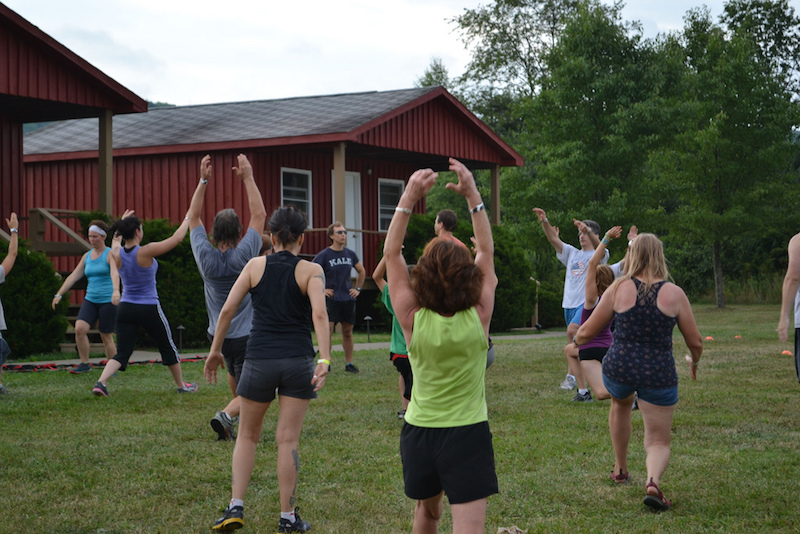
Boot camp workout


To be sure, these types of fitness programs can be safe and effective for burning calories and improving fitness. But because they are intense means that you need to be fit to even get started, so they may not be a good choice for people who are not already in shape or who are new to exercise. There is a greater risk of injury and even heart attacks in people who are unfit and start exercising at a very high intensity. At the very least, muscle soreness is likely and may impact your ability—and motivation—to repeat that exercise the next day.

Ideally, an exercise program would begin with a health and fitness assessment by a certified exercise professional to determine potential health risks. These results would be used to create an exercise prescription. For participants who have risk factors like high blood pressure or diabetes, those variables would be monitored to make sure the exercise sessions were safe and effective.

In the real world, many people who have these conditions simply show up at a gym to begin an exercise program, often with little or no review of health history or assessment of fitness. In most cases this is safe, but without some form of monitoring participants who have high blood pressure or diabetes may have problems. This is especially concerning since many people don’t know they have these conditions, which is why seeing a physician is often recommended before undergoing fitness testing or starting an exercise program, especially if you are over 40 years of age or have other health problems.

A good personal trainer or exercise leader should ask about your health history and perform some type of assessment to gauge your current fitness and use this information to start you at an appropriate level. Even the most intense exercise programs, classes, or videos are scalable to all fitness levels, but you need to know where you are starting from. Additionally, a qualified personal trainer or group exercise leader can help you learn proper techniques to reduce the risk of injury and improve your progress.

Once you begin, resist the temptation to do too much, too soon by going at your own pace. This is especially important in group exercise programs where you may feel pressure to keep up with other, fitter participants. Listen to your body, too. Feeling some level of fatigue and soreness is normal, but severe shortness of breath, chest discomfort, or muscle and joint pain, especially if it comes on suddenly, is a good reason to slow down or stop. Make sure you communicate how you are doing to trainer or exercise leader, too.

Maybe you will find that the intensity and variety of these exercise programs keeps you motivated to meet your goals.  But don’t forget that even if you aren’t pushing yourself, any exercise you do will have significant health and fitness benefits.


Nutrition, exercise, and health information can be confusing. 
But it doesn't have to be that way.
What can I help you with?
 drbrianparr@gmail.com | http://twitter.com/drbrianparr

What is your second chance New Year’s Resolution?

Last week I was a guest on the RadioMD show, Train Your Body, to talk about the idea of using this transition from summer into fall as a second chance to revisit stalled or failed New Year’s Resolutions. In the discussion, Melanie Cole (the host) asked listeners to share their Second Chance New Year’s Resolutions.

I figured I would play along, too. Here’s mine…

Version 2


I registered to complete a fitness challenge at our campus Wellness Center called PacerFit. It is a 12-week program with weekly workouts that are scored based on performance (time to complete, weight lifted, reps completed, etc.). Most of the participants are students–many of them mine–so the pressure is on!

This is part of a broader goal of mine to shift my focus from exercise for health to exercise for fitness. For the past several years, my activity and exercise habits have been more geared to meeting health goals. But this seems like a good time to start doing more real training for the purpose of improving fitness. And the PacerFit challenge seems like a good way to start.

Good luck with your second chance New Year’s resolution!


Nutrition, exercise, and health information can be confusing. 
But it doesn't have to be that way.
What can I help you with?
 drbrianparr@gmail.com | http://twitter.com/drbrianparr
A second chance for your New Year’s resolutions

How are you doing on your New Year’s resolutions? Hopefully, you are still on track to meet your goals. If not, you are in good company. Research suggests that by this time well over half of people who made New Year’s resolutions have either lost momentum or given up altogether and that only 8% will achieve their goal.

There are a host of reasons for this. Some of the most common resolutions—quitting smoking, losing weight, and getting in shape—are also some of the most difficult behaviors to change because they require making significant lifestyle modifications. To make things worse, many people set unrealistic goals or try to take on too much at once.

Many people who fail to keep their New Year’s resolutions this year will recycle them next year and try again. In fact, most people who manage to successfully quit smoking or lose weight have tried many times in the past. Sometimes experience, even a bad experience, is the best way to learn what does and doesn’t work.

But there is no need to wait until January 1 to try again. It turns out that now is a perfect time to restart your stalled New Year’s resolution or finally get around to doing what you planned months ago. Labor Day marks the end of summer and the beginning of a new school year, so it is a natural time to set goals and make changes. This is the topic of my Health & Fitness column in the Aiken Standard this week.

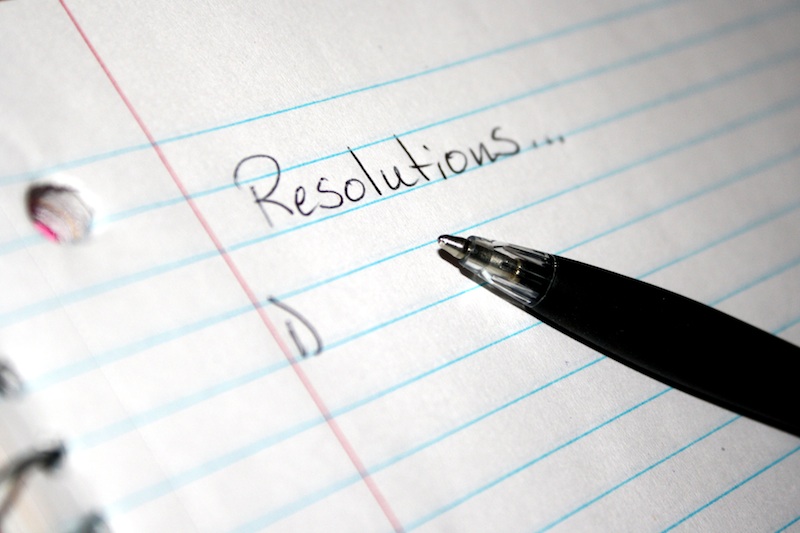
Resolution list


Since setting a date to begin a behavior change is critical step in the process, why not give yourself a second chance on your New Year’s resolutions today?

Here is some advice to help restart (or start!) your New Year’s resolutions successfully.

Be realistic. Many people fail to keep their resolutions simply because they don’t set realistic goals or aren’t honest with themselves about what it will take to meet those goals. For example, running a marathon is an ambitious goal for almost everyone, especially someone who doesn’t exercise at all. A resolution to work up to jogging five days per week, with a goal of completing a 5k run is more realistic and achievable.

Focus on learning. Making most health behavior changes involves learning as much as doing. Something as simple as eating healthier meals requires learning about the nutrients that make some foods better than others, learning to read food labels to select healthy foods, and learning how to cook and prepare healthy meals. If your resolution is to learn about healthy meals, you will be able to achieve that goal and be well on your way to eating a healthier diet.

Manage your time. Most health improvement projects require taking time to learn about, implement, and maintain those healthy behaviors. If you resolve to manage your time to include exercise or meal preparation in your daily schedule you will be much more likely to meet your goals. Trying to add these new activities as “extras” to your already busy day will inevitably lead to them getting squeezed out.

Plan ahead. Most people already know that changing health behaviors can be challenging, even under the best circumstances. It’s no wonder that holidays, travel, and other life events can complicate or even derail an otherwise successful diet or exercise program. Make it your resolution to think about what you can do before, during, and after these (and other) disruptions occur to keep yourself on track.

Hopefully these steps will help you keep your resolutions, achieve your goals, and make this a happy, healthy year. As a bonus, you can take January 1 off!


Nutrition, exercise, and health information can be confusing. 
But it doesn't have to be that way.
What can I help you with?
 drbrianparr@gmail.com | http://twitter.com/drbrianparr

It’s not your fault, but it is your responsibility.

Eating well and being physically active are two of the most important things you can do to promote good health. But knowing you should do these things does not always mean it is easy to actually do them.

Despite the simplicity of the message “eat healthy and exercise,” many people struggle with knowing exactly what to do and how to do it. This is largely due to the complicated and ever-changing nature of nutrition and exercise information and the fact that most people receive no education in these areas.

You may even feel like the information you read and hear is designed to confuse you. That may be true, considering that much of the nutrition information we get comes from food companies that are trying to convince us to buy their products. Even scientific research can yield conflicting results, challenging even the most knowledgeable professionals, myself included, to make sense of it. And even if you do decide to make eating or activity changes, the “best” diet or exercise program claims may make you wonder if you made the right choice.

Given this, it’s not your fault if you struggle to understand basic health information and recommendations. But it is your responsibility to learn as much as you can to make the best choices for you and your family.

This is the topic of my Health & Fitness column in the Aiken Standard this week

Man shopping in supermarket

This won’t be easy, of course. The popular media, as well as social media, promote confusion and false promises about nutrition by making claims that some foods are “toxic” while others are “superfoods.” The old good carb, bad carb or good fat, bad fat arguments have been given a new life as eat this, not that lists. The problem is that many of these claims are not supported by science. The research that is done often yields complicated or conflicting results that aren’t explained in a way that actually helps people make good decisions.

The same is true for exercise. No one doubts that exercise and physical activity are essential for good health, but there are conflicting claims about specific benefits of exercise and what the best form of exercise really is. This can lead to the idea that if you aren’t doing the right exercise, it doesn’t count. Nothing could be further from the truth! While there are reasons why some athletes might want specific types of training, the majority of people can benefit from simply spending less time sitting and going for a walk each day.

So, what can you do? Given the confusing and changing nutrition recommendations it’s best to focus on what hasn’t changed. That is, to focus on eating real food rather than processed, prepackaged foods. Planning meals and snacks to include fruits, vegetables, whole grains, nuts, legumes, lean meat, eggs, and dairy should give you plenty of healthy fats, carbohydrates, and proteins.

Instead of worrying about the “perfect” exercise, make it your goal to do something active for at least 30 minutes every day.  Beyond that, dedicating time for aerobic, strength, and flexibility exercise will bring greater benefits. Remember, the best exercise for you is the one you will do! Seek advice from people you trust and credible professionals, but remember that if it sounds too good to be true, it probably is.

Your responsibility isn’t to understand all of the nutrition, exercise, and health information you hear. It’s to make an effort to make a few simple, healthy choices despite that confusing information: Sit less, move more, and eat real food.


Nutrition, exercise, and health information can be confusing. 
But it doesn't have to be that way.
What can I help you with?
 drbrianparr@gmail.com | http://twitter.com/drbrianparr

How much protein do you need?

Recently I wrote about carbohydrates, fats, and protein, the major sources of energy in our diet. Getting sufficient amounts of these nutrients is essential to promote good health and exercise performance. Given the current trend of low-carbohydrate diets and an emphasis on protein for everything from fitness to weight loss, many people have wondered about how much protein they should eat. This is the topic of my Health & Fitness column in the Aiken Standard this week.


Good food display

As you might expect, protein needs vary from person to person for a variety of reasons. For example, an athlete who is working out to add muscle or training for a triathlon needs more protein than a person who does less strenuous exercise. Despite these individualized protein needs, there are some broad recommendations that apply to most people.

There are two ways to estimate the amount of protein a person needs, both of which you may be familiar with. One is to recommend a certain amount of protein, in grams, based on body weight. The RDA, the amount that meets the needs of almost all healthy adults, is 0.8 grams of protein per kilogram of body weight (g/kg) per day. You can calculate your protein requirement by multiplying your body weight by 0.4, so a 200 lb. person would require about 80 g protein per day. (You can also use an online calculator, like this one)

Meeting this protein requirement isn’t very difficult. A four-ounce serving of meat contains about 30 grams of protein, an egg has 6 grams, and a cup of milk has 8 grams. Plants contain protein, too—whole grain bread and cereal has about 4 grams per serving, and one cup of cooked beans contains about 15 g. Getting enough protein is important, but there is little benefit to eating more protein than you need and excessive intake could cause health problems.

In general, most adults get enough protein but children, women who are pregnant, and older adults should make an extra effort to eat protein-rich foods. Vegetarians and vegans, especially athletes, need to carefully plan meals to get enough protein and the right balance of amino acids to meet health and performance requirements.

The other way to estimate protein needs is based on the number of calories you eat. According to the Institute of Medicine, the acceptable range for protein is between 10–35% of total calories. If you eat 2,000 calories each day, this would equal 50 to 175 grams of protein each day. For someone who weighs 200 lbs, this would be between 0.5 and 2.0 grams of protein per kilogram. Notice that the RDA fits within this range, which accounts for the protein requirements of nearly everyone, including people who have very high protein needs.

While the RDA is sufficient for most healthy people, even those who exercise regularly, it may be too low for athletes engaged in strenuous endurance or strength training. The protein requirement for endurance athletes, including runners, cyclists, and triathletes, is 1.2–1.4 g/kg per day. Athletes who are training to add muscle mass and strength—think football players in the offseason—need even more protein: 1.2–1.7 g/kg per day. This should meet both energy needs to fuel training sessions and provide adequate protein for muscle repair and growth.

For most of us, though, the focus should not be on eating more protein but to get our protein from healthy sources. For starters, several servings of protein-rich lean meat, eggs, and dairy as well as whole grains, legumes, and vegetables should meet protein needs. The emphasis should be on real food rather than processed foods with added protein. After all, no amount of granola bars with added protein will make you healthier!


Nutrition, exercise, and health information can be confusing. 
But it doesn't have to be that way.
What can I help you with?
 drbrianparr@gmail.com | http://twitter.com/drbrianparr

Dive in to aquatic exercise.

There is nothing that feels better on a hot summer day than going for a swim. But beyond being a fun way to cool down, swimming is a great way to get in shape, build muscle, and to help you lose (and maintain) weight. Lap swimming is about as aerobically demanding and burns as many calories as land-based exercise such as walking or jogging. (Obviously, it depends on the stroke you use and how fast you swim). Swimming is also an excellent exercise for injury rehabilitation or for people with conditions like arthritis.

The health and fitness benefits of swimming and aquatic exercise is the topic of my Health & Fitness column in the Aiken Standard this week.

Aqua_Aerobics


The fitness benefits of swimming are well established. Since swimming is a whole-body exercise it uses all of your major muscle groups, building strength, endurance, and aerobic fitness. Highly trained swimmers have VO2max values, considered the best measure of aerobic fitness, that are similar to runners and cyclists. If you have doubts about the fitness benefits of swimming, think back to the last Olympics and how muscular and lean the swimmers looked.

Depending on the stroke and speed, swimming ranges between 5 to 10 METs. (METs are units used to measure the intensity of activity; one MET is equivalent to sitting at rest) For example, doing the backstroke at a moderate speed is about 5 METs while swimming laps freestyle with vigorous effort is about 10 METs.

This range is similar to walking at 4 mph up to jogging at a 9 minute per mile pace. What if you are just spending time in the pool or lake rather than swimming laps? Swimming leisurely is 6 METs, still a decent workout.

Swimming is a great way to burn calories, too. Even at a moderate pace, swimming laps for 30 minutes can burn over 200 calories. The exact energy expenditure depends on the stroke (butterfly is highest, backstroke is lowest) and the speed, but for most people swimming will burn as many calories as spending the same amount of time exercising on land.

There are two major reasons for this. First, water is more dense than air, so you need to expend more energy to move your body through the water. Second, swimming is a whole-body exercise which requires more muscle activity compared to walking or jogging which mostly involve the legs.

You may be surprised to learn that novice swimmers expend more energy per lap than elite swimmers. For example, one study showed that competitive swimmers expend only 280 calories to swim a mile, while less experienced swimmers burn about 440 calories to cover the same distance. The reason for this is that experienced swimmers are more efficient, so they expend less energy.

Aquatic exercise is popular for both therapeutic and fitness purposes, especially for people who don’t tolerate exercise on land well. When you are submerged up to your waist, 50% of your weight is supported; when you are up to your chest, about 75% is supported. This reduces the impact of exercise in the water, perfect for people who have arthritis, osteoporosis, severe obesity, or who are recovering from injuries.

Exercise in the water doesn’t have to mean swimming laps. Water aerobics, aqua walking or jogging, and resistance training using foam “weights” or webbed gloves offer safe ways to increase strength and endurance for almost everyone. Most fitness facilities that have a pool offer group aquatic exercise classes and you can find instructions online for exercises that you can do in your own pool.

If you are interested in using your pool for exercise, you can find information about aquatic exercise in general here and links to suggested exercises here. You can learn more about aquatic exercise specifically for arthritis and fibromyalgia, too.

The hot summer weather makes swimming and other water exercise appealing. But even if you don’t use the time for exercise, spending time playing in the pool or lake can still burn as many calories as going for a walk and is a great way to have fun and cool down!


Nutrition, exercise, and health information can be confusing. 
But it doesn't have to be that way.
What can I help you with?
 drbrianparr@gmail.com | http://twitter.com/drbrianparr
Affordable care acts

The Affordable Care Act is in the news again, this time because the U.S. Supreme Court recently ruled on the legality of subsidies offered to help people afford health insurance. Health care has long been an important and contentious topic in both political and social circles. Given the importance that accessing quality health care has for everyone, it is unfortunate that promoting good health has turned into a political debate.

In addition to expanding access to health care, the Affordable Care Act should also make it easier for people to get preventive care. This is important since preventable chronic diseases including diabetes and heart disease, are among the leading causes of disability and death as well as contributing to high health care costs. It turns out that adopting some simple lifestyle modifications can go a long way toward making you and your family healthier, as well as saving money.

This is the topic of my Health & Fitness column in the Aiken Standard this week.

2013-10-24 15.59.46


Here are a few affordable care acts you can implement today:

1. Move more

Significant health benefits, including weight loss and improved fitness, can be achieved with as little as 30 minutes of activity per day, but more is better. The activity doesn’t have to be “exercise.” It can include walking the dog, yard work, or house work. Research shows that sitting too much is just as unhealthy as not exercising. Spending less time sitting at work, home, or in the car is another easy way to improve health. And getting up and moving for even a few minutes is better than staying seated for long periods of time. Every little bit of activity really does count.

2. Eat smart

Making dietary changes can be difficult, but a few simple changes can lead to big benefits. Eating more real food including fruits, vegetables, whole grains, and lean meats and less added sugar is a good place to start. Fresh fruits, vegetables, and whole grain bread, pasta, and cereals are rich in vitamins, minerals, and fiber and most are low in calories. Eating less added sugar in sweets and processed foods can help you cut down on calories and lead you toward healthier food choices. Controlling portion sizes plays as big of a role in weight gain and loss as the types of food you eat, so pay attention to how much you eat, especially when you eat out. Chances are, it is more than you think!

3. Chill out.

Reducing and managing stress is essential for good health. Uncontrolled stress can lead to high blood pressure, poor immune function, and weight gain. Daily exercise will help, as will using stress management techniques like progressive relaxation. When you can, avoiding stressful situations is wise. Taking time to do something you enjoy each day is a good idea, too. Getting enough sleep (most adults require 7–9 hours) is also important for good physical and mental health.

4. Don’t smoke

Cigarette smoking more than doubles your risk of heart disease and stroke, and is by far the leading cause of lung cancer and other lung diseases. If you smoke, quitting now is one of the most important things you can do to improve your health—and the health of those around you. Nicotine replacement therapy and prescription medications can help, but quitting really does require serious dedication. It’s well worth the effort and the benefits of quitting can be realized almost immediately.

Regular activity, quitting smoking, managing stress, and the types of dietary changes described here can have a profound effect on preventing and treating many health problems. Best of all, these affordable care acts are basically free to implement and can lead to both health and financial savings now and in the future.


Nutrition, exercise, and health information can be confusing. 
But it doesn't have to be that way.
What can I help you with?
 drbrianparr@gmail.com | http://twitter.com/drbrianparr

Vocabulary lesson: Exercise, activity, and fitness

When I write about health-related issues I routinely use terms like exercise, activity, and fitness. Some people have asked why I use these different words since they all have a similar meaning. That is an excellent question, since these terms are related they have different applications for health and wellness.

Physical activity (PA) is defined as any movement produced by muscles that expends energy. Physical activity can be classified as occupational, what you do at work, and leisure-time, what you do in your free time. Occupational PA can vary greatly depending on the job, but it is low for most of us who spend much of our work day sitting. Leisure-time PA is all activity outside of work. This is of great interest to researchers since it reflects how we chose to spend our discretionary time. Physical activity can be measured by questionnaires or using devices such as pedometers, which count the steps you take, or accelerometers, which measure how much you move.

Exercise is a type of physical activity that involves planned, structured, and repetitive movement to improve or maintain physical fitness. Physical fitness, then, is a set of attributes that relate to the ability to perform physical activity and exercise. The components of physical fitness include endurance, strength, and flexibility. Basically, participation in physical activity and exercise improves your fitness and the greater your fitness, the better able you are to participate in physical activity. This is true for completing occupational tasks as well as traditional exercise, such as jogging or lifting weights.

The good news is that both physical activity and exercise have health and fitness benefits. Physical activity can vary in intensity, from light (slow walking), moderate (brisk walking), or vigorous (exercise like running). The 2008 U.S. Physical Activity Guidelines recommend that, at a minimum, all adults participate in moderate-intensity physical activity for 2 hours and 30 minutes per week or vigorous activity for 1 hour and 15 minutes per week along with strengthening exercises at least 2 days per week. You can meet this recommendation by going for a brisk walk for 30 minutes on 5 days per week or running for 25 minutes on 2 days per week or some combination of the two. Additional benefits come from doing more, either higher intensity or longer duration activity.

Vigorous exercise is the best way to improve fitness while moderate-intensity activity is strongly linked to health benefits. Fitness benefits result from adaptations in the heart and muscles, which get stronger and become better able to resist fatigue. These changes also lead to health benefits including lower blood pressure, cholesterol, and glucose as well as helping with weight loss and weight control.

Recent research suggests that health and fitness benefits also result from light-intensity or intermittent activity, especially if it replaces sitting. At home or at work, the more time you spend sitting, the poorer your health, even if you exercise every day. A recent study shows that getting off the couch and stepping in place during TV commercials results in nearly 25 minutes of activity per hour and burns about 150 calories, compared to 80 calories just sitting the entire time. You won’t get in great shape doing this, but it will increase your overall activity.

With this is mind, a good recommendation is to reduce sitting time in favor of light activity—stand while you read the paper or walk around while you talk on the phone—and participate in moderate or vigorous activity each day by going for a brisk walk or doing other exercises, including strength training.

Start making deposits in your fitness bank

Saving money for emergencies is good advice and important for maintaining quality of life in the event of a lost job or other financial crisis. While this may seem like common sense, many people have been caught without enough savings when they needed it and found it difficult to meet basic needs.

This principle can also be applied to fitness. When you are healthy, you can maintain a high level of fitness. This makes your day-to-day activities easier and serves as a reserve or “bank” to draw on when you need it. Your good fitness now can get you through a health crisis just like saving money can help you through a financial crisis. This health crisis could come in the form of an injury or illness that keeps you from being active for several days or a hospitalization that keeps you in bed for a week, a month, or longer. This is the topic of my Health & Fitness column in the Aiken Standard this week.

The problem with periods of inactivity, like bed rest or hospitalization, is that there are severe physiological effects that occur within days and get worse over time. You may have noticed this as weakness and fatigue after spending a few days in bed with a cold. Muscle strength declines at a rate of over 1% per day of bed rest, and can be 50% lower following as little as three weeks. That 50% reduction in strength could limit a person who was already deconditioned to a point where he or she would have difficulty completing the most basic activities of daily living.

A person who was fit and strong when they went into the hospital would certainly be better off when released. And older adults fare worse than younger individuals. According to one study, the decline in strength seen in older men in just 10 days was equivalent to the change measured after 28 days in men 30 years younger.

It’s not just the muscles that are affected, the bones get weaker, too. In fact, 12 weeks of bed rest can reduce bone density by as much as 50%, exposing patients to a greater risk of fracture. This is due to the reduced stress on the bone from not standing and walking as well as the lack of muscle activity. Two of the most effective ways to build bone density are putting stress on bones through weight-bearing activity and the action of the muscles pulling on the bones from resistance training. Because bed rest eliminates both of these stresses, bone density declines rapidly.

One unique study had healthy young men complete three weeks of bed rest back in the 1960s. They all experienced a rapid decline (over 20%) in their aerobic fitness, but recovered quickly after the experiment ended. These individuals also had their fitness tested again 30 years later. It turns out that the decline in fitness in those young men in three weeks of bed rest was greater than the decline in fitness that occurred over 30 years of aging!

The good news is that most patients are encouraged to move around as much as possible. Some receive in-patient physical therapy or rehab, even after major surgery, to help lessen the effects of prolonged bed rest. It is important to take advantage of these opportunities if you, or a loved one, are hospitalized.

There are many reasons to exercise and be fit, but the most important reason may be to develop a fitness “bank” you can draw on if you become injured or hospitalized. Since the effects of bed rest are seen in people of all ages, everyone can benefit from a good fitness foundation. Just like putting money in the bank, doing a little now can have great benefits later when you need it most.

Finally, some smart advice: First, achieve and maintain a high level of fitness now, just as you would save money for a rainy day. You never know when you will need it. Second, if you are hospitalized, take advantage of opportunities to move, whether that is limited to moving from bed to a chair or if it includes short walks or even inpatient exercise–if the medical staff approves, of course. While many well-meaning friends and family members will tell you to rest and not move, true bed rest is almost the worse thing you can do.

For example, inpatient cardiac rehabilitation targets patients who are recovering from heart attacks and even open heart surgery. The goal is to get these patients up and moving as quickly as possible to prevent long-term consequences of bed rest.


Nutrition, exercise, and health information can be confusing. 
But it doesn't have to be that way.
What can I help you with?
 drbrianparr@gmail.com | http://twitter.com/drbrianparr