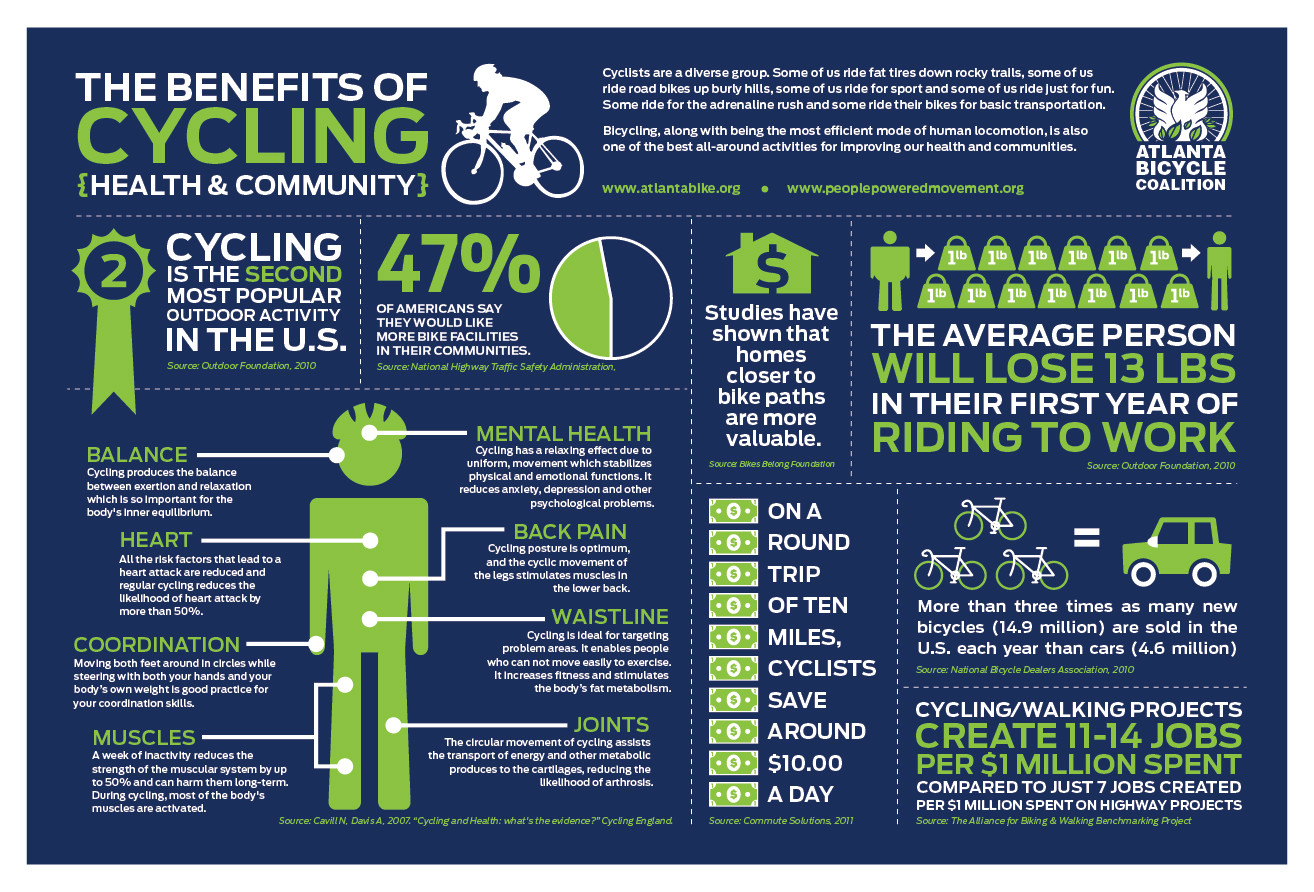
My bike and I are making the world a better place.

I started biking to work again this week. It turns out that, in addition to being good for my own health, this is good for the environment and the economy.

You’re welcome.

You can learn more about how making healthy choices is also good for the environment here.


That’s not fruit! It’s candy in disguise!

It may look like fruit. It may even contain real fruit juice. But many drinks and snacks–especially for kids– that look like fruit are really candy in disguise. Gummy fruit snacks and fruit-flavored drinks like Hi-C are two of the examples I use in my Health and Fitness column in the Aiken Standard this week.

Health by the numbers

There are many numbers you know (or should know) that are important to your health. Your blood pressure, total cholesterol, and body weight are a few.

But did you know that the numbers 0, 5, 10, 25, and 30 are just as important for good health? Any one of these numbers can reduce your risk of chronic disease and death. Combining all of them greatly improves your health and longevity.

You can learn more about these numbers, and how you can use them to improve your health, in my Health & Fitness column in the Aiken Standard this week.

Then, you can learn more about what these numbers represent at the links below:

If you smoke, you can learn more about the Health effects of smoking and get Information about smoking cessation.

Information about the importance of including fruits and vegetables in your diet as well as General nutrition guidelines for good health.

Check out the current Physical activity guidelines and a host of tools to help you become more active.

You can determine your body mass index (BMI) using this BMI calculator and get more information about losing weight and maintaining a healthy body weight.

Help! My salad has turned into a cheeseburger!

1 salad at your favorite fast-food or casual dining restaurant (lots of vegetables, healthy)

+

Chicken (or bacon or other meat), cheese, nuts, and other toppings (which can have lots of calories and fat)

The calorie and fat equivalent of a cheeseburger!

——-

You can learn more about the calories and fat in restaurant salads–and how to keep your salad from turning into a cheeseburger–in my Health & Fitness column in the Aiken Standard this week.

In that column I cite McDonald’s nutrition information comparing salads with other menu items. Since nearly every restaurant chain has nutrition information online, you can learn more about making healthy choices at your favorite restaurant. You may be surprised by what you learn.

Preseason practice safety

My Health & Fitness column in the Aiken Standard this week is about preseason sports safety. The major issues I raised involve risks associated with doing too much vigorous training  in a hot, humid environment and the potential for concussion, especially in contact sports like football.

This topic was covered in a recent NPR  interview  with Dr. Douglas Casa of the Korey Stringer Institute at the University of Connecticut in Storrs, Connecticut. You can also watch a video in which Dr. Casa discusses hydration and preventing heat illness in young athletes.

The topic of concussion is addressed in this video of a lecture given by Dr. Kevin Guskiewicz, Professor of Exercise and Sport Science at UNC-Chapel Hill and MacArthur Foundation “Genius” award winner.

You can learn more about sports injury prevention and the role of certified athletic trainers in keeping young athletes safe from the National Athletic Trainers Association (NATA). All athletic trainers working in our area at certified by the NATA.

More about Olympic sports science

I was catching up on some reading and came across this article in Time magazine about the training, fitness, and performance of Olympic athletes. It is an interesting peek into the world of sports science and shows that, no matter how important good genes are, rigorous training is the key to success.

How to win a gold medal at the Olympics

The famous (among exercise physiologists) exercise physiologist Per Olaf Åstrand once answered the question, “How does someone become and Olympic champion” this way: Pick the right parents! Of course, talent and skill developed through years of dedicated training are essential, but having the right genetics is a prerequisite for athletic performance at the elite level. My Health & Fitness column in the Aiken Standard this week explores the adaptations to training and the importance of genetics in making an Olympic-level athlete.

What you need to know about sports doping

With the Olympics starting this week—and the new accusations against cyclist Lance Armstrong—the use of performance-enhancing drugs among athletes is something we are sure to hear more about. In my Health and Fitness column in the Aiken Standard this week I write about sports doping, including examples of how and why athletes may engage in this practice.

You can learn more about sports doping from the United States Anti-Doping Agency (USADA), the organization responsible for research, education, testing, and sanctioning US Olympic athletes. The World Anti-Doping Agency (WADA) is the international body responsible for preventing doping in worldwide competition.

Both sites provide an excellent overview of the substances used to improve performance, how they work, and the potential negative effects of use. These are great resources for athletes and sports fans who are interested in learning more about sports supplements and performance.

More about low-carbohydrate diets

My Health & Fitness column in the Aiken Standard today is a follow-up to my column from last week about low-carbohydrate diets. These diets are both popular and effective for weight loss, but are criticized by many because they restrict many foods that are known to be an important part of a healthy diet—fruits, vegetables, and whole grains. It is possible that these diets are effect not because they restrict all carbohydrates, but because they limit the intake of “unhealthy” carbohydrates such as sugars and refined grains. The downside is that carbohydrate sources like whole grains are also restricted.

The best diet, then, might be one that emphasizes the right carbohydrates in the diet by limiting sugars and refined grains. Considering that these nutrients are a major part of the typical American diet, this would also have the effect of reducing calorie intake, leading to weight loss.

Two important goals of any weight loss diet should be to 1) reduce calories to promote weight loss and 2) promote the consumption of healthy foods. These two goals are essential for long-term weight management and reducing the risk of chronic disease. One excellent diet that meets both of these goals is the DASH diet. It is so effective that people who follow the DASH diet tend to lose weight even when they aren’t really trying! You can learn more about the DASH diet here.

Are low-carbohydrate diets the best for losing weight and keeping it off?

For many people, low-carbohydrate, high-protein diets like the Atkins diet are the best choice for losing weight. But for years, most weight loss experts have cautioned that these diets increase the risk for heart disease and are unlikely to work for long-term weight management. In recent years a number of weight loss experts have stated that low-carbohydrate diets really are the most effective diets to promote weight loss, citing research published in medical journals to support their case. This is the topic of my Health & Fitness column in the Aiken Standard this week.

I cite two studies in my column. The first examined the effect of several popular diets, including the Atkins diet, on weight loss over a one year period of time.  The results showed that subjects following the low-carbohydrate diet lost the greatest amount of weight during the one year study.  The second, more recent study, looked at the effect of three diets of varying carbohydrate, fat, and protein content on metabolic rate, a predictor of weight regain. The thinking is that if metabolic rate is maintained closer to normal, weight gain is less likely to occur. (Metabolic rate typically declines following weight loss, which may be a factor in regaining weight following a diet).

Does this mean that low-carbohydrate diets have won the diet war? I think it is too soon to tell. In my column I discuss several factors that are important to consider when evaluating these studies. Further research about the long-term effects of these diets on body weight, heart disease risk, and other health outcomes in free-living subjects is needed before a winner can be declared. In particular, the long-term health risks of following a low-carbohydrate diet cannot be ignored, as this recent study shows.

One thing is for sure: Based on recent research, low-carbohydrate diets should not be dismissed as a fad, and further research should help us understand the safety and efficacy of these popular diets.