DON’T BE AN APRIL FOOL WHEN IT COMES TO WEIGHT LOSS

Diets don’t work!

Exercise can actually make you gain weight!

You can take supplements that will melt fat away while you sleep!

Claims like these should make you wonder if someone is trying to fool you. Since April Fools’ Day was last week, my Health & Fitness column in the Aiken Standard is an attempt to uncover the truth about these common weight loss myths.

Diet pills


Diets don’t work
Considering that most people who lose weight end up gaining it back, this belief is understandable. The fact is that diets do work—that is how people lost weight in the first place! The problem is that many diets simply aren’t sustainable and don’t teach healthy eating habits necessary to keep the weight off. The result is that after the diet ends, a return to old eating patterns leads to gaining the weight back. The solution, of course, is to find a diet that you can stick with even after you have lost weight, one that teaches you how to make healthy choices and adapt your lifestyle.

Exercise doesn’t lead to weight loss
The traditional advice for losing weight is to eat less and exercise more. But some research suggests that exercise itself doesn’t lead to significant weight loss. In fact, exercise alone results in lower weight loss compared to diet only or diet plus exercise. While this is true, concluding that exercise isn’t important is a mistake.

First, even if exercise only leads to a small amount of weight loss (about a half pound per week in my experience) it does add up over time and can help someone achieve their weight loss goal more quickly. Second, research involving individuals who have succeeded at long-term weight loss in the National Weight Control Registry shows that exercise is important. It is noteworthy that 94% of these “successful losers” increased their physical activity in order to lose weight and 90% said that they maintain their weight by exercising an average of 60 minutes every day.

You can boost your metabolism and burn fat using supplements
Losing weight really does require making changes to your eating and exercise behaviors. Many of these changes can be difficult, so it is no surprise that people look for shortcuts. And there is no shortcut more appealing than a supplement that will increase your metabolism and burn fat while you sleep.

Keep in mind that there are no dietary supplements that have been shown to be effective for promoting long-term weight loss, despite what the manufacturers claim. In fact, some could even be dangerous. The only way to make a meaningful change in your metabolism is to exercise and significant weight loss simply won’t happen unless you change your diet.

Be especially skeptical when you see words like “flush” and “cleanse,” which are meaningless and have nothing to do with weight loss. There are a few prescription medications and one over-the-counter drug (Orlistat) that has been shown to promote weight loss—but only when combined with a healthy low-calorie diet and exercise.

Hopefully this advice will help you make healthy decisions and avoid becoming an “April Fool” when it comes to weight loss claims. The good news is that you can start losing weight today by making some simple changes including reducing your portion sizes at meals, choosing water or other calorie-free beverages when you are thirsty, and making it a point to be active every day. These modifications can lead to weight loss now and are exactly the type of changes you need to make to keep the weight off in the long run.


Nutrition, exercise, and health information can be confusing. 
But it doesn't have to be that way.
What can I help you with?
 drbrianparr@gmail.com | http://twitter.com/drbrianparr

Off to the races: Running (or walking) in a race in your community is a great way to get motivated to exercise.

Most of us could benefit from getting more exercise and, with the warmer spring weather, this is a perfect time to get started. You can meet minimum health and fitness goals with a 30 minute brisk walk five days per week. You can get even greater fitness benefits by exercising for longer or by doing more vigorous activity, like running. A good goal is to be active every day for at least 30 minutes and include longer exercise sessions or more vigorous exercise when possible.

Many people are motivated by having a goal to start or add to an exercise program. You may find that training for an event is more rewarding than exercising for the sake of being active. An excellent goal is to prepare to walk or run in a race. Don’t let the word “race” scare you. Most people who enter these events have the goal of finishing, not winning. That should be your goal, too, as I explain in my Health & Fitness column in the Aiken Standard this week.

running legs


Now is a great time to start training for your first race. The warm weather is an incentive to be active outdoors, and it’s not too hot to be enjoyable. In addition, there are several events in our community in the upcoming weeks and months that are excellent opportunities for first-timers and more seasoned racers. Many events are linked to charities, so they are also good ways to raise money for a good cause.

If you are starting to walk for exercise, completing a 5K (5 kilometers or 3.1 miles) walk is a good goal. If you don’t currently exercise, start with a target of 20 minutes of walking per day. You can split this up into 10 minute segments, if necessary. After you are comfortable walking 20 minutes at a time, increase to 30 minutes per day. Continue increasing your walking time until you are up to 45-60 minutes per day, about how long it takes most people to walk three miles. If you already do some walking, gradually build up to this goal.

Maybe you already walk and are interested in trying running. Preparing for a 5K run is great motivation. Start by adding some jogging into your walking routine. Try alternating 5 minutes of jogging with 10 minutes of walking. Once you are comfortable with that, try 5 minutes of jogging for every 5 minutes of walking. Increase the duration of the running intervals over time, until you can run for 30–40 minutes consecutively. If running 3 miles is too much, you can always complete a 5K by alternating walking and running. There are apps for your smart phone that can help you make the transition from walking to jogging. One popular example is the Couch to 5K program and app.

To reduce the risk of injury you should progress slowly, whether you are walking or running. This is particularly important if you are building up to a longer event, like a half marathon or marathon. Obviously, training to walk or run 13.1 or 26.2 miles requires a good deal of time and motivation. Keep in mind that most people who complete their first half or full marathon started with a much shorter event.

Even if you don’t plan to participate in one of these events, the opportunity to get outdoors for a walk or run on a nice day is reason enough to be active. Exercising outdoors has benefits beyond the improvements in fitness or weight loss you would expect. Walking or running in a natural environment can give you a better workout and make you feel healthier and more energized.

Use this as an opportunity to get your friends and family moving with you. Kids can ride their bike while you walk or run and you can push younger children in a stroller. Older children may want to walk or run with you, and don’t forget to bring your dog!


Nutrition, exercise, and health information can be confusing. 
But it doesn't have to be that way.
What can I help you with?
 drbrianparr@gmail.com | http://twitter.com/drbrianparr

The case of the missing beach body. How to get yours back…and keep it!

Now that spring has arrived you may have noticed that your eating and exercise habits over the winter (or past several winters!) haven’t been kind to your body. For some people this comes as a surprise, and they wonder where their beach body from last summer went. For others, their beach body may long gone, but they want to lose some weight and get in shape before summer.

Obviously, this will mean making changes to what you eat and your exercise habits. If you want to lose 5–10 pounds and get back in shape, this means small changes to your diet and exercise designed to meet your fitness goals. If you have more significant weight to lose you will need a stricter diet and an exercise program that will help you to burn calories and build your strength, endurance, and flexibility.

While diet and exercise can help you get back in shape, staying in shape requires making lasting behavior changes. My Health & Fitness column in the Aiken Standard this week includes a few key questions that will help you find your missing beach body now and, importantly, not lose it again in the future.Luddington beach


When did you last see it?

Many people can identify a time in their life when their lifestyle changed and weight gain began. Commonly, this is getting married, starting a new job, or having children. Other people notice that they have gained weight, but can’t point to any specific reason why. In both cases, healthy eating and exercise routines get replaced with other less beneficial habits. The result for most people is gaining weight, either very quickly or slowly over time. Understanding what led to your weight gain is important for making changes to fix it.

How long has it been gone?

The longer you have been inactive and eating poorly, the longer you have been developing these unhealthy habits. The consequence is that it will be more challenging to undo the damage these habits have caused and teach yourself new habits that are consistent with better health. Your task is relatively easy if you have just gained a few pounds since last summer. Trying to reverse years or decades of inactivity and unhealthy eating is a bigger challenge, but one you simply must take on!

Where did you last see it?

The environment has a huge impact on our health, largely through influencing our activity and eating behaviors. In many cases, weight gain may be at least partly a consequence of where we spend our time. For example, a new job that involves long commutes by car and workdays spent sitting can make gaining weight almost inevitable. Quitting that job probably isn’t reasonable, but knowing how it has affected your health allows you to focus your efforts on increasing your activity outside of work. For many women, weight gain occurs after graduating from college, getting married, and having children. While there are many contributing lifestyle factors in this case, the change from an active college campus to a more sedentary environment certainly plays a role.

Once you figure out when and where you last saw your beach body you will have an idea of what you need to do to get it back. Keep in mind that the type of behavior changes you need to make to lose weight and get back in shape are difficult and will take time to adopt. While you shouldn’t expect any miracles in the next month or two, developing healthy eating and activity habits can have a miraculous effect on your weight, your health, and how you feel in the years to come!


Nutrition, exercise, and health information can be confusing. 
But it doesn't have to be that way.
What can I help you with?
 drbrianparr@gmail.com | http://twitter.com/drbrianparr
Supermarket Prepared Meals: What to Watch Out For – Consumer Reports

You know that many pre-packaged and restaurant meals are unhealthy and that you should cook at home. But what if you don’t have the time or inclination to cook dinner? Many people turn to the ready-to-eat meals and dishes at their local supermarket.

These foods are convenient, tasty, and look like they were prepared in the store using high quality, fresh ingredients. A healthy alternative to cooking at home or eating out, right? According to a recent report by Consumer Reports, maybe not.

This highlights the challenges we face when trying to make smart food choices, something I have written about before.

Source: Supermarket Prepared Meals: What to Watch Out For – Consumer Reports


Nutrition, exercise, and health information can be confusing. 
But it doesn't have to be that way.
What can I help you with?
 drbrianparr@gmail.com | http://twitter.com/drbrianparr

Thinking beyond health and fitness.

Being healthy is a common goal, and almost everyone makes makes some effort to achieve and maintain good health. For many, this simply means not being sick. But being healthy goes beyond feeling good and involves actively talking steps to reduce the risk of disease and promote wellbeing. This is why not smoking, eating well, and being active are so important—these habits can improve your health now and help you maintain good health as you age.

But good physical health is only part of being truly “healthy.” This is the topic of my Health & Fitness column in the Aiken Standard this week.

https://pixabay.com/static/uploads/photo/2015/09/17/01/16/wellness-943766_960_720.jpg


The World Health Organization defines health as a state of complete physical, mental, and social well-being, and not merely the absence of disease or infirmity. This is consistent with concept of wellness that is not limited to physical health, exercise, and nutrition and integrates physical, mental, and spiritual well-being. While wellness models vary, they almost all include a range of components associated with living a good life. The National Wellness Institute presents a concept of wellness that includes six dimensions that act and interact to contribute to quality of life. They include:

Social Wellness is the ability to relate to and connect with other people in our world. Our ability to positively interact with people and establish and maintain positive relationships with family, friends and co-workers contributes to our social wellness.

Emotional Wellness is the ability to understand ourselves and cope with the challenges life can bring. The ability to cope with stress and acknowledge and share feelings of anger, fear, sadness or stress; hope, love, joy and happiness in a productive manner contributes to emotional wellness.

Spiritual Wellness is the ability to establish peace and harmony in our lives. It includes the ability to link personal values and actions and to realize a common purpose.

Intellectual Wellness is the ability to open our minds to new ideas and experiences that can be applied to personal decisions, group interaction and community betterment. Engaging in creative and stimulating mental activities to expand your knowledge and use information effectively desire to learn new concepts, improve skills and seek challenges in pursuit of lifelong learning are characteristics of intellectual wellness.

Occupational Wellness is the ability to get personal fulfillment from our jobs or our chosen career fields while still maintaining balance in our lives. Our desire to contribute in our careers to make a positive impact on the organizations we work in and to society as a whole leads to Occupational Wellness..

Physical Wellness is the ability to maintain a healthy quality of life that allows us to get through our daily activities without undue fatigue or physical stress. Adopting healthful habits while avoiding negative habits will lead to optimal physical wellness.

Other models also include additional components of wellness, including:

Environmental Wellness is the ability to recognize how your behavior impacts your surroundings, be it your home, community, and planet, how the physical world impacts you, and how to you can make a positive impact on the quality of our environment.

Financial Wellness includes managing your money effectively, living within your means, and making wise financial decisions now and for the future.

Obviously, these are all important for achieving health and wellness. Unfortunately, many programs which intend to promote health or wellness actually only prevent or treat disease. We should be mindful that wellness is an active process through which we become aware of, and make choices toward, a more vibrant and successful life and take steps to look beyond fitness and nutrition to embrace wellness.


Nutrition, exercise, and health information can be confusing. 
But it doesn't have to be that way.
What can I help you with?
 drbrianparr@gmail.com | http://twitter.com/drbrianparr

Is that a salad, or a cheeseburger?

I have written previously about restaurant salads that are surprisingly high in calories. This is particularly relevant for people who are trying to lose weight. Ordering a salad seems like a sure way to cut calories but, in some cases, a salad may have more calories than other menu items you are trying to avoid.

Even healthy-sounding salads can be high in calories. A recent example is the new McDonald’s Kale Salad, which has more calories than a Big Mac!

That doesn’t mean that ordering a salad is a bad idea. Even if it is high in calories, at least you are getting a good serving of vegetables, with vitamins, minerals, and fiber that a burger and fries simply can’t match!


Nutrition, exercise, and health information can be confusing. 
But it doesn't have to be that way.
What can I help you with?
 drbrianparr@gmail.com | http://twitter.com/drbrianparr


The kindergarten guide to health.

I often get the opportunity to speak about exercise, nutrition, and health. Sometimes the message is tailored to a specific audience. Other times I have the challenge of providing information that would be relevant for everyone, from students in preschool to their parents and grandparents. It turns out that the advice I would give the youngest children applies to everyone. My Health & Fitness column in the Aiken Standard this week includes four tips that are appropriate for all ages.

https://flic.kr/p/58nn9a


Eat a rainbow

Of fruits and vegetables, of course. You have probably heard that you should eat five servings of fruits and vegetables each day. In truth, you should get about twice that. Fruits and vegetables contain essential vitamins and minerals and are a good source of fiber. It turns out that dark and brightly-colored fruits and vegetables are rich in these essential nutrients. For example, even though spinach and iceberg lettuce have about the same number of calories, spinach contains significantly higher levels of iron and potassium. Red and orange fruits and vegetables such as cantaloupe are high in beta-carotene, an antioxidant vitamin linked to a lower risk of heart disease and cancer. Eating a variety of colors will make sure you get all of the essential vitamins and minerals and make meals and snacks more interesting.

Play every day

According to the U.S. Physical Activity Guidelines, children should get 60 minutes or more of physical activity each day, with an emphasis on vigorous activity. While this recommendation can be met through sports, there are benefits to unstructured play, especially in younger children. The important thing is that kids have opportunities to be active at school and at home. Like children, adults should be active every day, preferably doing something we enjoy. Since adults don’t spend time running around playgrounds, we get much of our activity through exercise, but the benefits are the same. Regular activity is essential for maintaining a healthy body weight, improving strength and fitness, and preventing disease in adults and children.

Eat breakfast

Children who eat breakfast every day perform better in class and on standardized tests, have fewer absences, and are less likely to be overweight. A good breakfast can improve memory, attention, and alertness in kids and adults. Eating breakfast is also associated with healthier choices for meals and snacks throughout the day. This is important for losing and maintaining weight. In fact, 80% of people who have successfully lost weight and kept it off report eating breakfast every day. Breakfast really is the most important meal of the day!

Don’t spend too much time watching TV

Or playing video games, or in front of the computer. A typical child spends almost as much time each week in front of a screen as they do in school! This is a major contributor to childhood obesity for two reasons. First, what we now call “screen time” is mostly sedentary, replacing opportunities for activity. Second, television viewing exposes kids to advertisements which promote eating foods that are high in sugar, fat, and calories. The American Academy of Pediatrics recommends a maximum of two hours of TV time per day. Kids who limit their screen time also get more sleep and do better in school. By the way, these same problems apply to adults, too. So do the benefits of reducing screen time.

As I write this I am reminded of the essay “All I Really Need to Know I Learned in Kindergarten,” by Robert Fulghum, which recounts simple lessons we learned as children that are relevant at all ages. I think the idea that the simplest lessons apply to everyone holds true for exercise, nutrition, and health information, too.


Nutrition, exercise, and health information can be confusing. 
But it doesn't have to be that way.
What can I help you with?
 drbrianparr@gmail.com | http://twitter.com/drbrianparr
Sugar and your health

You are probably aware that eating too much fat and sugar is bad for your health. Excessive consumption of both sugar and fat is associated with obesity and other chronic diseases. You are probably also aware that there has been a movement toward reducing the amount of fat in the food we eat. This can be seen in the vast selection of “low-fat” and “fat-free” foods at the grocery store and, likely, your own kitchen. In place of the fat, many of these foods have added sugar in order to maintain a desirable flavor. This also leads to the “Snack Well effect” after the popular low-fat prepackaged foods that were lower in fat but, in some cases, had the same number of calories as the full-fat version.

The majority of processed foods contain some form of sugar or other sweetener. Sugar as most of us know it is called sucrose and typically comes from sugar cane or sugar beets. If you look closely at a food label, though, you may not see sucrose listed. This is because there are a variety of “sugars” used by food manufacturers. For example, high fructose corn syrup (HFCS) is a sugar derived from corn that is sweeter than regular corn syrup. This is worth mentioning because, thanks to corn subsidies, HFCS is cheap for food manufacturers to use.

The effect of added sugar on health is the topic of my Health & Fitness column in the Aiken Standard this week.

Sugar cubes


Many public health medical professionals are increasingly concerned about the high sugar consumption in our population. Despite eating more reduced-fat foods, Americans have been getting fatter, and high sugar intake is thought to play a role in this trend. The individual and public health effects of excessive sugar consumption have been known for years. In addition to the extra calories from sugars that lead to weight gain, the way that sugar is metabolized is associated with hypertension, high blood glucose, and high blood lipids. This combination of conditions is called the metabolic syndrome and is linked to a high risk of diabetes and heart disease.

Obviously, reducing sugar consumption would be beneficial to many. Once controversial suggestion for how to reduce sugar consumption is through taxation and regulation. The idea of taxing added sugar is not new and the idea of a “fat tax” was proposed years ago as a way of limiting the amount of added fat in foods. Although controversial, one potential benefit of taxing products that contain added sugar—soda, other sweetened beverages, and sugared cereal, for example—is that significant revenue could be generated. This money could be used to subsidize the cost of healthier foods or to offset the health care costs associated with obesity.

Even more controversial is a recommendation that children be restricted from purchasing sugar-sweetened foods and beverages, similar to the age requirement to purchase alcohol. This would limit access for children, who stand to experience the greatest health consequences from excessive sugar intake.

It is unlikely that these regulatory measures will be enacted any time soon, if ever. But it does start a conversation about the negative effects our food supply has on us. You should note that the focus is on added sugars in processed foods, not naturally-occurring sugars in fruit and plain milk or the sugar you add to your coffee.  In the meantime, you should make efforts to reduce your consumption of added sugars. One easy way to limit the amount of added sugar you eat is to avoid processed foods and eat more “real” food. You should also pay attention to food labels and look for foods and snacks that have no added sugars.


Nutrition, exercise, and health information can be confusing. 
But it doesn't have to be that way.
What can I help you with?
 drbrianparr@gmail.com | http://twitter.com/drbrianparr


Your Heart Month action plan

Heart disease, sometimes called coronary artery disease, is the leading cause of death in the United States. Despite improvements in prevention, diagnosis, and treatment, it is still responsible for nearly 600,000 deaths each year, mostly from heart attacks. Millions more are at increased risk because of certain biological and behavioral risk factors. Some of these risk factors cannot be changed, such as age, sex, and family history, while others can be altered to reduce risk. These modifiable risk factors include smoking, high blood pressure, high cholesterol, diabetes, obesity, and physical inactivity. You can learn much more about heart disease from the American Heart Association.

Since February is Heart Month, this is an ideal time to assess your own risk of heart disease and take steps to improve your heart health. If you aren’t sure where to begin, my Health & Fitness column in the Aiken Standard this week includes four simple steps you can take to assess and lower your risk for heart disease. If you aren’t sure where to begin, these four steps should be a good start to prevent and treat heart disease.

Heart


Here is your Heart Month action plan:

  1. Assess your risk. If you haven’t done so recently, you should see your doctor to have your risk factors evaluated. This includes tests for blood glucose and blood lipids (including total, LDL, and HDL cholesterol and triglycerides), measurement of your blood pressure and body weight, and an assessment of other health factors such as your family history, whether you smoke, and your level of physical activity. You may be able to find a health fair or other event in the community at which you can have many of these measurements made, but only your doctor can help you determine the best course of treatment given your personal risk profile.
  1. Be active everyday. The benefits of as little as 30 minutes per day physical activity are well-established and impact heart disease risk in a multitude of ways. Physical activity helps with weight control, lowers blood pressure, improves blood lipids, and prevents and treats diabetes. Think of this as a great health “deal.” By modifying one risk factor—inactivity—you can also promote beneficial changes in four others—obesity, hypertension, high cholesterol, and diabetes. There is no other treatment, drugs included, that can have such a broad impact on reducing heart disease risk!
  1. Improve your diet. If you are like most Americans, your diet is too high in unhealthy fats, salt, and added sugar and lacking adequate whole grains, fruits and vegetables, and fiber. This type of diet is associated with obesity, high blood pressure, high cholesterol, and diabetes. All of these conditions are risk factors for heart disease, so you may literally be eating your way to a heart attack. Changing what you eat to include more whole grains, fruits, vegetables, and low-fat meat and dairy and minimizing added sugars, fat, and processed foods can help you lose weight and prevent or treat high cholesterol, diabetes, and high blood pressure.
  1. Quit smoking. There is no way around this one—quit! Ask your doctor about prescription medications that can make quitting easier. Nicotine replacement therapy in the form of patches, gum, and lozenges can help manage cravings and are available over the counter. Ultimately, though, quitting smoking is a behavior change that takes motivation, willpower, and time. But it is worth it—your risk of heart attack goes down within days and can drop 50–70% within five years after quitting.

The potential impact of these steps is great. Knowing which risk factors are most concerning can help you and your doctor make the most effective treatment decisions. Even modest changes in diet and activity can lead to improvements in risk factors and reduced heart attack risk. The best news is that you can start today by putting down your next cigarette, going for a walk, and eating a healthier dinner. Your heart will be glad you did.


Nutrition, exercise, and health information can be confusing. 
But it doesn't have to be that way.
What can I help you with?
 drbrianparr@gmail.com | http://twitter.com/drbrianparr


Finally–Three healthy foods that you actually might like!

If you pay attention to news about food and nutrition you will notice that there is a great deal of controversy about what we should eat. Often it is very black and white: Some foods are good for you, while others are bad. In reality, nutrition information almost always falls in the gray area between good and bad. There are very few foods that are always bad for you, but some are certainly more healthful than others.

Eating more vegetables and drinking enough water are two examples of things that everyone should do and are included in nutrition recommendations, almost without exception. Everyone should eat more vegetables and drink more water!

There are some foods, though, that seem to have health benefits, but aren’t necessarily recommended for everyone. You don’t have to consume these foods, but if you do, they may be beneficial. This is usually due to the presence of a nutrient or other component of the food, and the health effect is usually small.

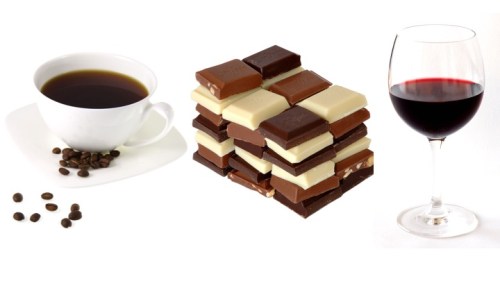
My Health & Fitness column in the Aiken Standard this week provides three examples of foods that have some health benefits.  You don’t have to eat them, but you may want to—in moderation, of course!

Coffee chocolate wine


Chocolate

Chocolate contains phytochemicals, plant-derived compounds that have health benefits. Indeed, chocolate does contain antioxidant flavonoids that have been shown to affect a variety of physiological systems. The beneficial effects include dilation of blood vessels, improved blood clotting, and reduced inflammation, all of which can reduce the risk of cardiovascular diseases including heart attack and stroke. Additionally, these flavonoids may lower blood pressure, regulate insulin levels, and reduce stress. These flavonoids are what give dark chocolate more of a bitter flavor than milk or white chocolate. Look for chocolate that contains at least 70% cocoa (sometimes listed on the label as cacao or cocoa solids) and remember that a small amount is enough.  Since chocolate does contain sugar and calories, eating more may not be the best idea.

Coffee

Coffee also contains many of the same or similar flavonoids as chocolate that have similar effects and benefits. Research shows that moderate coffee consumption (2-3 cups per day) is associated with a lower risk of heart disease. Coffee also contains caffeine which can have additional benefits related to alertness, attention, and exercise performance. If you choose not to consume caffeine, decaffeinated coffee still contains the beneficial phytochemicals. But make sure you are drinking coffee. Many popular coffee drinks are more like milkshakes, with lots of added sugar and calories.

Wine

You have probably heard that red wine is good for you. This is because it has many of the same antioxidant phytochemicals found in chocolate and coffee, wine can be a good source of these nutrients. Indeed, drinking 1-2 glasses of red wine has been shown to reduce the risk of hypertension and heart disease. Obviously, wine contains alcohol so more isn’t better and non-drinkers are not encouraged to start.

The good news is that there are some foods you may enjoy that can actually be good for you. With all of these, more isn’t better, so moderation is the key. Also keep in mind that many fruits contain the same antioxidants as chocolate, so a serving of berries, for example, may be a better choice. And finally, achieving good health requires more than simply changing one aspect of what you eat, so include these foods as part of a diet that includes real food balanced by daily physical activity.


Nutrition, exercise, and health information can be confusing. 
But it doesn't have to be that way.
What can I help you with?
 drbrianparr@gmail.com | http://twitter.com/drbrianparr