What’s trending in fitness?

There seems to always be something new in the fitness world. Whether it is a new piece of equipment in the gym, a new group exercise class, or a new way to perform traditional exercises, the fitness industry is constantly evolving. Some of these become popular enough that they are considered “trends,” attracting attention from fitness experts and exercise novices alike. Even if you aren’t a fitness enthusiast, you may be wearing one of these trends on your wrist.

Each year the American College of Sports Medicine (ACSM) surveys health and fitness professionals to identify exercise trends for the upcoming year. The report for 2017 was just published, so it is a good time to catch up on the leading fitness trends to look for in the upcoming year. Some of these are new, but many of the top trends are still popular from previous years. This is the topic of my Health & Fitness column in the Aiken Standard this week.

fitness-tracker


No surprise, the biggest fitness trend for 2017 is wearable fitness technology. Even if you don’t exercise regularly, you may have a fitness tracker. From activity trackers like the Fitbit to heart rate monitors, the newest “wearables” are sophisticated tools for recording your steps per day, distance you run, and calories you burn. Some, like the new Apple Watch, have multiple functions while others, like GPS watches, provide specific information. Make sure to pick the device that meets your needs… and your budget, as they can get expensive!

Next on the list is body weight training. Popular for building strength and endurance with minimal equipment, body weight training goes far beyond the push-ups and pull-ups you may remember doing in PE class. This type of training can be done almost anywhere, which is good news for people who are on a budget or want to train at home.

Following that is high-intensity interval training (HIIT), which uses repeated cycles of short, maximal or near-maximal exercise alternated with short rest periods. These HIIT sessions last less than 30 minutes but lead to fitness improvements that exceed those of traditional longer-duration training. Beginning exercisers should note that HIIT training is intense, so starting slow is recommended.

Fourth on the list is educated and experienced fitness professionals. You should look for a facility that requires the staff to have fitness certifications that involve both education and experience. Finding a personal trainer or group exercise instructor who has experience working with people like you is important, so ask for recommendations and references to get the best match.

Strength training still ranks highly, at number five, and for good reason. In addition to building or toning muscles, strength training can make everyday activities easier, help maintain bone mass, and promote weight loss. Strength training is often incorporated into other types of exercise, so you don’t necessarily need to “pump iron” to build strength.

Rounding out the top ten are group training, Exercise is Medicine, yoga, personal training, and exercise for weight loss, all of which have been on the list for some time. While this list does not include every popular or “trendy” type of exercise, it does capture the components of most types of training. CrossFit, for example, is a combination of body weight, strength, and functional training involving high-intensity intervals in a group setting.

Whether you decide to follow a fitness trend or not, make sure you dedicate time every day to be active. Health and fitness will always be trendy!


Nutrition, exercise, and health information can be confusing. 
But it doesn't have to be that way.
What can I help you with?
 drbrianparr@gmail.com | http://twitter.com/drbrianparr

Boo! It’s the attack of the Halloween candy!

Today marks the end of several days of Halloween events and celebrations. But even after the lights in the jack-o-lanterns have been extinguished and the costumes have been packed away, the Halloween horrors continue. It’s not the ghosts or witches or black cats you need to worry about, though. It’s the candy.

And not just the candy that gets brought home by (or is left over from) trick-or-treaters. What you really need to worry about is the candy that remains, either in the cabinet or in the dish on the table. This is the topic of my Health & Fitness column in the Aiken Standard this week.

candy corn


If your home is like mine, you have probably been accumulating candy for several days now. Despite our best intentions, most of it will get eaten, probably in the few days after Halloween. There are several ways in which a Halloween candy binge could be bad for our health.

First, it can add up to a lot of calories, which could contribute to weight gain. As a rough estimate, a typical “fun size” candy bar has about 75–100 calories. Look in your kids’ candy bags or the bowl of leftover candy at your front door and think about how many calories that adds up to.

Second, eating lots of candy could replace healthier foods. Candy is considered “empty calories,” meaning that there is little nutritional value beyond calories—typically no vitamins, minerals, or fiber. And if you eat less at meals because of the extra candy you are consuming you may not be getting enough essential nutrients. However, since the candy binge will probably only last a few days, this shouldn’t cause long-term health problems.

Third, the high sugar intake can contribute to cavities. Bacteria in the mouth produce acid when they come in contact with sugar, and this acid erodes tooth enamel to cause cavities. Sticky candy like gummies or hard candies that are in the mouth a long time are of particular concern. Obviously, brushing after eating can reduce the risk of cavities and chewing sugarless gum may help, too.

Many parents try to reduce some of these potential health concerns by limiting how much candy their children can eat at a time. This makes sense since spreading out the candy consumption—a few pieces each day—means less sugar intake at any one time.

Others solve this problem by letting their kids eat as much candy as they want on Halloween, then taking the rest away or letting their kids keep just a few pieces. Many times kids don’t even miss the candy when it is gone. This is probably a smart approach, but it does require some creativity to get the candy away. Replacing the candy with books, toys, or other gifts might help.

For many people, the real problems begin after Halloween when the leftover candy ends up in a bowl at home or in a dish on a desk at work. While there are some people who can resist reaching into the bowl, most of us can’t. It’s just too tempting to grab a piece of candy as we walk by, and we likely do it more often than we think. In fact, sometimes the candy dish is set out for the purpose of getting rid of the candy!

As the end of the Halloween candy season nears we will probably find ourselves eating more candy than we should. The good news is that as long as we get back to a routine of healthy eating and regular exercise, a Halloween candy binge shouldn’t do any lasting harm our health.


Nutrition, exercise, and health information can be confusing. 
But it doesn't have to be that way.
What can I help you with?
 drbrianparr@gmail.com | http://twitter.com/drbrianparr

It’s not too late to celebrate Walktober!

Walking is a great way to be active to help you lose weight, increase your fitness, and improve your health. The most common form of exercise is walking, and for good reason: it doesn’t require any special equipment (beyond comfortable shoes) or skills, and you can do it almost anywhere.

You can meet basic physical activity recommendations by walking briskly for 30 minutes most days of the week. Even this amount of walking can lead to a lower risk of diabetes, heart disease, and some cancers as well as improved mental health, cognitive function, and greater feelings of wellbeing.

Now that cooler fall weather is finally here, spending time being active outdoors is more enjoyable. That is the spirit of Walktober, an initiative adopted by health organizations, companies, and communities around the globe. October is a great time to take advantage of opportunities to go for a walk!

walk-in-woods


Walking, like any exercise, has substantial health benefits. These benefits are even greater if you are active outdoors. Being active in a natural environment has been shown to have an impact on mental health including enhanced feelings of energy and diminished fatigue, anxiety, anger, and sadness compared to similar activity conducted indoors. Research shows that exercise outdoors leads to physiological changes in brain blood flow that are associated with psychological benefits.

When you go for a walk outdoors you may get a better workout. This is mostly due to the fact that you will likely walk faster outdoors, but other factors like uneven ground and hills add to your effort. The good news is that even though you may exercise at a higher intensity outside, you may feel that your effort is lower than for the same exercise indoors. This is partly because the pleasant visual stimuli outdoors distracts you from sensations of effort during exercise. And much of the psychological benefit of outdoor exercise occurs in the first five minutes, so even short bouts of activity are meaningful.

If you are new to walking for exercise, you can start with 10–15 minute sessions and work up to 30 (or more!) minutes at a time. This can be as simple as going for a short walk outside when you have a break at work or taking your dog for a walk around the neighborhood. It’s also a good idea to walk with a friend or in a group, which can provide motivation and accountability. And, of course, it is a great way to spend time together.

If you have been exercising indoors, this is a perfect time to take your activity outdoors. Going for a hike in the woods or a long walk around town can build your endurance, especially if you encounter hills along the way. Running outdoors can break the monotony of the treadmill or other indoor exercise equipment. This might not replace your workouts at the gym, but it can certainly add to your activity.

The best part is that walking outdoors is something the whole family can do. Beyond the health benefits for everyone in your family, it sets an excellent example for your kids (and grandkids). Many experts agree that increasing opportunities for outdoor play and exercise is important for helping children grow up healthy and happy.

Every little bit of activity you do outdoors will have both physical and psychological benefits to help you become and feel healthier. So, get outside and get active this Walktober!


Nutrition, exercise, and health information can be confusing. 
But it doesn't have to be that way.
What can I help you with?
 drbrianparr@gmail.com | http://twitter.com/drbrianparr

Just do it — together!

It’s common to see people walking or running in pairs, and at the gym many people like to work out with a partner. Group exercise classes and boot camp programs are popular among novices and seasoned exercisers alike. Joining a team that trains together to walk or run in a race is a good plan for completing your first 5k or 10k event.

Having another person or a group of people to exercise with is a great way to increase your motivation and enjoyment. This makes it more likely you will stick with your exercise program, leading to better fitness and health. But there are additional benefits to exercising with others that may help you get started and continue your fitness program. This is the topic of my Health & Fitness column in the Aiken Standard this week.

Boot camp workout


Exercising with others provides a level of motivation and accountability that is important, especially for people who aren’t self-motivated. Knowing that you are meeting a friend for a walk or meeting a training partner at the gym makes it less likely that you will find an excuse to skip a workout. While guilt isn’t the best reason to exercise, for many people it is the one thing that will get them moving.

Did you know that exercising with others can also help you get a better workout? It’s true. When you are exercising with another person or a group you can get feedback on your technique. Doing exercises properly can reduce the risk of injury and improve your gains strength, endurance, and flexibility.

You can also get ideas for new exercises and training techniques that can make exercise more enjoyable and less monotonous. Many people find that having a friend to walk or run with makes the time seem to go by faster. The friendly “competition” that can come from a partner or group can push you to train harder, making the exercise more beneficial.

A group dynamic is an important component of many popular exercise classes and programs. At the gym, participants in classes from aerobics to Zumba and spin to yoga benefit from the support and motivation of exercising with others. And programs like boot camps, CrossFit, and F3 are popular largely because of the camaraderie of the other group members.

The benefits may be even greater if you exercise with someone who is more fit than you are. Research shows that when someone is exercising with a partner who they perceive to be more fit they will work out harder and longer than if they were exercising alone. You can benefit from finding a partner or group members who are in better shape than you are. Be careful, though, since exercising with people who are much fitter than you can have the opposite effect and you may get discouraged.

Your exercise partner doesn’t even have to be another person to be effective. Research shows that walking with a dog can improve your adherence to a walking program and lead to greater improvements in fitness compared to walking with a human companion. While a friend might make excuses to skip exercise, a dog will always look forward to a walk. Don’t worry if you don’t have a pet; one study used dogs at a local animal shelter as walking partners.

You can take advantage of the benefits of exercising with a partner easily by asking a friend to go for a walk. It’s something that will benefit you both and it will be a good opportunity to spend time together. No more excuses…get moving!

The effect of involving others in your behavior change process is also helpful for losing weight and quitting smoking. This is true even if the other person (or people) aren’t participating  with you—simply telling others about your plans to change can help make you more accountable and improve your chances for success.


Nutrition, exercise, and health information can be confusing. 
But it doesn't have to be that way.
What can I help you with?
 drbrianparr@gmail.com | http://twitter.com/drbrianparr
 

Exercise, when you need it most

Regular exercise is one of the most important things you can do for your health. A lower risk of weight gain, diabetes, heart disease, and some cancers are among a long list of positive health effects of exercise. Lesser known benefits include improved mental health, cognitive function, and greater feelings of wellbeing. Exercise is essential for development of children, maintaining health in adults, and can even reverse some of the effects of aging.

Despite these clear benefits, many people do not participate in regular exercise until they have a medical condition, like a heart attack or cancer, that motivates them to start.  This is the topic of my Health & Fitness column in the Aiken Standard this week.

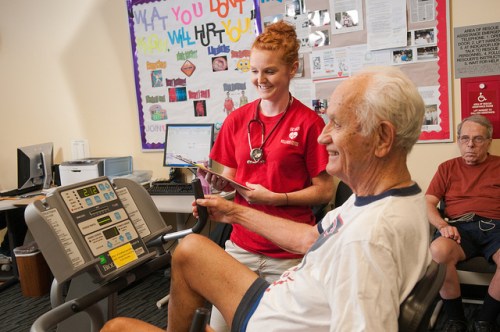
usca-cardiac-rehab


It is well-known that people who exercise have a lower risk of heart attack and improved survival if they do have one. While immediate treatment of a heart attack using medications and surgery is critical, the truth is that the long-term outcomes are largely based on what happens next. Traditionally, heart disease patients were told to rest and not stress their hearts, a belief that many still hold today. Now we know that exercise-based cardiac rehabilitation programs are key to improving heart health and preventing future complications.

Most cardiac rehabilitation programs include several phases that include monitored exercise, education about nutrition, weight control, stress management, proper medication use, and psychosocial wellbeing. The benefits of cardiac rehabilitation are well-established through research and practice. In fact, many patients credit cardiac rehabilitation with saving their lives, even if they had bypass surgery. Despite this, less than a third of patients who are eligible for cardiac rehabilitation actually attend a program.

Exercise is also known to reduce the risk of developing certain types of cancer, including breast, colon, bladder, lung, kidney, and endometrial cancers. This is due to the fact that exercise causes changes at the cellular and hormonal level that result in reduced inflammation and improved immune system function. Regular physical activity can also improve survival and reduce the risk of recurrence of cancer.

In addition to helping reduce the risk of cancer development and recurrence, regular exercise can help you handle cancer treatment better. To be sure, cancer treatment can lead to extreme physical consequences including loss of weight, muscle mass, strength, and endurance. At least some of this is due to more time resting and less time being active, the effects of which occur within days and get worse over time.

The fitter you are when you begin treatment, the fitter you will be at the end because you have “saved” more strength and endurance in your fitness bank. You simply have more you can lose before you get to a point at which you can’t complete your normal activities. And post-cancer exercise programs are becoming more common as a way to help women recover from cancer treatment and rebuild strength, endurance, and feelings of wellbeing.

Another benefit of cardiac rehabilitation and cancer exercise programs is the support from other heart attack and cancer survivors. Combined with support from medical professionals, family, and friends, these groups become an essential resource for information, comfort, and encouragement.

If you or someone you know has had a heart attack, heart surgery, or a cancer diagnosis, encourage them to ask their doctor about an appropriate exercise program—it is likely to be the best way to improve quality of life. In our area, there is a cardiac rehabilitation program based at the USC Aiken Wellness Center as well as at several hospitals in Augusta. There is also an exercise program for cancer survivors called Livestrong at the YMCAs in Aiken, North Augusta, and Augusta.


Nutrition, exercise, and health information can be confusing. 
But it doesn't have to be that way.
What can I help you with?
 drbrianparr@gmail.com | http://twitter.com/drbrianparr
Video

This video explains what functional fitness really means, and why it matters.

Earlier this week I wrote about the benefits of exercise on health, fitness, and physical function across the lifespan. Of particular interest is the concept of functional fitness, which aims to improve physical function in practical, real-life settings. This is no more important than activities of daily living, which are a major reason so many elderly lose independence. In fact, many younger people find it difficult to do these basic, day-to-day activities.

Watch and learn…


Nutrition, exercise, and health information can be confusing. 
But it doesn't have to be that way.
What can I help you with?
 drbrianparr@gmail.com | http://twitter.com/drbrianparr
Aside

Earlier this week I wrote about how exercise can reduce the impact of age on health, fitness, and physical function. In many cases, exercise can even reverse the effects of age, literally turning back time.

Last week there was a good article on TIME.com about how exercise can help the elderly reduce the risk of disabling injury and shorten the time to recovery if an injury does occur. This suggests that exercise can promote independence by maintaining strength, endurance, balance, and mobility.

The research cited in the article is available here: http://annals.org/article.aspx?articleid=2556138


Nutrition, exercise, and health information can be confusing. 
But it doesn't have to be that way.
What can I help you with?
 drbrianparr@gmail.com | http://twitter.com/drbrianparr

Turning back time with exercise

The benefits of regular exercise for everyone from childhood through old age are well-known. Children who are physically active establish healthy habits and do better in school than their peers who are more sedentary. Young adults who exercise are more likely to be active as they age, reducing their risk of heart disease, cancer, and other chronic diseases.

Older adults can maintain their memory, cognitive function, and ability to complete everyday activities by improving their fitness. At all ages, physical activity helps people maintain a healthy body weight. In many ways, exercise can turn back time on many health and fitness variables that decline with age. This is the topic of my Health & Fitness column in the Aiken Standard this week.

elderly-exercise


Ideally, people would be active throughout their entire lifespan. What is more common, though, is that activity in childhood and young adulthood is replaced by a lifestyle that becomes increasingly sedentary over time. This can lead to a pattern of weight gain and declining fitness.

For many people the consequences may not be immediate, so there is no clear sign that the lack of exercise is having negative effects. But make no mistake, the health effects of inactivity accumulate over time eventually leading to conditions like obesity, heart disease, and osteoporosis.

Aside from the risk of chronic disease, years of inactivity can result in poor strength, endurance, and flexibility. This can lead to increased risk of injury and difficulty completing work and leisure activities. This is particularly true in older adults who are more likely to experience falls, broken bones, and prolonged disability due to poor strength and balance.

It is well-known that strength and endurance decline with age. Fitness decreases about 10% per decade, so that a 70 year-old has lost about half of the exercise capacity they had at 20 years of age. It turns out that this decline in fitness is due more to decreasing activity, not age itself.

Resistance training can lead to improvements in strength at all ages, but the biggest gains occur in the elderly. Beyond the impact on activities of daily living—carrying bags of groceries, for example—strength training can improve bone density. This is of particular concern for women.

Bone density peaks about age 25, so women who exercise achieve greater bone density when they are young. This means they can lose more bone mass as they age before they experience problems. Middle-age and older women can also reduce age-related bone loss by participating in regular exercise. In fact, exercise is essential for the effective treatment for osteoporosis.

There is good news for those who haven’t been exercising. You probably know that people who exercise now are less likely to suffer poor health in the future, provided they stay active. But research also shows that people who are out of shape now but improve their fitness also experience a reduced risk of many common health conditions like diabetes and heart disease.

It doesn’t matter when someone becomes active—the benefits can be realized at any age. In fact, one study showed that older men who begin a vigorous exercise program can improve their fitness to the level they were at 30 years ago. And these changes can occur in as little as six months.

The bottom line is that exercise can turn back time by reversing many effects of aging. Best of all, it is never too late to start. If you have fallen into a pattern of inactivity you can benefit from regular exercise no matter how old you are. So, what are you waiting for?


Nutrition, exercise, and health information can be confusing. 
But it doesn't have to be that way.
What can I help you with?
 drbrianparr@gmail.com | http://twitter.com/drbrianparr

When it comes to trans fats, zero is too much!

Nutrition recommendations are often confusing and contradictory. To make things worse, the nutrition information provided on food packages can be difficult to decipher or downright misleading. In my Health & Fitness column in the Aiken Standard this week I share information about trans fats and how zero doesn’t always mean none.

trans-fat-label


Remember when fat was bad and carbohydrates were good? The idea was that eating fat led to weight gain, a problem that could be solved by eating less fat. Then carbohydrates, including bread and pasta, were blamed for obesity and other health problems which led to the low-carb diet craze.

The truth is that all fats and all carbohydrates aren’t necessarily good or bad. Fats come in different forms, some of which have positive health effects and others that are linked to poor health and disease. Similarly, carbohydrates also come in different forms, some you should eat more of and some you should limit. This is why you hear people talk about good carbs and bad carbs or good fats and bad fats. In reality, no nutrients are really “bad” as long as you consume them in reasonable amounts balanced by exercise and other activity.

Nutrition recommendations for good health call for a moderate fat intake (20–35% total calories) with an emphasis on monounsaturated and omega-3 fats, while limiting saturated and trans fats. Olive oil, canola oil, and avocados are good sources of monounsaturated fats. Fish, including salmon and tuna, are high in omega-3 fatty acids. Saturated fats are found primarily in animal products, especially red meat and butter, as well as tropical oils like palm and coconut oil.

Most trans fats come from partially hydrogenated vegetable oils, which are polyunsaturated fats that have been modified for use in frying and in baking (margarine is a partially hydrogenated vegetable oil). While there is much debate about the health effects of the different types of fats, almost everyone agrees that trans fats should be avoided.

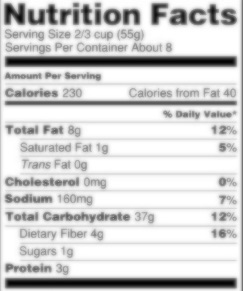
The Nutrition Facts panel on food packages also contains information that is supposed to help you make choices that are lower in total fat, saturated fat, and trans fat. Unfortunately, this is not as straightforward as it seems. By law, manufacturers can list trans fat at 0 grams as long as it contains less than 0.5 grams. This means that a food can contain up to 0.49 grams of trans fat per serving even though it is listed as 0 grams!

This may not seem like much, but consider that the American Heart Association recommends limiting trans fat intake to 2 grams per day, at most. You could easily exceed this limit with just a few servings of “trans-fat free” foods. When it comes to trans fats, zero can be too much. It’s no wonder so many people struggle to make healthy food choices!

How can you tell if zero isn’t really zero? One way is to look for “partially hydrogenated vegetable oil” in the ingredient list, which indicates that trans fats are present.

Nutrition information is confusing, to say the least. Even if you know to look at the Nutrition Facts panel on food packages, the information there is not always easy to understand. In some cases, what you see on the label does not reflect what you are really eating.

One step toward making healthy choices is to eat “real,” unprocessed food as much as possible. Fats that occur naturally in food are less of a concern than modified fats that are added in food processing. So, don’t worry so much about fat in meat and dairy and use natural oils, like olive oil. You will likely find that these “real” foods are not just better for you, but better tasting, too!


Nutrition, exercise, and health information can be confusing. 
But it doesn't have to be that way.
What can I help you with?
 drbrianparr@gmail.com | http://twitter.com/drbrianparr

Improve your success by treating weight loss or exercise like a project

Almost everyone who starts a weight loss of exercise program does so with good intentions. Many get off to a good start and see beneficial results, at least initially. Unfortunately, long-term success is uncommon.

There are myriad reasons for this, but the way people manage their weight loss and exercise efforts is certainly among them. Think about it: when someone takes on a new diet or exercise program it is usually added to their typical routine. The problem with this approach  is that most people are busy, and there is little extra time in their day. As a consequence, the diet and exercise doesn’t get the time or attention is needs in order for people to be successful.

This is where the lessons of good project management can be helpful. In the workplace a major project is usually accomplished though defining the scope to the project, appropriate goal setting, allocation of resources (including time), and a mechanism to assess progress.

But many people who approach projects this way at work tend not to apply this process to health improvement projects at home. The result is poor planning, setting unrealistic goals, and failure to allocate appropriate resources, including time.

Especially time. Time to set goals, time to plan and prepare meals,  time to exercise, and, perhaps most important, time to assess and adjust the plan along the way.

Many of these problems could be avoided through the same good project management techniques that would be used at work. The idea of treating weight loss, exercise, and other health improvements as a project is the topic of my Health & Fitness column in the Aiken Standard this week.

to-do-list


Think about the last time you tried to do something that was good for your health. Maybe you were trying to lose weight, eat a healthier diet, or start an exercise program. If you are like many people, your attempt wasn’t successful, at least in the long term. In fact, more than two-thirds of adults who lose weight gain it back and about 50% of those who start exercising quit within six months. The problem isn’t so much getting started, it is sticking to the program.

The number one reason why people abandon their diet and exercise is time. Dedicating time for exercise and to plan and prepare healthy meals is challenging. Most people are busy—maybe too busy—with work, family, and other responsibilities, so health improvement tends to take a lower priority.

Perhaps part of the solution is to treat health improvement like you would a project at work, rather than an “extra” activity. Using project management strategies that are common in the workplace could help you dedicate adequate time and resources to your next diet and exercise program. Here are some examples of how you can utilize the methods of one program management model to improve your chances for success:

Initiation

Identify what you need to change, set goals, and determine what resources you will need. For example, if you want to lose weight you should have a goal weight and timeline in mind. You can, and should, set both short-term and long-term goals. Then, think about what knowledge or tools you will need to get started. You should also tell others about your plan and identify people who can provide support.

Planning

This is where you determine when and how you will put your plan into action. If you need information about what to eat or decide to join a gym to exercise, this is the time to put those components in place. Take out your calendar and make time for preparing meals and daily exercise. Make a weekly menu of meals and a grocery list before you go to the store. Set a start and end date for your project, decide how you will monitor your progress, the think about “what if” scenarios.

Execution

Once you have yourself organized, it is time to begin! Hopefully, this is a bit easier since you planned ahead, but keep in mind that you will continuously need to revisit and modify your plan. This is important because one reason why people don’t succeed is that they don’t allow flexibility in their plan; once things go awry, they give up.

Monitoring

As you proceed through your weight loss or exercise program it is helpful to get feedback on your progress. Keeping track of your weight is a simple way to monitor. You can also keep a record of what you eat or what you do for exercise to see how you are progressing. Tying progress to rewards is important for keeping you motivated, just make sure the rewards are consistent with your goals.

Closing

In the office, this is the end of your project and the time when you file everything away and move on to something else. Health improvement projects tend to be ongoing, so this is your chance to review what worked, what didn’t work, and what you need to do to maintain your good health habits. This would also be a good time to get rid of your clothes that are now too big—otherwise you may end up in them again someday!


Nutrition, exercise, and health information can be confusing. 
But it doesn't have to be that way.
What can I help you with?
 drbrianparr@gmail.com | http://twitter.com/drbrianparr