Category Archives: Uncategorized

A Thanksgiving dinner that is good and good for you.

This is Thanksgiving week, and people throughout the country are planning a feast that includes traditional dishes and family favorites. Even though many of these are not the healthiest choices, they make an appearance on the table each year. For many, Thanksgiving dinner is a day marked by overindulgence and  poor nutrition choices.

In an effort to make Thanksgiving dinner healthier, recommendations for modifying or replacing traditional dishes are a common theme in magazines, on the morning TV shows, and on the web. While these suggestions are meant to be helpful, I’m not sure they actually serve to make a significant impact on health. In fact, the foods we eat and the way we eat them may be the healthiest part of a traditional Thanksgiving dinner. This is the topic of my Health & Fitness column in the Aiken Standard this week.


thanksgiving-dinner

After all, Thanksgiving is one day, and if there was ever a day to give yourself license to indulge, this is it! Of course, trying new foods and cooking techniques is always good, but the impact of replacing the butter in your mashed potatoes with fat-free sour cream or taking the marshmallow topping off Granny’s famous sweet potato dish for one day isn’t realistically going to make you any healthier in the long run.

The truth is that if you eat a healthy diet every day, or even most days, and you have an active lifestyle you can get away with a day—or weekend—of overeating. (Obviously, you should always follow dietary restrictions for any medical conditions you have.) The problem comes when Thanksgiving dinner is yet another unhealthy meal in addition to the others that week or month.

Some of these recommendations are worth trying, for sure. Making an alternative to a traditional dish can get your family to try new foods they might not otherwise consider. And cooking using different ingredients or techniques on Thanksgiving can give you ideas for other meals, too.

However, focusing on modifying your Thanksgiving dinner may distract you from appreciating the greatest potential health benefit of this meal. Given the current confusion about how much and what type of carbohydrates and fats we should eat, there is an increased push to get us to eat less processed food and more real food.

For many of us, Thanksgiving dinner is one of the only times we cook and eat real food. A real turkey, vegetables, and home-made dessert are a huge improvement over the processed foods most of us eat on a daily basis. While we eat turkey at other times, it is almost always in a processed form such as ground turkey or deli meat, which frequently includes other additives. Cooking and eating a whole turkey is, for most families, relatively rare. So is eating a meal that doesn’t come from a restaurant or isn’t heated in a microwave.

Additionally, Thanksgiving dinner is shared simultaneously around a common table (and maybe a kids’ table, too). All too often, meals are consumed away from the family table, frequently at different times. The benefits of eating together as a family are well-known, and can have a positive impact on nutrition, psychological well-being, and health in general. Maybe Thanksgiving dinner isn’t about the food as much as it is the company. Why not make this a habit at other meals?

This week, let’s all give thanks for family, friends, and a shared meal. Let’s also take a lesson from the day and try to prepare and eat more real food as a family. This may be the best part of Thanksgiving. That, and a second serving of pumpkin pie!


Nutrition, exercise, and health information can be confusing. 
But it doesn't have to be that way.
What can I help you with?
 drbrianparr@gmail.com | http://twitter.com/drbrianparr
Video

This video explains what functional fitness really means, and why it matters.

Earlier this week I wrote about the benefits of exercise on health, fitness, and physical function across the lifespan. Of particular interest is the concept of functional fitness, which aims to improve physical function in practical, real-life settings. This is no more important than activities of daily living, which are a major reason so many elderly lose independence. In fact, many younger people find it difficult to do these basic, day-to-day activities.

Watch and learn…


Nutrition, exercise, and health information can be confusing. 
But it doesn't have to be that way.
What can I help you with?
 drbrianparr@gmail.com | http://twitter.com/drbrianparr

Telling the truth to yourself and hearing–no, expecting–it from others.

Earlier this week I wrote about the importance of being honest with yourself about your health. Unless you can honestly assess your own health and health behaviors, making meaningful changes simply won’t work. Living in denial about your weight or eating and exercise behaviors means that you can’t recognize what you need to change.

We should also expect others to be honest with us, too. While family and friends may be hesitant to voice their thoughts, especially about sensitive topics like weight, we should expect them to be supportive. And we should certainly expect medical professionals to tell us the truth about our health, even if we don’t want to hear it.

Unfortunately, many doctors, nurses, and fitness/wellness professionals are reluctant to bring up topics like weight for fear of offending a patient or client. This was expressed eloquently in a recent article in the New York Times.

While the goal should never be to offend or ridicule, I believe that health professionals should always bring up potential health issues and talk honestly about what people can do to improve their health.


Nutrition, exercise, and health information can be confusing. 
But it doesn't have to be that way.
What can I help you with?
 drbrianparr@gmail.com | http://twitter.com/drbrianparr

Supplements shouldn’t replace food for athletes, either.

Earlier this week I wrote about dietary supplements and whether using supplements means you don’t have to eat healthy food. When it comes to promoting good health, the answer is no!

But what about supplements for athletes or people who exercise to improve fitness or body composition? While many athletes use dietary supplements to help meet their exercise goals, most don’t actually need to. Even if there is a need for additional nutrients, in most cases those demands can be met through actual food rather than supplements.

Sports drink

Dietary supplements are a multi-billion dollar industry with many products marketed specifically to people who exercise. In fact, you may use these supplements already—sports drinks like Gatorade and post-workout protein shakes or smoothies are common in most gyms.

While many sports supplements are effective and even necessary for some athletes, many people who use supplements really don’t need them. This could be because the type of exercise they do doesn’t require them or because they get enough of that nutrient through their diet. And there are some people who might benefit from supplements but don’t use them because of the cost.

This raises the question, can you replace sports supplements with food? One of my former students, Kyle Sprow, examined this question while he was an undergraduate USC Aiken. The supplements he included in his analysis are both widely used and have research to show that they are effective. This is an important point since most sports supplements have no research to support their use. Here I will focus on two supplements commonly used by athletes engaged in strength training: protein and creatine.

Protein supplements are often recommended for people who exercise. The protein requirements for athletes who are attempting to build muscle mass and strength are well above the general recommendation for good health. For example, someone who weighs 200 pounds needs a minimum of 72 grams of protein per day. To put this in perspective, 4 ounces of meat contains about 30 grams of protein. But that same person who is engaged in strenuous resistance training may need twice as much protein!

Many athletes turn to protein supplements to meet this requirement. However, since most athletes eat more total food, this leads to a protein intake that meets this need. And those who do need more protein can get it from food. A can of tuna contains as much protein as a serving of a typical whey protein supplement at a much lower cost.

The timing of protein intake is also important. Research shows that protein consumed immediately after exercise leads to greater muscle growth, especially if it is combined with some carbohydrates. This is why you might have seen a sign in the locker room at the gym reminding you that “your workout isn’t complete” without a special recovery beverage from the juice bar.

But almost any food or drink that contains a mixture of carbohydrates and protein will work.  Research also shows that chocolate milk is just as effective as more expensive supplements for promoting muscle protein synthesis following exercise. It turns out that the mix of carbohydrate and protein in chocolate milk closely matches that in many supplements and is more affordable.

Another popular supplement for boosting muscle mass is creatine monohydrate. This supplement boosts muscle levels of creatine, an important fuel for heavy resistance training. This leads to greater gains in muscle mass and strength, something that is well-supported by research. Unlike protein, it would be very difficult to get enough creatine from food. Most supplements contain about 5 grams of creatine. By comparison, you would need to eat a kilogram (that’s over 2 pounds) of beef to get the same amount!

In most cases, the nutrients in sports supplements can be provided by food at a lower cost. I focused on protein here, but the same is true for carbohydrates, omega-3 fats, and most vitamins and minerals. The exception is creatine for athletes who are doing intense strength training.

Keep in mind that the benefits of protein and creatine supplements are greatest for athletes who do intense training. The type of workouts that most people do to lose weight or improve their fitness do not require supplements at all. In fact, people who exercise to lose weight may find that using certain dietary supplements can interfere with their weight loss goals…and may even lead to weight gain!


Nutrition, exercise, and health information can be confusing. 
But it doesn't have to be that way.
What can I help you with?
 drbrianparr@gmail.com | http://twitter.com/drbrianparr

Stay cool and get fit by going for a swim

It’s hot! Whether you are swimming laps or splashing in a lake, swimming is a great way to stay cool. Swimming is also an excellent exercise for improving your fitness and helping with weight loss.

This is the topic of my Health & Fitness column in the Aiken Standard this week. You can also find more information about the fitness and health benefits of swimming from something I wrote previously.

Swimmer


There is nothing that feels better on a hot summer day than going for a swim. But beyond being a fun way to cool down, swimming is a great way to get in shape. Swimming is also an excellent exercise for injury rehabilitation or for people with certain conditions like arthritis.

The fitness benefits of swimming are well established. Since swimming is a whole-body exercise it uses all of your major muscle groups, building strength, endurance, and aerobic fitness. Highly trained swimmers have VO2max values, considered the best measure of aerobic fitness, that are similar to runners and cyclists. If you have doubts about the fitness benefits of swimming, think about how muscular and lean Olympic swimmers are.

Depending on the stroke and speed, swimming ranges between 5 to 10 METs. (METs are units used to measure the intensity of activity; one MET is equivalent to sitting at rest) For example, doing the backstroke at a moderate speed is about 5 METs while swimming laps freestyle with vigorous effort is about 10 METs.

This range is similar to walking at 4 mph up to jogging at a 9 minute per mile pace. What if you are just spending time in the pool or lake rather than swimming laps? Swimming leisurely is 6 METs, still a decent workout.

Swimming is a great way to burn calories, too. Even at a moderate pace, swimming laps for 30 minutes can burn over 200 calories. The exact energy expenditure depends on the stroke (butterfly is highest, backstroke is lowest) and the speed, but for most people swimming will burn as many calories as spending the same amount of time exercising on land.

There are two major reasons for this. First, water is more dense than air, so you need to expend more energy to move your body through the water. Second, swimming is a whole-body exercise which requires more muscle activity compared to walking or jogging which mostly involve the legs.

You may be surprised to learn that novice swimmers expend more energy per lap than elite swimmers. For example, one study showed that competitive swimmers expend only 280 calories to swim a mile, while less experienced swimmers burn about 440 calories to cover the same distance. The reason for this is that experienced swimmers are more efficient, so they expend less energy.

Aquatic exercise is popular for both therapeutic and fitness purposes, especially for people who don’t tolerate exercise on land well. When you are submerged up to your waist, 50% of your weight is supported; when you are up to your chest, about 75% is supported. This reduces the impact of exercise in the water, perfect for people who have arthritis, osteoporosis, severe obesity, or who are recovering from injuries.

Exercise in the water doesn’t have to mean swimming laps. Water aerobics, aqua walking or jogging, and resistance training using foam “weights” or webbed gloves offer safe ways to increase strength and endurance for almost everyone. Most fitness facilities that have a pool offer group aquatic exercise classes and you can find instructions online for exercises that you can do in your own pool.

The hot summer weather makes swimming and other water exercise appealing. But even if you don’t use the time for exercise, spending time playing in the pool or lake can still burn as many calories as going for a walk and is a great way to have fun and cool down!

How Square Watermelons Get Their Shape, and Other G.M.O. Misconceptions – The New York Times

Earlier this week I wrote about organic food and whether it is really healthier. To be sure, organic food can be a healthy alternative to conventional food, but many times the difference may not be as great as commonly believed. In some cases, organics simply may not be the smartest choice.

GMO corn

One reason why people choose organically produced foods is that they don’t contain GMOs, or genetically-modified organisms. Many people believe that GMOs are dangerous or, at the very least, make foods less healthy.

Unfortunately, just like with organic food, there is a great deal of confusion about GMOs in food. An article in the New York Times addresses some of the misconceptions about GMOs.
In an effort to inform consumers about the presence of GMOs in their food, the U.S. Senate recently passed GMO-labeling legislation that has received much criticism. No doubt this is something we will hear more about in the future.


Nutrition, exercise, and health information can be confusing. 
But it doesn't have to be that way.
What can I help you with?
 drbrianparr@gmail.com | http://twitter.com/drbrianparr

What children gain and lose over the summer

Summer vacation is a rite of passage for children. Long summer days to play, go to camp, and relax are an important part of growing up. But many educators and health professionals are concerned about what gets lost, and what gets gained, when kids are away from school.

Kids playing outdoors


Summer learning loss is a real concern. It is estimated that children lose, on average, two months of reading skills and one month of overall learning over summer break. Those losses must be made up when school starts again in the fall, so teachers spend about six weeks re-teaching material that was covered in the previous grade. That is six weeks that children are not learning at grade level, which certainly has an impact on achievement over time.

Not all kids are affected equally. Much of the disparity in summer learning losses falls along socioeconomic lines. Some children have more opportunities than others to continue learning over the summer through formal educational programs and camps and informal encouragement to read.

To address this issue, many institutions implement summer “school” through classes, on-line learning programs, and encouraging reading at home. Some target the students who need them the most while other programs are instituted for all children. In fact, all three of my kids are completing online learning programs this summer.

Learning losses are not the only concern with an extended break from school. Many children gain more weight over the summer than during the rest of the year. Furthermore, fitness gains made during the school year are frequently lost over the summer. While poor nutrition and a lack of activity in schools is a real concern, many children get more exercise and eat better at school than they do at home. Being at home over the summer can lead to poor eating habits—too much unhealthy food or not enough food in general—and lack of chances to be active.

This is important because the combination of poor nutrition, physical inactivity, and obesity has physical, psychological, and social consequences for children that frequently persist into adulthood. Overweight and obese children are at increased risk for type 2 diabetes, high blood pressure, heart disease, and even stroke – conditions usually associated with adulthood. Even if an overweight child does not have these conditions now, he or she is likely on that path. In fact, many experts predict that children born today will be the first generation in history to have a shorter lifespan than their parents due to obesity-related diseases that begin in childhood.

Children who are overweight are also more likely to suffer other consequences including lower self-esteem, social functioning, and academic performance. Overweight children are also less likely to play sports or participate in other forms of physical activity, which creates a cycle leading to poorer health and, potentially, poorer academic success.

Now that school is almost out for the summer, this is a critical time of year to focus on good nutrition, physical activity, and continued reading and learning to help prevent a summertime slump in health and academics. Schools can only do so much, so adults should model good diet, activity, and reading behaviors themselves. A good place to start is by turning off the TV and reading a book or going outside to play. It’s something all of us—adults and children—will benefit from.


Nutrition, exercise, and health information can be confusing. 
But it doesn't have to be that way.
What can I help you with?
 drbrianparr@gmail.com | http://twitter.com/drbrianparr
What’s in your grocery cart?

The next time you go grocery shopping, take a look at what is in your cart. Since the first step toward a healthy diet is buying nutritious food, what you put in your cart says a lot about what you and your family are eating. Most of us know that eating out increases the chance that we will consume too many calories and too much fat, sugar, and salt. For this reason, shopping for groceries and eating meals at home can lead to a healthier diet, as long you are buying healthy food to begin with. Your shopping cart, what’s in it—and what’s not in it— is the topic of my Health & Fitness column in the Aiken Standard this week.

grocery cart


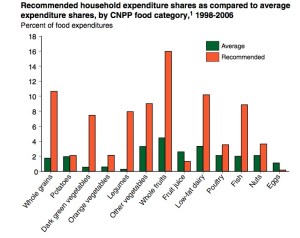
If you are like the typical American, your grocery cart falls short of recommendations for good health. In fact, according to a USDA report, food purchases have less than a 60% adherence with current dietary recommendations. The report also shows that people who live in the Northeast and West tend to make healthier choices than people living in the South and Midwest, where obesity is more common.

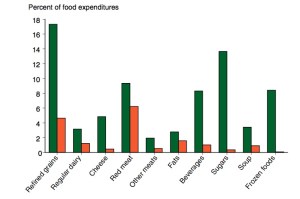
This report also reveals that we are purchasing almost the opposite of what is recommended. People bought four times as much refined grains as recommended but only one-quarter of the recommended whole grains. Our carts are missing fresh vegetables and fruits but contain too many processed frozen foods. We buy less fish and poultry and more red meat than we should. And, finally, we bring home far more beverages and foods containing added sugars than is recommended.

What we should be buying (but aren’t):

What we should eat

What we are buying (but shouldn’t):

What we do eat

The contents of our shopping carts closely mirrors the typical American diet, suggesting that we eat what we buy. A diet high in refined grains, red meat, and added sugars and low in whole grains, fruits, vegetables, and lean sources of protein is linked to obesity, heart disease, and some cancers. Shopping habits can have a big impact on health, so changing what we buy can be beneficial.

The good news is that there are a few simple steps you can take to improve the healthfulness of your grocery purchases. First, plan your meals before you go shopping, make a list, and stick to it. Impulse purchases, the things we see and just can’t pass by, are likely to be unhealthy foods. Second, shop the perimeter of the store. This is where you find most of the fruits, vegetables, dairy, and meat. The interior aisles contain primarily packaged and processed foods that tend to be high in sugar, salt, and fat. Third, buy fresh fruits and vegetables when you can. Frozen vegetables are a good alternative, too. Be careful with canned vegetables which can be high in salt and fruit juices which may contain added sugars.

Of course, this is easier said than done. Grocery stores are designed to get you to buy more of the most profitable foods, from the floor plan to the displays and placement of the food items. You have to be vigilant to avoid temptation and make good choices, but you don’t have to be perfect. Even relatively small purchasing changes can improve your diet and your health. Try buying more fresh vegetables this week and focus on whole grains next week. Over time, you will find that your cart will be filled with healthier foods for you and your family.


Nutrition, exercise, and health information can be confusing. 
But it doesn't have to be that way.
What can I help you with?
 drbrianparr@gmail.com | http://twitter.com/drbrianparr
The case of the missing beach body. How to get yours back…and keep it!

Now that spring has arrived you may have noticed that your eating and exercise habits over the winter (or past several winters!) haven’t been kind to your body. For some people this comes as a surprise, and they wonder where their beach body from last summer went. For others, their beach body may long gone, but they want to lose some weight and get in shape before summer.

Obviously, this will mean making changes to what you eat and your exercise habits. If you want to lose 5–10 pounds and get back in shape, this means small changes to your diet and exercise designed to meet your fitness goals. If you have more significant weight to lose you will need a stricter diet and an exercise program that will help you to burn calories and build your strength, endurance, and flexibility.

While diet and exercise can help you get back in shape, staying in shape requires making lasting behavior changes. My Health & Fitness column in the Aiken Standard this week includes a few key questions that will help you find your missing beach body now and, importantly, not lose it again in the future.Luddington beach


When did you last see it?

Many people can identify a time in their life when their lifestyle changed and weight gain began. Commonly, this is getting married, starting a new job, or having children. Other people notice that they have gained weight, but can’t point to any specific reason why. In both cases, healthy eating and exercise routines get replaced with other less beneficial habits. The result for most people is gaining weight, either very quickly or slowly over time. Understanding what led to your weight gain is important for making changes to fix it.

How long has it been gone?

The longer you have been inactive and eating poorly, the longer you have been developing these unhealthy habits. The consequence is that it will be more challenging to undo the damage these habits have caused and teach yourself new habits that are consistent with better health. Your task is relatively easy if you have just gained a few pounds since last summer. Trying to reverse years or decades of inactivity and unhealthy eating is a bigger challenge, but one you simply must take on!

Where did you last see it?

The environment has a huge impact on our health, largely through influencing our activity and eating behaviors. In many cases, weight gain may be at least partly a consequence of where we spend our time. For example, a new job that involves long commutes by car and workdays spent sitting can make gaining weight almost inevitable. Quitting that job probably isn’t reasonable, but knowing how it has affected your health allows you to focus your efforts on increasing your activity outside of work. For many women, weight gain occurs after graduating from college, getting married, and having children. While there are many contributing lifestyle factors in this case, the change from an active college campus to a more sedentary environment certainly plays a role.

Once you figure out when and where you last saw your beach body you will have an idea of what you need to do to get it back. Keep in mind that the type of behavior changes you need to make to lose weight and get back in shape are difficult and will take time to adopt. While you shouldn’t expect any miracles in the next month or two, developing healthy eating and activity habits can have a miraculous effect on your weight, your health, and how you feel in the years to come!


Nutrition, exercise, and health information can be confusing. 
But it doesn't have to be that way.
What can I help you with?
 drbrianparr@gmail.com | http://twitter.com/drbrianparr

Is that a salad, or a cheeseburger?

I have written previously about restaurant salads that are surprisingly high in calories. This is particularly relevant for people who are trying to lose weight. Ordering a salad seems like a sure way to cut calories but, in some cases, a salad may have more calories than other menu items you are trying to avoid.

Even healthy-sounding salads can be high in calories. A recent example is the new McDonald’s Kale Salad, which has more calories than a Big Mac!

That doesn’t mean that ordering a salad is a bad idea. Even if it is high in calories, at least you are getting a good serving of vegetables, with vitamins, minerals, and fiber that a burger and fries simply can’t match!


Nutrition, exercise, and health information can be confusing. 
But it doesn't have to be that way.
What can I help you with?
 drbrianparr@gmail.com | http://twitter.com/drbrianparr