Category Archives: Uncategorized

Find another excuse!

The most common reason people cite for not exercising regularly is that they don’t have enough time. As I explain in my Health & Fitness column in the Aiken Standard this week, based on recent data about how the average American spends their time, this is a poor excuse!

The NPR Planet Money blog has some excellent infographics of how Americans spend their weekdays and weekends. See…plenty of time for a 30 minute walk!

The most recent Physical Activity Guidelines for Americans show just how easy it can be to meet recommendations for good health.

South Carolina–the future looks fat!

A recent report from the Trust for America’s Health and the Robert Wood Johnson Foundation suggests that 63% of South Carolina residents could be obese by the year 2030. Currently, 31% of SC adults are considered obese, so this  represents a doubling in the obesity rate in under 20 years.

This increase in obesity, which represents people who are 25-30 pounds (or more!) over a healthy body weight, will also be associated with an increase in obesity-related conditions like heart disease, diabetes, and some cancers. This is certainly bad news for our state, both in terms of personal illness and economic cost.

But the problem isn’t limited to South Carolina.  The report estimates that 39 states will have an obesity rate above 50% and all states will be above 44% by 2030. Mississippi is predicted to lead all states with a 67% of their population projected to be obese.

South Carolina ranked 5th on the list. Being in the top five of this list is not good.

Read more: Study: 63 percent of S.C. residents will be obese by 2030 | Aiken Standard


You may be “normal,” but are you healthy?

Susan is about 20 pounds overweight. Given her full-time job and shuffling three kids around she doesn’t get much exercise and meals tend to be fast food or take-out from restaurants.

This sounds normal, right? In a sense, it is. The typical American is overweight, doesn’t get enough exercise, and eats a diet that is far from ideal. But this isn’t normal in the context of good health, as I explain in my Health & Fitness column this week.

Two bits of (potentially) good news to end the week

1. The New York City Board of Health approved a ban on “supersize” sweetened bottled drinks and fountain beverages. http://tinyurl.com/9gzjuhc

2. McDonald’s announced that they will begin posting calories for each menu item. http://tinyurl.com/9rrmk5b

These initiatives are interesting because the potential to change people’s behavior toward making healthier choices is great.

New York City has served as a model for restricting smoking and trans fats, so other communities may follow their lead. Of course, there is controversy over what exactly is included in the ban and if these items are necessarily unhealthy. The trans fat ban was effective in reducing the trans fat content of restaurant food, which would be beneficial for people who regularly eat at fast-food and other chain restaurants covered in the ban.  Time will tell if the drink restriction is also effective.

By taking the lead in providing nutrition information to customers, McDonald’s not only improved their own image but also put pressure on other restaurants to do the same. There has long been an argument that people can’t make healthy choices if they don’t have readily available information to rely on. McDonald’s is giving their customers some information to use to make better decisions.

Regardless of what steps communities or restaurants take to help us eat healthier, it is up to us to make smart choices.


Exercise and academic performance

My Health & Fitness column in the Aiken Standard today is about the effects of regular physical activity on academic performance. Despite these benefits, exercise and activity in school through physical education and recess are increasingly being cut. This is done, in part, to allow more time to prepare kids to take standardized exams. This brings up the troubling possibility that children would perform better on these exams if they had more time to be active rather than more time in class.

You can learn more about  the benefits physical activity in school-age children  from the Centers for Disease Control here. Information about promoting activity and fitness for children  is available from the American Academy of Pediatrics here.

Practical weight loss advice from a surprising source

The newest weight loss expert is…Jessica Simpson! She  has been following the Weight Watchers program to lose weight after having a baby and  is set to be their next celebrity spokesperson. In a recent story in USA Today she reveals some smart advice for anyone trying to lose weight:

1. Eating less is the key to success, but totally depriving yourself of food you enjoy is not necessary and may be counter-productive. According to the article:

Simpson is “eating less of everything,” but “I don’t believe in completely depriving yourself.”

2. It may be best to avoid certain foods that you know you will overeat. For Simpson, it is macaroni and cheese.

Since joining Weight Watchers, she hasn’t eaten macaroni and cheese. “It’s better not to have it at the moment.”

3. Satisfy cravings with small portions of favorite foods. Many people find that totally eliminating things they really like leads to massive cravings and overeating. Small portions here and there can reduce this chance.

“I’m a woman who wants her chocolate. I allot myself a fun-size (bag) M&Ms. I eat one of those, and my craving is satisfied. I don’t need the whole bag of M&Ms.”

4. Exercise everyday. Research shows that a minimum of 60 minutes per day of moderate-intensity exercise (a brisk walk, for example) is needed to lose weight and keep it off. Simpson does exactly that:
Besides monitoring her food intake, Simpson says, she’s doing about 60 minutes of cardio exercise a day, mostly walking.
5. She has the support of family and friends, something that is essential for long-term success:
She has Weight Watchers meetings in her home with her mom, Tina, and several good friends — 14 people in all. By late August, they had collectively lost 160 pounds, she says. “It’s nice to do it together and motivate each other.”
I have always thought that the real weight loss experts are people who have been successful losing weight and keeping it off. It doesn’t matter what program of diet you follow, the real key to success is modifying behavior. It looks like Jessica Simpson is on that path and has smart advice for anyone who wants to lose weight.

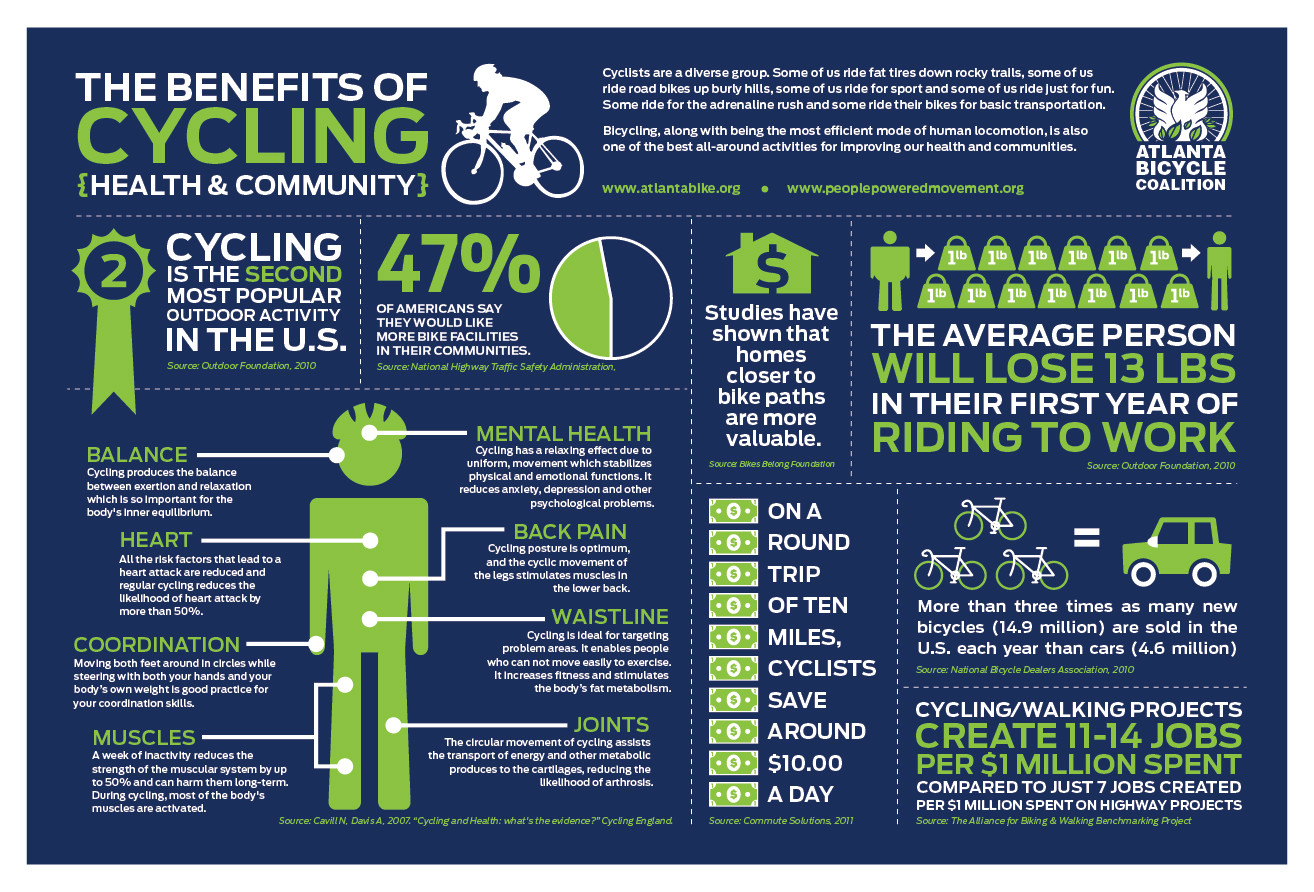
My bike and I are making the world a better place.

I started biking to work again this week. It turns out that, in addition to being good for my own health, this is good for the environment and the economy.

You’re welcome.

You can learn more about how making healthy choices is also good for the environment here.


That’s not fruit! It’s candy in disguise!

It may look like fruit. It may even contain real fruit juice. But many drinks and snacks–especially for kids– that look like fruit are really candy in disguise. Gummy fruit snacks and fruit-flavored drinks like Hi-C are two of the examples I use in my Health and Fitness column in the Aiken Standard this week.

Help! My salad has turned into a cheeseburger!

1 salad at your favorite fast-food or casual dining restaurant (lots of vegetables, healthy)

+

Chicken (or bacon or other meat), cheese, nuts, and other toppings (which can have lots of calories and fat)

The calorie and fat equivalent of a cheeseburger!

——-

You can learn more about the calories and fat in restaurant salads–and how to keep your salad from turning into a cheeseburger–in my Health & Fitness column in the Aiken Standard this week.

In that column I cite McDonald’s nutrition information comparing salads with other menu items. Since nearly every restaurant chain has nutrition information online, you can learn more about making healthy choices at your favorite restaurant. You may be surprised by what you learn.

More about Olympic sports science

I was catching up on some reading and came across this article in Time magazine about the training, fitness, and performance of Olympic athletes. It is an interesting peek into the world of sports science and shows that, no matter how important good genes are, rigorous training is the key to success.