Category Archives: Health & Fitness

Don’t be an April Fool! Weight loss myths revealed.

Diets don’t work!

Exercise will make you gain weight!

This supplement will melt fat away while you sleep! 

Unfortunately, claims like these are not an April Fools joke. They are repeated so frequently that diets and exercise are avoided by many in favor of supplements to promote weight loss. Also unfortunately, they aren’t true. My Health & Fitness column in the Aiken Standard this week busts these common weight loss myths. Here is a bit more about each.

1. Diets don’t work! This is a common claim, usually to explain why most people who lose weight end up gaining it back. But diets do work. Almost every diet leads to weight loss in the short-term and some lead to  long-term weight loss. I have written about selecting the “best” diet and why the diet you pick isn’t the most important predictor of weight loss previously. And it is possible to lose weight and keep it off. But it is difficult, as this article explains so elegantly. Difficult, not impossible.

2. Exercise will make you gain weight! This is another popular myth about weight loss.  The good news is that exercise does work to promote weight loss. In fact, weight loss by exercise alone results in greater fat loss and preserves muscle compared to weight loss by diet. It’s true. But you probably shouldn’t try to lose weight by exercise alone. The best results will come from combining diet and exercise.

3. Melt fat away while you sleep by taking supplement X! This sounds great, which explains why Americans spend billions of dollars on dietary supplements each year. Unfortunately, most of these supplements have not been researched either adequately or at all to determine their effectiveness or safety, or they have been shown to be ineffective, as shown here. A conservative conclusion is that there are no supplements that have been shown to safely promote long-term weight loss.

Know your nutrients: Fats

I am continuing my celebration of  National Nutrition Month by writing about the major nutrients (called “macronutrients”) in my Health & Fitness column in the Aiken Standard. This week I provided information about fats.

Although there are different sources and types of dietary fats, they are are usually grouped together. This leads to the misperception that “fat is bad” or “fat is good. It turns out that some fat intake is essential for good health and getting more of your dietary fats from some sources is better for your health than other sources. For example, saturated fat and trans fats are This is where things get confusing.

I try to alleviate some of this confusion in my column, but I wanted to provide some links to additional (and quality) information. You can learn more about dietary fats, including additional details about functions, health effects, and recommendations from the Centers for Disease Control and Prevention here and from the Mayo Clinic here.

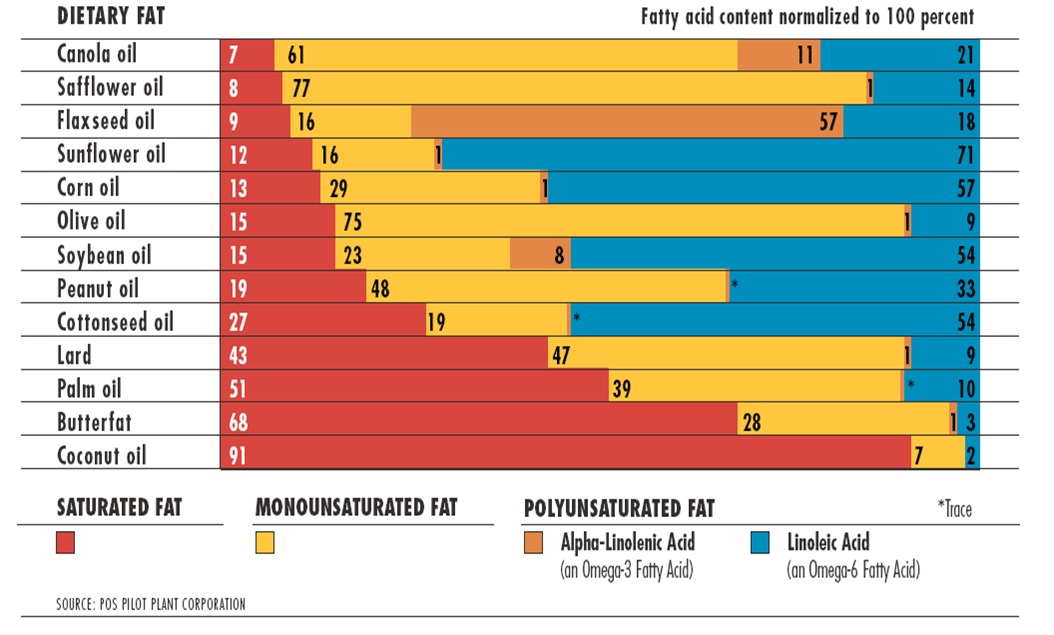
Ultimately, making smart food choices is needed to shift the balance from unhealthy (saturated and trans) fats to healthier (monounsaturated and omega-3) fats. But determining the types of fats in the food we eat is difficult, to say the least. This excellent graphic shows the food sources of the various types of fatty acids and I find it helpful for making recommendations.

Image

Source: http://canola.okstate.edu/nutrition

Even though the health effects of dietary fats is a confusing issue, the bottom line is that most people could benefit from the following two steps:

  1. Reducing their intake of total fat
  2. Shifting the balance  away from saturated (primarily animal sources) and trans (processed foods) fats toward monounsaturated and omega-3 fats from vegetable oils and fish.

Know your nutrients: Carbohydrates

March is National Nutrition Month, an annual campaign to educate people about making healthy eating choices. Reading food labels is an important step in making smart choices. But food labels tend to be confusing, and many people don’t understand the terminology or even what the major nutrients listed on a food label are. In order to make informed decisions, people really need to know some basic information about the food we eat, including the major nutrients.

I am celebrating National Nutrition Month by writing about the major nutrients—carbohydrates, fats, and protein—in my Health & Fitness column in the Aiken Standard. This week I provide an introduction to carbohydrates.

You can learn more about carbohydrates, including specific guidelines and recommendations here.  I recently heard an interesting segment about whole grains on the NPR show Talk of the Nation. Apparently, all whole grains are not created equally. It’s worth a listen.

If you were paid millions of dollars, you would lose weight too!

Jared Fogle has been a spokesperson for Subway restaurants for 15 years now. He has had a huge impact on Subway sales, largely because of his remarkable weight loss which was due, in part, to eating Subway sandwiches. (Of course, there is nothing magical about his “Subway diet.” The weight loss was due to the fact that he was eating far fewer calories!)

What is more remarkable than his initial weight loss is the fact that Jared kept the weight off for 15 years. He has had some serious motivation to do so. First, he has literally been paid millions of dollars to keep the weight off. Second, because his story is so widely known and because he is so recognizable, Jared is accountable to all of us. His weight regain would be noticed by many people, include some who have made him a role model.

Most of us won’t get paid to lose weight (or exercise or quit smoking), but we can find something to motivate us. And by telling people about our goals—or better yet, getting them involved with us—we are accountable to others. In this way we can benefit from the very same factors that have contributed to Jared’s success.

You can read more about motivation and accountability and making health behavior changes in my Health & Fitness column in the Aiken Standard this week.

Too much of a good thing–can you do too much exercise?

Given that most people aren’t active enough, the message “move more” seems like a good one. But it is possible to do too much. my Health & Fitness column in the Aiken Standard this week discusses the potential hazards of doing too much exercise as well as how to avoid this situation.

For most people, the biggest risk for doing too much comes when they begin an exercise program. Progressing too quickly to longer time and/or higher intensity exercise can lead to muscle soreness or injury. A common guideline is the 10% rule: don’t increase your time or intensity more than 10% at a time. Although increases of 10% may not always be practical—a 10% increase from a 30 minute jog is 33 minutes—the message to increase slowly is a good one. Incidentally, this New York Times article suggests that there isn’t any good evidence that following the 10% rule reduces injury risk. That said, going from a 30 minute run to 60 minutes is too much, too soon.

One way to get guidance on how to progress in an exercise program is to consult a fitness professional, like a personal trainer. Sadly, many people get injured, or at least have a bad exercise experience, because of an overly ambitious personal trainer. Make sure you find someone who has experience with novice exercisers to help reduce this risk.

Despite the potential hazards of doing too much exercise, most people should worry about not doing enough. So, get moving!

It’s not about the diet

Last week I wrote about some characteristics of a good weight loss diet and what to avoid if your goal is to lose weight and keep it off. At about that time, the Best Diets rankings were published in U.S. News and World Report.

Despite this focus on diets and what to eat to lose weight, the key to long-term weight management isn’t food—it’s your ability to make good decisions and change your behaviors to support your weight loss goal. Sure, what you eat is important, and you should find a diet that is low in calories and teach you how to eat a healthy diet in the long run. But to make that diet work you need to alter your eating and activity habits. This is the difficult part, especially after the diet or weight loss program “ends”. (As people who have lost weight and kept it off will tell you, the effort never really ends)

To illustrate the importance of behavior change in achieving lasting weight loss, here are two examples of real people (with fake names) and how they overcame a major obstacle by changing their habits:

Andrea was a single mom who worked full-time and took classes toward her college degree. As you can imagine, her days were full and, even though she knew exactly what she should eat, she ate most of her meals on the go, often when driving. This meant that she ate a lot of take-out and fast food, typically as several snacks throughout the day as opposed to normal meals. Andrea struggled to lose weight and was getting frustrated that even though she knew what she should be eating, her lifestyle made this all but impossible. Then she decided to start packing food for herself. She actually carried two bags—one with her books and the other neatly packed with healthy snacks. This way she could have appropriate food with her everywhere she went. A yogurt in the morning at work rather than donuts from the kitchen or fruit and cheese instead of fast food while driving to pick up her kids at school. Preparing a day’s worth of food took time, but making this change made all the difference for Andrea.

Ed travelled a lot for work, which meant he spent long days on the road and ate out for most meals. Sitting all day in meetings and eating at restaurants with business associates made it almost impossible for him to stick with his diet or exercise program. He did his best to order salads, skip desert, and look for the healthiest options on the menu. No surprise, he ended up eating far more calories than he should and didn’t lose much weight. But skipping these meals wasn’t an option. Ed decided that since he couldn’t control his diet as much as he would like, he would focus his efforts on exercise. He started staying at hotels with fitness centers and woke up early to exercise before work. If he finished early in the afternoon he would use that time to go for a walk or go to the gym again before dinner. This wasn’t easy, but it was worth it. The exercise helped with weight loss directly by burning calories and indirectly by giving Ed a sense of control over his weight loss which motivated him to be even more careful ordering meals.

What Andrea and  Ed have in common is that, even though they were following the same diet (a low-calorie diet with daily exercise), their success came more from how they changed their behavior to fit their lifestyle than from the details of the diet. And that is something that most diet books or programs don’t tell you. It is also why it takes most people several tries before they successfully lose weight and keep it off. Anyone can follow a diet for a few months, making short-term changes to accommodate a new eating and activity pattern. But it takes someone with real dedication to make the type of long-term behavior modifications that are required to keep weight off in the long run.

Fat but fit, Santa is ready to go!

He may not look it, but Santa probably hits the gym regularly to work on the strength, endurance, and flexibility he needs for his job. Since Santa tends to keep to himself, he hasn’t come to my lab for a fitness test. But I tried to make a good guess as to what he does in the “offseason” to stay in shape in my Health & Fitness column in the Aiken Standard.

It’s a good thing he keeps himself in shape, too. Since he is overweight, good fitness is essential for reducing his risk of, among other things, a heart attack or stroke. In fact, Santa is probably healthier than some people who have a “normal” weight, but don’t exercise.

He should watch his weight, though. An ABC News report suggests that Santa is getting fatter!

An unexpected consequence of childhood obesity

My Health & Fitness column in the Aiken Standard this week is about an unexpected consequence of childhood obesity. Much of the discussion of childhood — and adult — obesity is centered on the health effects. Since obesity is a leading cause of type 2 diabetes, high blood pressure, and heart disease, there are serious consequences of being overfat.

The problem is even more severe in young people. Because of childhood obesity, pediatricians are now treating kids in their early teens for type 2 diabetes. Adults who have type 2 diabetes tend to have heart attacks at a relatively young age and are likely to die early. Does this mean that teenagers who have type 2 diabetes will suffer heart attacks in their 20s and 30s? Many physicians and researchers think so, but the truth is that we just don’t know…yet.

Kids who are obese also tend to be less physically active than their peers. This leads to a condition of low fitness, making participation in sports more difficult, which leads to more inactivity, which can lead to weight gain… I think you get the idea. And children who are at a “healthy” weight may be unfit due to not getting enough exercise. So there is now this situation in which young people are likely to be unfit, obese, or both.

Aside from the health issues, there is an unexpected consequence of childhood obesity: many potential military recruits do not meet weight and/or fitness entrance requirements. It is entirely possible that the obesity epidemic could have national security consequences!

You can read more about the problems associated with obesity and poor fitness among military recruits here.

Where to begin?

Let’s say you smoke, don’t exercise, and need to lose weight. Or maybe you are overweight and mostly sedentary. Let’s also say that you are only willing to change one of these health behaviors. Where should you begin?

This is the topic of my Health & Fitness column in the Aiken Standard this week. Check it out…the answer may surprise you.

Incidentally, many people are in the situation described above and many more need to change two of these behaviors, most commonly losing weight and becoming more active. And many people find making these changes to be overwhelming, so they try to start with one. But which one?

Your pants may be making you fat!

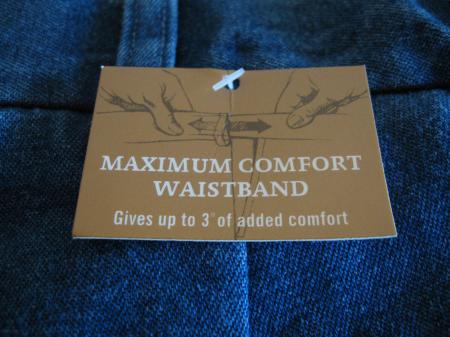
It’s true! Many men’s pants—women’s too, I’m told—have an expandable waist with up to 2–3″ of stretch for “comfort” or to “move with you.” Move with you? Are you James Bond?

What this really means is that these pants allow you to expand your waist and still wear the same size pants. That way you can still tell yourself that you wear the same pants size you did in college.

Read more about this, and other ways we miss signals that we are gaining weight, in my Health & Fitness column in the Aiken Standard today.

Maybe we have been asking the wrong question. Instead of, “Do these pants make me look fat?” we should ask “Will these pants actually make me fat?”

These pants WILL make you fat!

“Comfort” must be pants-code for fat!