Tag Archives: health

The importance of youth sports for health and fitness.

Since May is National Physical Fitness and Sports Month, it’s a good time to think about the vital role of youth sports in promoting fitness and health. This is the topic of my Health & Fitness column in the Aiken Standard this week.

pexels-kampus-8813564

Continue reading

Driving yourself to the doctor–why spending time in the car is bad for your health, and what to do about it.

Have you ever thought about how much time you spend in your car? On average, Americans face a 50-minute round-trip drive each day just for their jobs, and nearly thee-quarters of commuters drive alone. In suburban and metropolitan areas the commute can be much longer. Even in Aiken the average commute time is about 23 minutes. When you include driving to work, taking the kids to school, and doing errands, sitting in a car can easily account for an hour or more each day.

The impact of spending time in the car on your health is the topic of my Health & Fitness column in the Aiken Standard this week.

You are probably very aware of the time you spend in the car. What you may not know is that sitting in your car can also have negative effects on your health and happiness. This is the conclusion of several studies that examined the relationship between commuting time and indicators of health. One of these studies suggests that vehicle miles traveled is a strong predictor of obesity. In another study, commuting a greater distance was associated with lower levels of physical activity and fitness as well as a higher waist circumference and blood pressure.

This makes sense because spending more time sitting in your car means you have less time to dedicate to being physically active, something we know is good for your health. Add to that the fact that driving is sedentary. There is accumulating evidence that spending more time sitting in the car, at work, or at home is a predictor of poor health, regardless of how active you are the rest of the day.

It gets worse. Many people eat in their cars during long commutes. Much of the time these “meals” consist of fast food and other prepackaged foods—not many people eat salads while they drive! Since these foods are typically of questionable nutritional quality and high in calories, this alone can contribute to obesity and poor health. The combination of inactivity and eating behind the wheel can easily shift the balance toward weight gain. Plus, eating while you drive is dangerous!

Beyond the direct impact on health through eating and activity behaviors, commuting alone in a car is a form of social isolation. Research suggests that this can lead to depression, itself an important factor leading to poor health.

The problems with long commute times are well established and easy to appreciate. Unfortunately, the solutions are not. Most people can’t move in order to have a shorter commute and relying on public transportation isn’t practical or even possible for many people, especially in our area. Replacing driving a car with active modes of transportation simply isn’t practical.

Aside from the time requirement, our environment doesn’t adequately support active travel—imagine how long a 25-minute drive would take on a bike or on foot! Being able to walk or bike requires access to safe bike lanes and sidewalks that connect people’s homes to work, school, and other destinations. Even public transportation increases activity over driving and enhances social connections. Sadly, this infrastructure doesn’t exist in most communities, which were built to support cars, not people.

But we can take steps to undo some of the damage that so much driving can cause. Making activity at other times of the day a priority is a good start. This could include exercise at the gym, going for a walk, or even yard work or housework. When possible, replace car trips with walking or biking. Planning these activities with others can strengthen social connections as well as improve health and fitness. Finally, act as an advocate for changes in the community that will make active transportation more realistic.


drparrsays blog footer

Golf for fun, fitness, and health

Since the Masters is this week, lots of people in our area are talking about, and playing, golf. Over 25 million Americans played golf last year, making it one of the most popular sports to participate in. In fact, golf is the most popular sport played by adults over the age of 55.

Often perceived as a leisurely activity for retirees or business executives, golf offers a wide range of health benefits that make it an excellent form of physical activity for individuals of all ages. Playing golf can improve cardiovascular health, enhance muscle strength and endurance, increase flexibility, improve balance and coordination, and reduce stress levels. This is the topic of my Health & Fitness column in the Aiken Standard this week.

pexels-jopwell-1325681


According to one study, which measured heart rate in golfers not using an electric cart on a hilly cart, the intensity of a round of golf is consistent with moderate-intensity aerobic exercise. Considering that the average golfer plays for about three hours per round, this accounts for a substantial amount of recommended weekly physical activity. A golfer who walks the course could burn up to 1,000 calories over 18 holes. Of course, the activity level and health benefits are reduced when riding in a motorized cart, but even that level of activity is associated with health benefits.

Playing golf can improve muscle strength and endurance. Golf requires the use of multiple muscle groups, including the core, legs, arms, and shoulders. Swinging a golf club strengthens the muscles of the upper body, while walking uphill and downhill on the golf course strengthens the leg muscles. Carrying the golf bag on the shoulders or pushing a golf cart can further enhance the benefits of the exercise.

Golf can also enhance flexibility, which is crucial for maintaining a healthy range of motion and reducing the risk of injuries. The swinging motion of the golf club requires a full range of motion of the shoulders, back, hips, and wrists. Additionally, the walking and bending involved in playing golf also contribute to improving flexibility. Together, enhanced strength and flexibility  can aid in the prevention of back pain, joint stiffness, and muscle soreness.

Playing golf can also improve balance and coordination, which is essential for performing daily activities and maintaining stability. Golf requires a high level of hand-eye coordination, as well as coordination between the upper and lower body. The ability to maintain balance while swinging the golf club and walking on uneven terrain can help prevent falls and injuries, especially in older adults.

Lastly, playing golf can reduce stress levels and improve mental health. Most golfers play in a group, so golf offers social interaction in addition to activity. Furthermore, outdoor activity is known to have substantial benefits on mood and feelings of well-being, meaning that golf can be good for mental health as well as physical health.

In conclusion, golf is an excellent form of physical activity that offers numerous health benefits. The aerobic, strength, flexibility, balance, and coordination involved in playing golf can enhance overall fitness and reduce the risk of chronic diseases. Furthermore, golf can provide a peaceful and relaxing environment that can reduce stress levels and improve mental health. So, next time you think of golf, remember that it is not just a sport but also a way to stay fit and healthy.



drparrsays blog footer

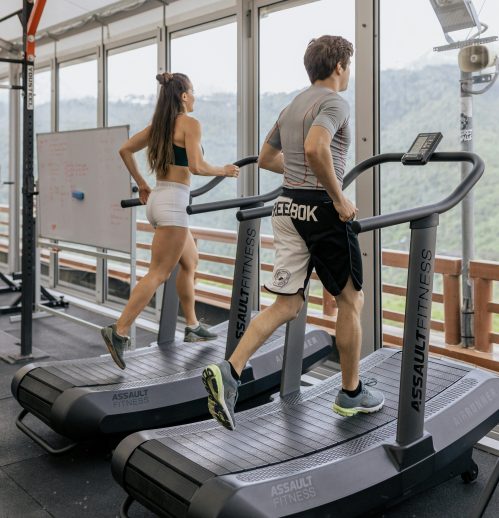
Understanding Training Zones

Aerobic exercise is essential for fitness, weight loss, and overall health. One way to optimize your exercise routine is to understand the concept of “training zones.” These zones are based on your heart rate and reflect different levels of intensity. By tailoring your workouts to these zones, you can achieve more specific fitness goals, from fat burning to improving athletic performance. This is the topic of my Health & Fitness column in the Aiken Standard this week.

Continue reading

Trick or treat? More like getting tricked by treats! Watch out for candy and soda dressed up as healthy food.

Boo! Since Halloween is this week, it’s a good time to think about what makes this holiday so scary. It’s not the ghosts or zombies that come to your door in the evening seeking candy that you should be scared of, though. In fact, you don’t even need to wait until dark to get spooked. You are likely to see the scariest “costumes” on your breakfast table on Halloween morning—candy and soda dressed up as healthy food! Here are three common examples:

candy corn


Fro-yo dressed as healthy yogurt

Most people would consider yogurt to be a healthy breakfast. And it is, provided you aren’t getting tricked! Low-fat and fat-free flavored yogurt is almost always sweetened with sugar. This is true for the yogurt tubes that kids love and much of the Greek yogurt that is so popular. Sure, it contains protein and beneficial bacteria, but the added sugar makes it equivalent to frozen yogurt or ice cream in terms of calories and sugar. Some of these yogurts even come with toppings, like bits of chocolate, just like fro-yo!

A healthier alternative is plain yogurt with real fruit. Sure, it’s not as sweet, but you will be getting the benefits of eating yogurt without all the added sugar.

Soda dressed as fruit juice

Many “fruit” drinks contain less than 5% juice but plenty of added sugar, so they are essentially soda without bubbles. For example, the orange drinks like Hi-C or Sunny D are a popular substitute for orange juice, but they are far from a nutritional equivalent. The same is true for other drinks, including juice boxes and pouches, which are commonly part of breakfast, lunch, or snacks. Even scarier is the fact that these drinks are much sweeter than real fruit. Children may develop an expectation that oranges or orange juice should taste as sweet as soda and prefer the sugar-sweetened version over the real fruit.

A better choice is to make real fruit and fruit juice, not soda disguised as juice, a part of meals and snacks

Candy bars and cookies dressed as cereal and breakfast bars

Many popular breakfast foods targeted at children include sugar-sweetened cereals, pastries, and bars. Some breakfast bars and cereals that seem healthy are really candy bars in disguise. Some even skip the disguise and actually look like candy or dessert. Pop Tarts and some granola bars are covered in chocolate or frosting, and favorite cereals often contain marshmallows or are shaped like cookies. No surprise that these foods are as high in calories and sugar as cookies or some candy bars. Worse, a child who is used to breakfast or snack foods that taste like candy or cookies may resist real food when it is offered. Now that’s scary!

When you think you are eating something healthy but it’s really not—I call this Candy and Soda for Breakfast. And it’s not just breakfast, it happens at every meal.

While the focus here is on food for kids, it really isn’t much different for adults. Breakfast foods like donuts and pastries are almost always topped with icing and it would be difficult to distinguish many muffins from cupcakes. For many people, coffee isn’t just coffee anymore, but a drink that contains as much sugar and as many calories as a milkshake, sometimes with whipped cream on top. What’s really scary is that this is how many people eat every day.

The good news is that you can make your breakfast healthier without too much effort. While there is much debate about what constitutes a healthy breakfast, there is agreement about what it doesn’t include—lots of added sugar! Look for cereals that are low in added sugars and high in fiber. Include real fruit, fruit juice, and milk (or soy milk) whenever possible. If you have time, eggs are an excellent source of protein and healthy fats. Yogurt is good, too, but watch out for added sugars in flavored yogurt. Whole grain toast or a bagel with peanut butter makes a good alternative to Pop Tarts or breakfast bars.

As a general rule, steer clear of foods that look like dessert. Frosting, marshmallows, chocolate chips, and sprinkles simply aren’t part of a healthy meal!

If you are worried about the big bags of candy that get brought home on Halloween night, keep this in mind.  While eating a lot of candy is never healthy, a typical Halloween candy binge lasts a few days, after which time the candy is gone or the kids are literally sick of eating it.  The long-term effects on your kid’s health (and teeth) can be offset by a good diet, regular activity, and diligent brushing and flossing. The same applies to you, too, if you find yourself digging into the big bowl of candy that is inevitably left over.


drparrsays blog footer

Exercise for stress management and resilience

Many people in our area are still dealing with damage from Hurricane Helene and the overwhelming impact it is having on their lives. Hurricanes and other natural disasters can have a profound negative impact on our physical and mental health. From everyday pressures to the aftermath of natural disasters, finding effective coping mechanisms to deal with stress is crucial.

Exercise is a potent tool for stress relief and resilience, both in daily life and in the wake of catastrophic events. This is the topic of my Health & Fitness column in the Aiken Standard this week.

hurricane copy

Continue reading

Celebrate Walktober by going for a walk outdoors.

Now that cooler fall weather is here, being active outdoors is more enjoyable. October is a great time to get outdoors and go for a walk! That is the spirit of Walktober, an initiative adopted by health organizations, companies, and communities around the globe.

Walking is a great way to be active to help you control your weight, increase your fitness, and improve your health. The most common form of exercise for most people is walking, and for good reason: walking doesn’t require any special equipment (beyond comfortable shoes) or skills, and you can do it almost anywhere.

You can meet basic physical activity recommendations by walking briskly for 30 minutes most days of the week. Even this amount of walking can lead to a lower risk of diabetes, heart disease, and some cancers as well as improved mental health, cognitive function, and greater feelings of well being.

father and son walking in woods

Continue reading

The importance of youth sports for health and fitness.

Since May is National Physical Fitness and Sports Month, it’s a good time to think about the vital role of youth sports in promoting fitness and health. This is the topic of my Health & Fitness column in the Aiken Standard this week.

pexels-kampus-8813564

Continue reading

Don’t get juiced! Whole fruits and vegetables are healthiest.

Nutrition information is often confusing and conflicting, making healthy food choices a challenge. Fortunately, there are some recommendations that are consistent. Among these is eating more fruit and vegetables. Depending on how you consume these foods, you may be missing some of the nutrients that make them so healthy. This is the topic of my Health & Fitness column in the Aiken Standard this week.

Continue reading

Golf for fun, fitness, and health

Now that spring has arrived and the Masters just ended, lots of people in our area are talking about, and playing, golf. Over 25 million Americans played golf last year, making it one of the most popular sports to participate in. In fact, golf is the most popular sport played by adults over the age of 55.

Often perceived as a leisurely activity for retirees or business executives, golf offers a wide range of health benefits that make it an excellent form of physical activity for individuals of all ages. Playing golf can improve cardiovascular health, enhance muscle strength and endurance, increase flexibility, improve balance and coordination, and reduce stress levels. This is the topic of my Health & Fitness column in the Aiken Standard this week.

pexels-jopwell-1325681


According to one study, which measured heart rate in golfers not using an electric cart on a hilly cart, the intensity of a round of golf is consistent with moderate-intensity aerobic exercise. Considering that the average golfer plays for about three hours per round, this accounts for a substantial amount of recommended weekly physical activity. A golfer who walks the course could burn up to 1,000 calories over 18 holes. Of course, the activity level and health benefits are reduced when riding in a motorized cart, but even that level of activity is associated with health benefits.

Playing golf can improve muscle strength and endurance. Golf requires the use of multiple muscle groups, including the core, legs, arms, and shoulders. Swinging a golf club strengthens the muscles of the upper body, while walking uphill and downhill on the golf course strengthens the leg muscles. Carrying the golf bag on the shoulders or pushing a golf cart can further enhance the benefits of the exercise.

Golf can also enhance flexibility, which is crucial for maintaining a healthy range of motion and reducing the risk of injuries. The swinging motion of the golf club requires a full range of motion of the shoulders, back, hips, and wrists. Additionally, the walking and bending involved in playing golf also contribute to improving flexibility. Together, enhanced strength and flexibility  can aid in the prevention of back pain, joint stiffness, and muscle soreness.

Playing golf can also improve balance and coordination, which is essential for performing daily activities and maintaining stability. Golf requires a high level of hand-eye coordination, as well as coordination between the upper and lower body. The ability to maintain balance while swinging the golf club and walking on uneven terrain can help prevent falls and injuries, especially in older adults.

Lastly, playing golf can reduce stress levels and improve mental health. Most golfers play in a group, so golf offers social interaction in addition to activity. Furthermore, outdoor activity is known to have substantial benefits on mood and feelings of well-being, meaning that golf can be good for mental health as well as physical health.

In conclusion, golf is an excellent form of physical activity that offers numerous health benefits. The aerobic, strength, flexibility, balance, and coordination involved in playing golf can enhance overall fitness and reduce the risk of chronic diseases. Furthermore, golf can provide a peaceful and relaxing environment that can reduce stress levels and improve mental health. So, next time you think of golf, remember that it is not just a sport but also a way to stay fit and healthy.


drparrsays blog footer