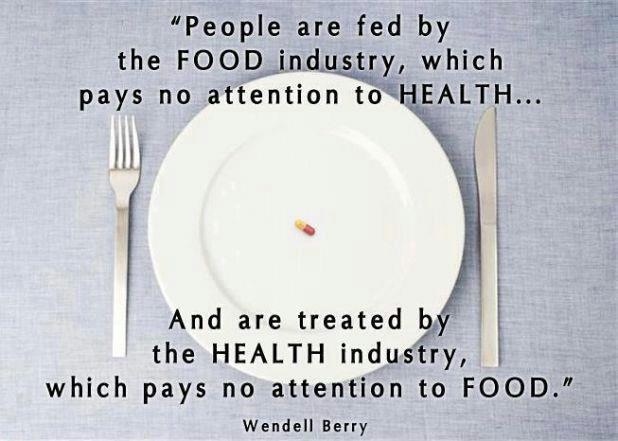
It shouldn’t be food vs. health — it should be food AND health. I wonder when we will get this right?

It shouldn’t be food vs. health — it should be food AND health. I wonder when we will get this right?
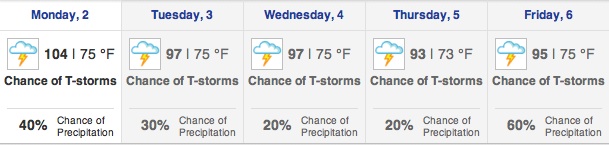
A look at the weather forecast for this week shows that the hot temperatures will continue. Even though it is actually cooler than the past few days, these temperature pose a challenge for people who exercise, work, and play outdoors. This is the topic of my Health & Fitness column in the Aiken Standard this week.
You can find more information about problems associated with exercise in the heat as well as suggestions for safe play in the heat from the American College of Sports Medicine here.
Posted in Uncategorized
When can zero be too much? When it comes to trans fats. Excess consumption of trans fats is linked to high LDL (bad) cholesterol and a high risk of heart disease. The Nutrition Facts panel on food labels now contains the trans fat content of the food in grams. You should look for foods that contain little to no trans fat–as well as low levels of saturated fat, which is also linked to heart disease. But did you know that a food that is labeled as containing 0 grams of trans fat may actually contain up to 0.49 grams? It’s one of example of how food labels can be confusing and, at times, misleading.
You can read more about food labels and trans fats in my Health & Fitness column in the Aiken Standard.
You can learn more about the Nutrition Facts panel and deciphering food labels here.
Posted in Health & Fitness
Several people have asked me if taking a multivitamin/mineral supplement can take the place of eating fruits and vegetables. The answer, or course, is no! There is more to food than vitamins and minerals. Fruits and vegetables are also a good source of fiber and some are good sources of protein.
I address this question in my Health & Fitness column this week and provide additional examples of why eating healthy food is the best choice. Trying to make up for a poor diet by taking supplements simply won’t work.
That said, taking a multivitamin/mineral supplement is appropriate as a way to “top off” the vitamins and minerals you get from the food you eat. Most supplements contain levels that are at or above 100% of the recommended intake (the RDA) for most of the vitamins and minerals. In most cases this isn’t harmful and you will excrete the excess. But you should look for a multivitamin/mineral supplement that contains at most 100% of the RDA for each; there is really no benefit of taking in more. The key point is that the vitamin supplements your diet, so you don’t need to get 100% of your vitamins and mineral from the supplement.
Posted in Uncategorized
I was just watching a Frontline episode about Parkinson’s disease. It was an interesting show, but a segment about treating Parkinson’s disease with exercise really got my attention. Ongoing research is showing that exercise is beneficial for Parkinson’s patients, potentially more so than some medications. Obviously, more research is required to determine the mechanisms by which exercise acts on the brain and the optimal dose of exercise for treating PD.
I’m not surprised, though, since I believe that regular exercise plays a beneficial role in nearly every physiological process in the body. That doesn’t mean that exercise can prevent or cure every disease, but I think we will continue to learn that exercise has some benefit or, at the very least, doesn’t make any disease worse. It’s nice to see that research is being done in this area and that new benefits of exercise are being discovered.
You can watch the full Frontline episode here and learn more about the research in the area of exercise and Parkinson’s disease here.
Posted in Uncategorized
My Health & Fitness column in the Aiken Standard this week is about the benefits and potential drawbacks of high-intensity interval training (HIIT). With this type of training, even a few minutes of very intense exercise can lead to improvements in fitness that are greater than can be achieved through longer training sessions at a lower intensity. But the level of effort needed to see these improvements may be too much for many people.
You can learn more about the benefits of high-intensity training from this recent article: Physiological adaptations to low-volume, high-intensity interval training in health and disease.
That article might be a dense for non-scientists, so a more user-friendly alternative is here: How 1 minute intervals can improve our health.
Posted in Health & Fitness
I like infographics and I like nutrition information, so I think this is pretty cool: Fat or Fiction.
Maybe we would make better food choices if nutrition information was presented in a way that was both interesting and easy to understand.
My Health & Fitness column in the Aiken Standard this week is about toning shoes and whether the claims made by the shoe manufacturers can be believed. Based on research that I presented, and that presented by others, at the American College of Sports Medicine Annual Meeting last week in San Francisco, the answer is no!
Claims that toning shoes cause you to burn more calories and promote weight loss were not supported by my own study and another similar study, both of which showed no meaningful difference in calories burned wearing toning shoes compared to regular shoes.
Similarly, the claims that toning shoes can strengthen and tone muscles in the legs were not supported by several studies that showed no real difference in muscle activation while walking or standing in the toning shoes. (abstracts from these presentations are available here)
This research is in accordance with a previous study that showed that toning shoes do not cause changes in muscle activation or in the energy expended during walking.
My study did show that people tended to walk more and eat fewer calories on days when they were wearing toning shoes compared to days when they wore their regular shoes. It seems as if wearing the toning shoes encouraged people to make healthier activity and dietary choices. This study only lasted two weeks, so we don’t know if this represented a lasting change or not. But if these changes were maintained, they could lead to weight loss in the long run.
The bottom line is that wearing toning shoes isn’t the answer to weight loss or toned muscles as the shoe companies suggest. But if wearing them makes you walk more–most subjects report that walking in them is very comfortable–then it won’t hurt.
It seems like the shoe companies and the public are getting this message. The sales of toning shoes dropped from $1.1 billion in 2010 to $550 million in 2011. And two shoe companies recently paid a combined $65 million to settle consumer complaints about their effectiveness. (You can read more about this here)
Posted in Health & Fitness
If you are trying to lose weight you may wonder which diet is the best. In reality, there is no “best” diet, since it is possible to lose weight following almost any diet. But there are characteristics of diets that tend to promote better long term success:
The last two are particularly important since reducing portion sizes almost always reduces calories, and daily exercise will increase weight-loss and help you keep it off. The goal of a good diet should be for you to learn how to change your lifestyle for long-term weight maintenance, not just short-term weight loss. The result may be losing weight more slowly, but you are less likely to gain it back.
There is a diet that I recommend to everyone: The DASH diet. This diet was originally developed to treat high blood pressure – DASH stands for Dietary Approaches Stop Hypertension – but research showed that it led to weight loss. The DASH diet is low in red meat, added sugar and fat and emphasizes whole grains, fruits, vegetables and low-fat dairy foods. It is widely considered to be a healthy diet and has been shown to lower blood pressure, blood cholesterol and blood glucose in addition to promoting weight loss. Best of all, information about the DASH diet is available for free at www.nhlbi.nih.gov/health/public/heart/hbp/dash/.
The DASH diet is an excellent way to eat for promoting weight loss and maintaining your weight. Even if you don’t need to lose weight, the makeup of the diet is consistent with preventing and treating other health problems and maintaining your weight over time.
Posted in Health & Fitness
My Health & Fitness column in the Aiken Standard this week is about the problem of losing weight on a diet then gaining it back soon after the diet ends. Many people who lose weight go back to their “normal” way of eating. The problem is that the “normal” diet of most people is hardly normal at all and is certainly not consistent with maintaining weight loss. In the article I give an example of a man who loses 50 pounds but goes back to the way he ate before losing that weight. After losing weight, his energy (calorie) needs are lower than they were when he was heavier. As a result, he was eating 500 more calories each day than he needed to maintain his new lower weight. Predictably, he gained the weight back even though he exercised every day. What he needs is a new “normal” diet.
The reason for this has to do with total energy expenditure (TEE), a measure of how many calories a person needs to maintain their weight. TEE is determined by two major components: Resting metabolic rate (RMR)–what most people refer to as their “metabolism”– and the energy expended in activity. RMR is based on body size and sex; the energy of activity is based on how active you are, including occupational activity, exercise, and other activity.
TEE is useful because it represents the number of calories you need to eat to maintain your current weight, assuming your activity doesn’t change. It is also a good way to come up with a calorie goal for a diet. For example, if your TEE is 2500 calories/day and your diet is 1,500 calories/day you are cutting out 1,000 calories/day. This should lead to a weight loss of 2 pounds per week. I also use this information to help explain why someone isn’t losing weight at quickly as they expect. The culprit is usually that they are eating more than they think they are, likely because portion sizes are too big. (If you have done this, don’t feel bad. Estimating portion sizes and calories is challenging, even for “experts”)
RMR can be measured in a lab, but it is usually estimated using a complicated formula based on age, height, weight, and sex. Energy of activity can be estimated based on your usual level of physical activity. You can calculate your own total energy expenditure using the following equation below, which is super-simple but accurate enough for most purposes. More complicated equations can be used for research, but that isn’t necessary here.
Step 1: Calculate your RMR
RMR (calories/day) = weight (kg) x 24
(note: weight in kg = weight in pounds ÷ 2.2)
Step 2: Calculate TEE
TEE (calories/day) = RMR x activity level
Activity levels
Posted in Health & Fitness

 Dr Parr Says...