It’s about time.

My Health & Fitness column in the Aiken Standard this week is about time—why dedicating adequate time is essential for exercise and weight loss success and suggestions for how to spend your time to achieve health and fitness goals.


Improving your health through diet, exercise, and weight loss takes motivation and dedication. It also takes time. This includes time to learn about what you should (and shouldn’t) do as well as the time needed to modify these health habits. For many, the problem isn’t knowing what to do or how to get started, it is finding the time to stick with the program. In fact, the number one reason why people abandon their diet and exercise routine is lack of time.

Given that most people are busy—maybe too busy—with work, family, and other responsibilities, finding time to focus on health isn’t easy. But it is important, so the first step should be dedicating your time wisely to meet your goals. This involves time for planning, taking action, and monitoring your progress. In short, you should treat your diet or exercise program like a project, rather than an “extra” activity.

This idea is supported by behavior change research, workplace productivity programs, and the practical experience of real people who have gone through this process. Here are a few suggestions to help you dedicate the time you need to achieve your health and fitness goals.

Before you begin. Any health behavior change should begin with identifying what you want to change, setting realistic goals, and determining what information, resources, and support you will need. For example, if you want to lose weight you should have a goal weight and timeline in mind. You should also set both short-term (weekly) and long-term (monthly or longer) goals.

This is also a good time to determine when and how you will put your plan into action. If you need information about what to eat or decide to join a gym to exercise, put those components in place now. Looking at your calendar and scheduling time for preparing meals and daily exercise or making a weekly menu of meals and a grocery list before you go to the store are good ways to invest your time.

Getting started. Once you have yourself organized, it is time to begin! Hopefully, this is a bit easier since you planned ahead, but keep in mind that you will continually need to revisit and modify your plan. This is important because a major reason why people don’t succeed is that they don’t allow flexibility in their plan. Once things go awry, they give up. The key is to keep moving forward, even if the progress is slow.

Keeping track of your weight or a record of what you eat or what you do for exercise is a simple way to monitor your progress. Linking progress to rewards is important for keeping you motivated, but make sure the rewards are consistent with your goals.

Sticking with it. While starting a diet or exercise program can be challenging, it is also exciting and seeing progress can be motivating. The trick is to maintain that progress over time, especially when you aren’t seeing such big improvements. Knowing that things will not always go as planned can help you avoid a bad day or week from ruining your success. This is why dedicating time to thinking about “what if” scenarios and coming up with back-up plans is essential.


The secret to lasting weight loss or maintaining an exercise program isn’t so much the details of the program but spending the time to plan, get off to a good start, and maintain the changes you decide to make. In the end, it’s about the time you dedicate to developing healthy habits.


The five pillars of good health

What does it really take to live a healthy lifestyle? This is the topic of me Health & Fitness column in the Aiken Standard this week.


Confusing and conflicting information can make improving your health especially challenging. Some advice is straightforward—quit smoking, for example. But other recommendations, especially those regarding nutrition and exercise, are less clear. In an effort to stay focused on the “big picture” I have created what I call the Five Pillars of Good Health. These are five habits that are the basis for achieving and maintaining good health.

Don’t Smoke.

Smoking doubles your risk of heart attack and stroke and is the leading cause of lung cancer. Second-hand smoke can affect the health of others, so these risks are not limited to the smoker.

If you smoke, quit now…no excuses! Newer prescription medications and over-the-counter nicotine replacement products can help, but quitting will require dedication, effort, and support.

Eat Smart.

Good nutrition is essential for preventing and treating most chronic diseases including obesity, diabetes, and heart disease. Perhaps the best way to cut through the conflicting nutrition information and diet claims is to simplify healthy eating to it’s most basic form: Eat real food, not processed “food.”

This isn’t easy, of course. One sure way to make better choices is to limit added sugars and salt, which are almost always present in processed foods. Strive to eat more whole fruits and fruit juices, vegetables, whole grains, legumes (like beans), lean meat, dairy, and nuts. If weight loss is a goal for you, reducing portion sizes will absolutely help you cut calories.

Move More.

This is a three-step process. First, sit less. Limit sedentary time at work and home and make opportunities to get up and move. The health effects of prolonged sitting are similar to not exercising. If you find yourself in stuck a chair for an hour, at least get up and stretch for a minute.

Second, move more. Look for ways to add activity to your everyday routine. This can include yard work and house work as well as using the stairs and parking further away in parking lots. Every additional step counts!

Third, dedicate time to be active every day. This can include activity such as taking the dog for walk as well as more structured exercise that includes endurance, resistance, and flexibility training. Strive for 30 minutes per day, but know that more is better.

Chill Out.

Chronic stress can have a powerful effect on your health. While it is not possible to eliminate all stress from your life, you should dedicate yourself to identifying and modifying sources of stress at work and home and learning to control your stress response.

Much of the stress of life comes down to not having enough time. Good time management, planning carefully, and setting priorities will certainly help reduce both long and short-term stress. You should also know that inadequate sleep adds to the health effects of stress, so strive to get enough sleep.

Make It Work For You.

This is the tricky part—how to actually make these changes. The first step is to make good health a priority and dedicate time and energy to your efforts. No doubt you have tried some of these changes before, you probably have an idea of what does and doesn’t work for you. Try something different this time around. The support of others is essential, so don’t be afraid to ask for help. Get your friends and family involved, too. They will certainly benefit from joining you on your journey toward better health.


Get out of (health) debt

My Health & Fitness  column in the Aiken Standard this week is about debt. Specifically, health debt and how to get out of it.


Getting out of debt is a worthwhile goal and a common New Year’s resolution. This almost always means financial debt, which is a burden for millions of Americans. Many individuals and families have gotten themselves in this situation by spending too much and not saving enough. For most, this situation has been years in the making, has no simple solution, and will have an impact lasting years into the future. Reducing this debt is essential for achieving financial health.

This is not the only type of debt we face—many people are also in health debt. Poor eating habits and increasingly sedentary lifestyles have led to an obesity epidemic. The problem is widespread, since nearly two-thirds of Americans are overweight, including one-third who are obese. Fewer than half of US adults meet minimum recommendations for physical activity and about 20% of adults smoke. Alone and in combination, these poor health habits are the major causes of the most common, and preventable, causes of diabetes, heart disease, and some cancers.

Even if we have not been diagnosed with diabetes or heart disease or other health problems, our lifestyle has put us on that path. Small changes in what we eat or how active we are have added up over the years to create a condition of poor health. And our overall health and potential complications get worse year after year, so the longer we are overweight and inactive, the worse our health is likely to be in the future. That is our health debt.

The good news is that making small changes now can begin to erase our health debt.

The first step to making successful health behavior changes is to identify what needs fixing.

Have you become less active? Are you eating more? Do you smoke? Be specific. An honest assessment of your health and lifestyle is key to your success. Look at this as the equivalent of adding up everything you owe in order to start repaying a financial debt.

Next, be realistic about what you are willing to change. The majority of chronic health conditions can be prevented and treated by making dietary changes, becoming more active, and quitting smoking. Some things aren’t negotiable—you must quit smoking if you are serious about improving your health.

But you can make some choices about others. Are you willing to join a gym and start an exercise program or would making time for a 30 minute walk each day work better for you? If you won’t consider skipping your favorite coffee drink every morning, what will you give up instead? It’s okay to have a few things you don’t want to change, but you have to be willing to make changes elsewhere.

While this can be difficult, keep in mind that even small changes in activity and diet can lead to weight loss and improved health over time. Make it a priority to be active every day and try to spend less time sitting. Pass on second servings at meals and skip desert once in a while. And if you smoke, quit—no excuses.

Remember, this health debt didn’t develop overnight. It was the result of small changes, some of which we may not have noticed, over time. Fixing it will take time, too. But the time to start is now, before the debt gets bigger.

What to expect when you join a gym

One of the most common New Year’s resolutions is to start an exercise program. One good way to do this is to join a gym. The equipment, exercise classes, access to fitness professionals, and the accountability of paying for a membership at a gym can help you meet your exercise goals.

But many people are intimidated by the gym experience or recall a time when exercise meant running, lifting weights, and a “no pain, no gain” mentality. The reality is the modern fitness facilities are constantly changing what they offer to meet the needs of people who are new to exercise as well as those with more experience who are looking for a new challenge.

Since 2007, the American College of Sports Medicine (ACSM) has surveyed health and fitness professionals to identify exercise trends for the upcoming year. The report for 2015 was published in ACSM’s Health and Fitness Journal in November. Here is a summary of the top ten fitness trends to look for in 2015.

The biggest fitness trend for 2015 is body weight training. Popular for building strength and endurance with minimal equipment, body weight training goes far beyond the push-ups and pull-ups you may remember doing in PE class. This type of training can be done almost anywhere, which is good news for people who are on a budget or want to train at home.

Next is high-intensity interval training (HIIT). This type of training uses repeated cycles of short, maximal or near-maximal exercise alternated with short rest periods. These HIIT sessions last less than 30 minutes but lead to fitness improvements that exceed those of traditional longer-duration training. Beginning exercisers should note that HIIT training is intense, so starting slow is recommended.

These first two trends are relevant even in you don’t join a gym. A good example of a high-intensity, body-weight workout that you can do at home with minimal equipment was published in the ACSM’s Health & Fitness Journal in 2013. Because of it’s simplicity and effectiveness, it received much attention in the media and is the foundation of at least one fitness app.

Third on the list is educated and experienced fitness professionals. You should look for a facility that requires the staff to have fitness certifications that involve both education and experience. Some of the most respected certifications are through professional organizations including ACSM, National Strength and Conditioning Association (NSCA), and American Council on Exercise (ACE).

This may include personal training, both individually and in groups. Personal trainers are excellent resources for people just starting out to learn proper techniques, set goals, and track progress. Experienced exercisers can get a motivation boost and learn new ways to enhance their training. Group personal training adds a team dynamic and can be more economical than one-on-one training. Again, finding a trainer who has experience working with people like you is essential, so ask for recommendations and references to get the best match.

Other trends on the list include strength training and yoga. Aerobic exercise, including walking, running, cycling, and swimming, are among the most common forms of exercise. But there are additional benefits to including strength and flexibility training in an exercise program. Building strength can make everyday activities easier, help maintain bone mass, and boost your metabolic rate. Activities like yoga can improve flexibility, which can help reduce the risk of muscle and joint injuries. Yoga can also help with stress management and promote feelings of wellbeing.

While this list does not include every popular or “trendy” type of exercise, it does capture the components of most types of training. CrossFit, for example, is a combination of body weight, strength, and functional training involving high-intensity intervals in a group setting.

Even if you don’t plan to join a gym or aren’t interested in the latest fitness trends, keep in mind that even something as untrendy as walking for 30 minutes each day can have substantial health and fitness benefits. And if you haven’t been exercising, this can be a great way to get started on a happy and healthy New Year!

It’s time for Santa’s annual fitness report

Since Christmas is only a few days away our attention is naturally focused on one person: Santa Claus. Have you ever wondered how Santa gets in shape for his yearly sleigh ride to deliver gifts to good boys and girls around the globe? Like many elite athletes, Santa does not publicly discuss his training or his fitness.

There are certainly no published studies that report his one repetition maximum strength or his maximal oxygen uptake. Given this lack of information, I attempted to make an educated guess about Santa’s training, fitness, and health in my Health & Fitness column in the Aiken Standard this week.

By all accounts, Santa is overweight. While we don’t know his body mass index, he would probably be considered obese. Furthermore, he appears to have a large waist circumference, indicating a high level of visceral fat. This suggests that Santa is a high risk for type 2 diabetes, high blood pressure, and heart disease. This combination can lead to a heart attack and, possibly, death at a relatively young age.

But Santa has avoided this fate, and seems to be living a healthy life. His secret, no doubt, is regular exercise. There is good evidence that maintaining a high level of physical fitness can reduce the risk of death in people who are obese (and everyone else). Like many athletes, Santa trains in the “offseason” to get ready for his annual Christmas Eve journey.

Santa’s training likely includes endurance, strength, and flexibility exercises. In order to visit every home around the world in one night, Santa moves quickly. This suggests that he has a high maximal aerobic capacity as well as good endurance. This is a result of both high-intensity interval training and long-duration, lower intensity training, similar to what a marathon runner might do.

Evidence for his good aerobic fitness is shown by the fact that he flies away from each home with a hearty “ho, ho, ho.” If he were out of shape, he would be too short of breath to speak, much less give such a robust farewell.

Santa must also dedicate training time to improving his strength. His sack of gifts is certainly very heavy and he repeatedly carries it up and down chimneys. In addition to traditional weight lifting, Santa probably also engages in plyometric training, which involves explosive movements that develop muscle power.

Santa must also have good flexibility in order to squeeze through narrow spaces and move quickly without pulling a muscle. This is the result of stretching and, likely, other exercises such as yoga.

Santa is also educated about sports nutrition. The cookies and milk you leave for him are more than a reward for delivering gifts at your house. The carbohydrates (sugar) in the cookies help Santa maintain his blood glucose to delay muscle fatigue.

Some research suggests that combining carbohydrates with protein is even more effective, so the glass of milk is a good addition. Of course, Santa could have a specialized sports drink, but that doesn’t make for such a good story.

We can learn an important health lesson from Santa. Even though he is overweight, through regular exercise, Santa has reduced his risk of health problems and maintained his fitness at a level that allows him to complete his necessary activities.

Like Santa, all of us can benefit from being physically active, whether we are overweight or not. He would likely be healthier and be able to perform his job better if he lost weight, but I’m not about to tell Santa what to do!


Not sure where to begin to improve your health? A guide to taking the first step

If you are thinking about losing weight, becoming more active, or quitting smoking you are not alone. These are three of the most common health-related New Year’s resolutions. Considering that two-thirds of American adults are overweight, about half don’t meet minimum recommendations for physical activity, and one in five smoke, there are many people who need to change more than one of these behaviors.

Quitting smoking and changing eating and exercise habits to lose weight or improve fitness are among the most difficult behavior changes to make, especially at the same time. Some people focus on one change to begin with.

Obviously, changing all three of these behaviors is ideal, but if you are only willing to change one, which should you take on first to have the biggest impact on your overall health? This is the topic of my Health & Fitness column in the Aiken Standard this week.

You might think that quitting smoking would be the most important change to make initially. Smoking is the primary cause of lung cancer and other respiratory diseases such as emphysema and chronic bronchitis. Smoking also increases the risk of most other cancers and is a major contributor to heart attacks and strokes. Quitting smoking greatly reduces these risks with beneficial changes that begin within days of quitting. Despite this, if you only want to change one behavior, smoking isn’t the place to start.

Being overweight is a leading cause of diabetes, high blood pressure, heart disease, and some cancers. If you are overweight, losing just 10% of your body weight (20 lbs. for a 200 lb. person) can significantly reduce the severity of these conditions. Maintaining a healthy body weight can prevent many of these health problems. However, losing weight is not the first change you should make.

It turns out that becoming physically active is the most important change you can make to improve your overall health. Decades of research show that regular physical activity reduces the risk of most chronic diseases including diabetes, heart disease, and some cancers and can extend the lifespan by up to five years. In fact, the health risks of inactivity are equal to or greater than that of obesity or smoking. Regular activity also improves muscular strength, aerobic fitness, bone density, cognitive function, and memory. There is no other single intervention—drugs included—that has as many health benefits.

Research also shows that the negative health effects of being overweight and obesity are, in part, caused by inactivity and poor fitness. If you are overweight but physically fit, your risk of death is lower than if you are at a “healthy” weight but unfit. Regular exercise can reduce the risk of diabetes in people who are overweight, whether they lose weight or not. Furthermore, studies of “successful losers” show that daily exercise is a requirement for long-term weight loss, so becoming active now can help you lose weight later.

You should change all three of these behaviors to achieve optimal health. But if you are looking for an initial step that will have the biggest impact, start by becoming more active. A good initial goal is to reduce the time you spend being sedentary (sitting) and to get a minimum of 30 minutes of moderate-intensity activity, such as a brisk walk, each day. You can get greater benefits by participating in more intense exercise, including strength training, three or more days per week. And once you have established a routine of regular activity you will be ready to make other health changes.

The truth about holiday weight gain…and how to prevent it!

The holiday season has arrived. It is a time for shopping, spending time with family and friends, and eating, often too much. The bad news is that weight gain between Thanksgiving and the New Year is a very real possibility. The good news is that the typical holiday weight gain is less than you might think. The even better news is that this weight gain can be prevented, as I explain in my Health & Fitness column in the Aiken Standard this week

First, the bad news. Research shows that, on average, people gain about one pound during the holidays. Even subjects who said they were trying to lose weight over the holidays ended up gaining about 0.5 pounds on average. The problem is that this extra weight is not lost during the spring or summer, meaning that holiday weight gain is a major contributor to the gradual increase in weight (about one pound per year) most people experience over time.

Now for the good news: The weight gain that typically occurs during the holidays can be prevented. Since people tend to gain less than one pound, even small modifications to activity or diet can make a difference. Here are some strategies:

  1. Stay active. The average holiday weight gain could be prevented by walking about one mile, or about 20 minutes, per day. Since time may be a factor, you can turn a shopping trip into a chance to be active by taking an extra lap around the mall or parking farther away in the parking lot. Go for a walk before or after a family meal or party—take your family and friends with you.
  1. Don’t hang around the food. Most holiday parties include lots of food, and usually not the healthiest choices. You can reduce the amount you eat by limiting your time near the food—literally, fill your plate and move away from the food. Using a smaller plate will reduce the amount of food you take, too. Getting rid of the candy dish on your desk at work or the plate of treats on the countertop at home are also smart ideas.
  1. Don’t drink your calories. Alcoholic beverages, soda, and juice all contain calories and can add up to a big part of your total calorie intake. For example, egg nog can contain over 300 calories per glass. This doesn’t mean you can’t enjoy your favorite drinks, but enjoy them in moderation.
  1. Plan ahead. If you are trying to watch what you eat, have a healthy snack before you go to the party. You will feel less hungry so you will probably be less inclined to eat as much. If you are bringing a dish to the party make it something healthy that you like.
  1. Focus on family and friends, not food. The holidays are a time to enjoy meals and events with family and friends, and that should be your focus. You should enjoy your favorite foods and drinks, just do it in moderation.

You can prevent holiday weight gain by watching what you eat and staying active. It is easier to keep the weight off than it is to lose it later, so a little extra effort now is worth it in the long run. Considering that many people plan to exercise and lose weight after the holidays, you could get a head start on your New Year’s resolutions along with making this a happy and healthy holiday season.

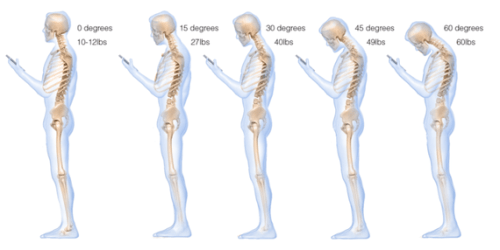
Thanks to my phone and my chair, my spine hates me!

I saw an article in the Atlantic recently about the stress that looking down at your iPhone puts on your neck. There is more to the story, but the graphic in the article makes it obvious that looking down like that for extended periods multiple times per day certainly isn’t natural.


This reminded me of a similar graphic describing the effects of prolonged sitting on the spine (and elsewhere)  in the Washington Post earlier this year.


No wonder back pain is such a huge problem!


Advice for staying healthy for the holidays

Now that Thanksgiving is behind us, the holiday season is in full swing. At the same time, though, we are in the midst of cold and flu season. In addition to the natural spread of cold and flu viruses at this time of year, the holiday season itself, with hectic schedules, stress, and lack of sleep, can weaken your immune system making you more susceptible to getting sick.

The good news is that there is much you can do to keep yourself healthy for the holidays. This is the topic of my Health & Fitness column in the Aiken Standard this week.

For starters, getting a flu vaccine is the most sensible thing you can do to prevent seasonal influenza (flu). If you haven’t gotten your flu shot yet, it’s not too late. I have written about flu previously, including the fact that exercise may make your flu vaccine even more effective!

Another basic step in preventing sickness is to wash your hands regularly. Soap and water is best, and there is no additional benefit in using an antibacterial soap. If you can’t wash your hands, an alcohol-based hand sanitizer is an acceptable alternative. Keep in mind that hand sanitizers don’t actually clean your hands and aren’t as effective if your hands are dirty.

Cold and flu viruses are spread through the air when an infected person coughs or sneezes, so avoiding close contact with people who are sick is important. If you are sick, you should stay away from others as much as you can. Cover your mouth and nose with a tissue or cough or sneeze onto your sleeve to help keep the germs from spreading through the air or on your hands.

You can also be exposed to cold and flu viruses by touching something with virus on it (a doorknob, for example) and then touching your nose, mouth, or eyes. You can protect yourself by not touching your face and by washing your hands frequently.

People who participate in moderate exercise on a daily basis have fewer and less severe colds than people who aren’t regularly active. This is because exercise has the effect of stimulating the immune system, making it better able to respond when you are exposed to cold or flu viruses.

More exercise isn’t always better, though. Research shows that immune function is depressed in the weeks after running a marathon, leading to an increased risk of becoming sick. Athletes who engage in vigorous and prolonged training also tend to be more susceptible to upper respiratory infections. The bottom line is that regular exercise improves your immune system, but very vigorous exercise may not.

Good nutrition is also essential for optimal immune system function. Deficiencies of certain nutrients can have a negative effect on immune function, so eating a balanced diet is essential. That said, there is no support for “boosting” the immune system by taking high doses of vitamins, minerals, or other supplements, despite the claims made by supplement companies.

You can get benefits from two more common-sense recommendations: getting adequate sleep and reducing stress. Poor sleep habits are associated with suppressed immunity and more frequent illness. High levels of stress increase susceptibility to colds and flu and can lead to more sick days from work or school. Stress and poor sleep habits tend to occur together, creating a double negative effect on the immune system.

By taking these steps, you can improve your chances of celebrating the holidays in good health. As a bonus, eating a healthy diet, exercising every day, managing your stress, and getting enough sleep will give you a head start on what are likely to be New Year’s resolutions.


Take a lesson in healthy eating from your turkey this Thanksgiving.

My Health & Fitness column in the Aiken Standard this week is about Thanksgiving dinner. With all the talk about how to make it a “healthier” meal by replacing traditional dishes and modifying recipes, I think we may be missing an important lesson in healthy eating.


This is Thanksgiving week, and people throughout the country are planning a feast including traditional dishes and family favorites. Even though many of these are not the healthiest choices, they make an appearance on the dinner table each year. Combined with the common occurrence of over-indulging, Thanksgiving dinner can represent a day of poor nutrition choices.

In an effort to make Thanksgiving dinner healthier, recommendations for modifying or replacing traditional dishes are a common theme in magazines, on the morning TV shows, and on the web. While these suggestions are meant to be helpful, I’m not sure they actually serve to make a significant impact on health.

After all, Thanksgiving is one day, and if there was ever a day to give yourself license to indulge, this is it! Of course, trying new foods and cooking techniques is always good, but the impact of replacing the butter in your mashed potatoes with fat-free sour cream or taking the marshmallow topping off Granny’s famous sweet potato dish isn’t realistically going to make you any healthier in the long run.

The truth is that if you eat a healthy diet every day, or even most days, and you have an active lifestyle you can get away with a day—or weekend—of overeating. (Obviously, you should always follow dietary restrictions for any medical conditions you have.) The problem comes when Thanksgiving dinner is yet another unhealthy meal in addition to the others that week or month.

Some of these recommendations are worth trying, for sure. Making an alternative to a traditional dish can get your family to try new foods they might not otherwise consider. And cooking using different ingredients or techniques on Thanksgiving can give you ideas for other meals, too.

However, focusing on modifying your Thanksgiving dinner may distract you from appreciating the greatest potential health benefit of this meal. Given the current confusion about how much and what type of carbohydrates and fats we should eat, there is an increased push to get us to eat less processed food and more real food.

For many of us, Thanksgiving dinner is one of the only times we cook and eat real food. A real turkey, vegetables, and home-made dessert are a huge improvement over the processed foods most of us eat on a daily basis. While we eat turkey at other times, it is almost always in a processed form such as ground turkey or deli meat, which frequently includes other additives. Cooking and eating a whole turkey is, for most families, relatively rare. So is eating a meal that doesn’t come from a restaurant or is heated in a microwave.

Additionally, Thanksgiving dinner is shared simultaneously around a common table (and maybe a kids’ table, too). All too often, meals are consumed away from the family table, frequently at different times. The benefits of eating together as a family are well-known, and can impact nutrition, psychological well-being, and health in general. Maybe Thanksgiving dinner isn’t about the food as much as it is the company. Why not make this a habit at other meals?

This week, let’s all give thanks for family, friends, and a shared meal. Let’s also take a lesson from the day and try to prepare and eat more real food as a family. This may be the biggest benefit of Thanksgiving. That, and a second serving of pumpkin pie!