The heat is on! How to safely enjoy outdoor summer activities.

It’s that time of year again: school is out and the temperature and humidity are up. Since summer is officially underway it is a good time to revisit some common sense guidelines to make exercise, work, and play outdoors in the summer heat safe and enjoyable for your entire family. This is the topic of my Health & Fitness column of the Aiken Standard this week.
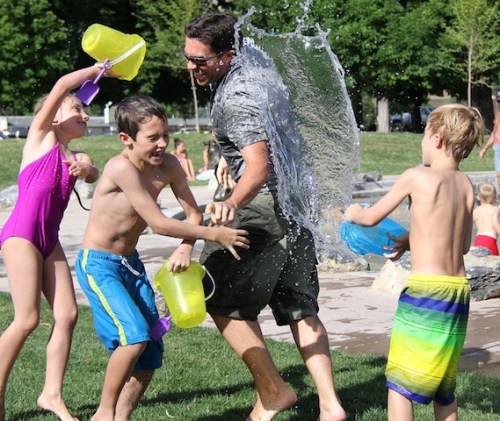
Water fight


Drink plenty of fluids

When it’s hot you have to sweat to lose heat and maintain your body temperature. High humidity makes sweating less effective, so you sweat even more. Losing lots of water through sweating can lead to dehydration. At the very least, you probably will feel fatigued but in more severe cases dizziness, low blood pressure, and fainting can occur.

For this reason it is important to drink plenty of fluids before, during and after your outdoor activity. As a general rule, a cup (8 oz.) of water every 15 minutes is sufficient for most people. Thirst is a good indicator of fluid needs, but you should take frequent breaks to rehydrate. You can see how dehydrated you are by weighing yourself before and after outdoor exercise. Every pound you lose is equivalent to 16 oz. of water you need to replace.

Make sure to remind kids to take breaks since they can get so busy playing that they forget. Water, juice, sports drinks, and other soft drinks are equally effective, so pick something you and your kids will drink.

Take breaks

The longer you are active the hotter you will get and you may feel more fatigued because of the heat. Taking frequent breaks will give you a chance to rest, cool down, and get something to drink.

Seek out shade

Being in the sun means that you will feel even hotter because you gain heat from the sun’s rays. Spending as much time as you can in the shade will help you stay cool. While this isn’t always practical for all activities, look for shady spots to take breaks.

Keep in mind that shady areas at will change throughout the day, so plan your trip to the park accordingly. Also be aware that direct sunlight can make outdoor surfaces, like playground equipment, very hot. This is another reason to find shady areas to play.


Pick cool clothes

Lighter colored clothing will reduce heat gain from the sun. Synthetic fabrics that wick sweat from the skin can help keep you feel cooler, too. And having more skin exposed will allow you to lose more heat.

Wear sunscreen

Sun exposure is the leading cause of skin cancer. Always use a broad-spectrum (both UVA and UVB rays) sunscreen and apply—and reapply—it according to the instructions. You should also protect your eyes by wearing a hat or sunglasses.

Avoid the hottest times of the day

Try to plan your outdoor activity in the morning or evening to avoid the hottest times of the day. Keep in mind that the highest temperatures often occur in the late afternoon or early evening, so right after work may not be the best time for outdoor activities. Early in the morning is probably the best time since it tends to be cooler and less humid.

You may not be able to plan all of your activities in the shade or when it is cooler. This is especially true for people who work outdoors. In these cases, drinking plenty of fluids and taking frequent breaks is particularly important. By taking the right precautions, though, you can still enjoy your favorite outdoor activities all summer long.


Nutrition, exercise, and health information can be confusing. 
But it doesn't have to be that way.
What can I help you with?
 drbrianparr@gmail.com | http://twitter.com/drbrianparr

Traveling this summer? Go for a walk while you fly!

If you travel for work or have vacation plans this summer, that may mean spending time on planes and in airports. It usually also means a lot of sitting. But it doesn’t have to. In fact, you can easily find ways to include physical activity in your air travel plans. This is the topic of my Health & Fitness column in the Aiken Standard this week.

walking in airport


Airports, especially large airports, are built for walking. If time permits, you can easily walk long distances while you wait for your flight. Even if the airport has a train or other transportation between terminals, there is almost always a way to walk. If you have enough time, you can take a walk around the entire airport, giving you an active way to pass the time. You can always get at least a few minutes of activity by taking a short walk rather than sitting in the gate area waiting for your flight to board.

While airports are not designed with exercise in mind, some do encourage walking by posting information about distances between terminals. Passageways that showcase art, shopping, or other information make walking through the airport a more pleasant experience. Some airports even have dedicated spaces for exercise and a few have added yoga rooms for travelers to use. If you are travelling with children, many airports have areas that allow kids to move and play.

Prolonged sitting has health consequences, whether it is done at home, work, or on a plane. There has been some concern about the development on blood clots in the veins in the legs as a result of sitting still on long flights. This condition is commonly called “economy class syndrome,” since the tight seating makes it challenging to move around. While the risk of blood clots appears to be low for most people, this concern has made people aware of the importance of moving during flight.

Breaking up sitting, even for short amounts of time, is beneficial. On the plane you can usually get out of your seat and stand up, stretch, and walk around a bit. This is easier if you book an aisle seat. If not, your seat mates will need to stand up to let you out. Far from being an inconvenience, though, they should thank you for giving them a short break from sitting. While you are seated you can do leg exercises, too. The safety information card at your seat likely has suggestions, but even moving your legs and feet can improve circulation and make you feel better.

The American College of Sports Medicine has a task force on Healthy Air Travel with the mission to educate travelers and airport administrators about ways to encourage activity among travelers. Over time this should lead to more amenities and greater promotion of walking and other activity at airports. In the meantime, here are a few simple steps you can take to take advantage of opportunities to move while you travel:

  • Book an aisle seat so it is easier for you to get up and out of your seat during your flight
  • Walk rather than using motorized transportation and walkways in airports
  • Check the airport website to find places to walk and other amenities (like a yoga room or play area for kids)
  • Wear comfortable shoes—you will be doing a lot of walking!


Nutrition, exercise, and health information can be confusing. 
But it doesn't have to be that way.
What can I help you with?
 drbrianparr@gmail.com | http://twitter.com/drbrianparr
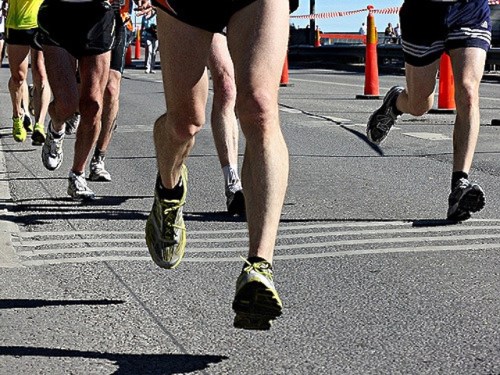
Sports Science in the News: The 2-hour marathon

There was a great article in the New York Times recently about a sports scientist who is on a quest to train a runner to complete a marathon in under two hours. Even though the world record right now is just under 2 hours and 3 minutes, a sub two-hour marathon is a bit like the four-minute mile once was—many people think it is impossible (or at least not likely to happen anytime soon). What I appreciated about the article was the way it explained some key concepts in exercise physiology. Since I am preparing to teach my summer Exercise Physiology course in June, I thought this was particularly relevant and worth sharing in my Health & Fitness column in the Aiken Standard this week.

Marathon feet


First, let’s put a two-hour marathon in perspective. To do it would require sustaining a running speed of over 13 miles per hour for two hours! Most runners I know would be hard pressed to complete the 285 yards at that pace…forget about the 26 miles that come first. It is also more than twice as fast as the average marathon time of over 4 hours. If you are brave you can see how fast this is yourself by getting on a treadmill and cranking the speed up to 13 miles per hour. Hang on, though, because you won’t last long!

The article mentions the training method known as “live high, train low.” This technique involves athletes spending time at high elevations but doing much of their training at sea level. This works because the key to endurance performances like a marathon is getting as much oxygen as possible to the muscles to use to produce energy. Living at high altitude causes the body to produce more red blood cells, increasing oxygen delivery to the muscles. But because there is less oxygen in the air at altitude, athletes can’t train as hard, which may offset the gains in red blood cells. Because of the lower training intensity, which is essentially doing less work, some athletes realize little benefit from this technique. So, a perfect solution is to live (or spend lots of time) high, but train low to maximize the benefits of both altitude and intense training.

The article also mentions another interesting phenomenon related to oxygen delivery to the muscle. As the heart pumps blood to the muscles it also sends blood returning from the muscles to the lungs to pick up oxygen from the air we breathe. As the red blood cells pass by the air sacs of the lungs (the alveoli), oxygen molecules bind so that the blood is fully saturated with oxygen before it is pumped back to the muscles. But the harder the heart beats during exercise the faster the blood flows. In some elite athletes, the blood flows so fast that the red blood cells don’t have enough time to pick up enough oxygen. This can reduce oxygen delivery to the muscles and impair performance in these athletes. (Fortunately, it isn’t a problem for the rest of us)

Admittedly, I am a bit of a physiology geek, so this is fascinating to me. If you are curious about exercise physiology and sports performance, check out the New York Times article from May 11—it’s a sneak peek into the world of sports science. The article also touches on nutrition, especially carbohydrates, biomechanics, temperature regulation, and training as important factors in reducing marathon times. All of these are topics that I cover in my Exercise Physiology course, too. And in case any of my students are reading this—yes, it will be on the exam!


Nutrition, exercise, and health information can be confusing. 
But it doesn't have to be that way.
What can I help you with?
 drbrianparr@gmail.com | http://twitter.com/drbrianparr

Exercise and cancer prevention and treatment.

Exercise has broad and significant health benefits, making it among the most important healthy behaviors you can adopt. These benefits include improved muscular strength and endurance, stronger bones, and better cardiovascular system function. Exercise is also essential for maintaining a healthier body weight and body composition and improving metabolic health through blood glucose and lipid regulation.

But exercise causes changes at the cellular and hormonal levels that have even broader effects. Among these is a reduction in inflammation, which has long been linked to a lower risk of heart attack. Accumulating research suggests that reduced inflammation and improved immune system function may be an important way in which exercise reduces the risk of cancer. The role of exercise in cancer prevention and treatment is the topic of my Health & Fitness column in the Aiken Standard this week.

cancer exercise group


While we typically associate the immune system with communicable diseases like cold or flu, our immune system plays an important role in the body’s defense against cancer. Conditions like obesity, poor nutrition, and a sedentary lifestyle can promote chronic inflammation. Among other negative effects, inflammation can interfere with the normal functioning of the immune system. This impairs your cells’ natural cancer-fighting capacity, making it more likely that cancer will develop and spread. Exercise can reverse the immune system damage caused by chronic inflammation, reducing the risk of cancer development and progression as well as making it less likely you will become sick from a cold or flu.

The idea that exercise can reduce the risk of cancer isn’t new. I have written previously about the fact that regular physical activity can lower breast cancer risk by as much as 30%, improve survival, and reduce the risk of recurrence. A recent study confirms that high levels of physical activity can significantly lower the risk of breast cancer along with many other common types including colon, bladder, lung, kidney, and endometrial cancers.

In addition to helping reduce the risk of cancer development and recurrence, regular exercise can help you handle cancer treatment better. To be sure, cancer treatment can lead to extreme physical consequences including losses in weight, muscle mass, strength, and endurance. At least some of this is due to more time resting and less time being active, the effects of which occur within days and get worse over time.

You may have noticed this as weakness and fatigue after spending a few days in bed with the flu. Muscle strength declines at a rate of over 1% per day of bed rest, and can be 50% lower following as little as three weeks. That reduction in strength could limit a person who was already deconditioned to a point where he or she would have difficulty completing the most basic activities of daily living. Bed rest can also reduce bone density, exposing patients to a greater risk of fracture.

The fitter you are when you begin treatment, the fitter you will be at the end because you have “saved” more strength and endurance in your fitness bank. You simply have more you can lose before you get to a point at which you can’t complete your normal activities. In fact, maintaining physical activity is a key component of cancer treatment. And post-cancer exercise programs are becoming more common as a way to help women recover from cancer treatment and rebuild strength, endurance, and feelings of wellbeing.

The best approach is to be active now to reduce your risk of cancer (and many other chronic diseases) and build strong muscles and bones to help you successfully handle any cancer treatment or periods of other illness you may encounter later.


Nutrition, exercise, and health information can be confusing. 
But it doesn't have to be that way.
What can I help you with?
 drbrianparr@gmail.com | http://twitter.com/drbrianparr

Good reasons to go for a bike ride

May is National Bike Month, a time to remind people of the many benefits of bicycling and encourage everyone to go for a bike ride. Aside from being a great way to get around, bicycling can improve physical, mental, and social health, and has environmental and economic benefits. This is the topic of my Health & Fitness column in the Aiken Standard this week.
Bike ride


Going for a bike ride is a good way to meet physical activity goals. For most people, bicycling would help meet the minimum recommendation of 30 minutes of moderate-intensity activity per day. At faster speeds, biking is an excellent exercise to improve fitness. For kids, riding a bike is a fun way to be active and teaches important movement skills.

Riding outdoors can promote enhanced feelings of energy and diminished fatigue, anxiety, anger, and sadness compared to similar activity conducted indoors. Additionally, some research suggests that outdoor activity, including bicycling, may improve attention, learning, and productivity in adults and children.

Bicycling is often done with others, whether that is a family bike ride or exercising with a cycling group. This strengthens social connections and allows people to share in the enjoyment of being active. Even if you ride alone, you are far less isolated from other people and your environment compared to driving a car. These connections to the community are an important part of health and happiness.

Replacing car trips with cycling is good for the environment, too. Every mile you drive releases carbon dioxide and other pollutants into the environment. Additionally, spending more time sitting in your car can also have negative effects on your mental and physical health. Biking has no such effects on the environment and has important health benefits including improved fitness, weight control, and greater feelings of wellbeing.

As an added bonus, driving less will mean using less gas. Even though gas prices are lower now than in recent years, every mile you don’t drive saves money. Plus, it costs far less to purchase and maintain a bike than it does a car, so it makes economic sense to ride your bike instead of drive when possible. If you think you drive too far bike, think again. Most people commute less than five miles to work and nearly half of all car trips are less than two miles. Both are reasonable distances to bike. Even if you have longer distances to travel, you could probably replace some car trips with active transportation.

Obviously, biking everywhere isn’t practical. It requires access to safe bike lanes and sidewalks that connect people’s homes to work, school, and other destinations. Sadly, this infrastructure doesn’t exist in most communities (including ours), which were built to support cars, not people. Whether or not we bike for exercise or transportation ourselves, we should all act as advocates for changes in the community that will make bicycling more realistic for everyone.

Something as simple as a family bike ride around the neighborhood or biking to work or to visit a friend can have important health, environmental, and economic benefits. In fact, May 20 is National Bike to Work Day, a perfect chance to try commuting by bicycle. Whenever and wherever you ride, keep in mind that common sense says you should always obey all traffic laws and wear a helmet.

Finally, if you haven’t been out on two wheels for some time, don’t worry—it’s just like riding a bike!


Nutrition, exercise, and health information can be confusing. 
But it doesn't have to be that way.
What can I help you with?
 drbrianparr@gmail.com | http://twitter.com/drbrianparr

Lose, win, gain: The fate of Biggest Losers

The Biggest Loser has been in the news again this week. This time, though, the focus isn’t on the remarkable transformations the contestants experience through a strict low-calorie diet combined with hours of vigorous exercise each day.  The results are impressive considering that the average weight loss of the winners is almost 170 pounds, or nearly 50% of their original weight! The show does demonstrate that hard work and dedication do lead to results, and provides inspiration for many viewers who should lose weight themselves.

But what happens when the cameras are turned off? Unfortunately, most of the contestants regain much of the weight they lost during the show and some end up even heavier than they were at the beginning. A new study published last week confirms that this is true and suggests that long-lasting changes to metabolic rate are to blame. But there is more to the story, which is relevant to anyone who has lost weight and gained it back, as I explain in my Health & Fitness Column in the Aiken Standard this week.

feet on scale


The new study followed contestants from season 8 of the Biggest Loser for six years. Only one of the 14 contestants continued to lose weight after the show ended. The others gained back much of the weight they lost and four are heavier than they were previously. The researchers also measured resting metabolic rate which tells how many calories you burn at rest, the majority of your energy expenditure each day. The results show that the metabolic rate of the contestants decreased significantly after the show ended and stayed low for years. The decreased metabolic rate was expected, but the fact that it stayed low for so long was a surprise.

This finding is an important reason why the contestants gained weight back: they were burning hundreds of calories less each day! Considering that a difference as small as 100 calories per day can lead to weight gain over time, it is no surprise the Biggest Losers became big gainers. Even if they were careful to maintain a low calorie diet and exercise every day, weight regain was almost inevitable.  This change was so dramatic because of the extreme weight loss; people who lose more reasonable amounts of weight would have a much smaller change in their metabolism.

While the change in metabolic rate is important in explaining weight regain in Biggest Loser contestants, it is far from the only factor. In order to lose weight and keep it off, people need to learn a whole new lifestyle involving what, when, why, and how to eat and exercise. These lifestyle changes are difficult to make and can take months or years to fully adopt. Participating in any weight loss competition, whether that is the Biggest Loser or a team weight loss program at work, leads to quickly losing weight by following and inappropriate diet or participating in exercise that is too intense instead of learning new skills and behaviors.  Again, maintaining that weight loss is difficult, to say the least.

It shouldn’t come as a surprise that losing weight rapidly, especially under the watchful eyes of doctors, nutritionists, and personal trainers (not to mention millions of viewers), would be difficult to sustain upon returning home without that support. This is consistent with prevailing wisdom that the quicker someone loses weight, the quicker they are likely to gain it back.

The lesson here is that there are powerful biological changes that occur following significant weight loss that make it challenging to keep the weight off. Add to that a focus on losing weight quickly rather than developing long lasting habits only makes it more difficult.  Being a “successful loser” requires realizing that the effort must be sustained long after the diet ends.


Nutrition, exercise, and health information can be confusing. 
But it doesn't have to be that way.
What can I help you with?
 drbrianparr@gmail.com | http://twitter.com/drbrianparr

A one minute workout?

You have probably heard of people who do very short workouts—sometimes just a few minutes—but still get the same benefits as you do going for a long run or sweating through an hour on the elliptical machine. This type of exercise is called high-intensity interval training (HIIT), which involves short bouts of very intense exercise separated by periods of rest or light activity. I have written about this type of training previously (and before that, too), but a new study that has been in the news this past week makes revisiting this topic worthwhile.

Cycling class


Previous research has shown that shorter exercise sessions can be as effective as the typical 20-60 minutes of continuous exercise people commonly do to lose weight or get in shape. The catch is that these shorter bouts of exercise must be done at a very high intensity to promote improvements in maximal exercise capacity (called VO2max) and endurance by enhancing heart function and causing changes in the muscle itself. These adaptations can lead to improved fitness, performance, and health.

For example, in one study the intervals were as short as 30 seconds of all-out, maximal exercise separated by rest periods, for a total of just six minutes of exercise per day. Other studies employ slightly less intense intervals for a total of 20 minutes of exercise per session. Another study found that a single 4-minute bout of vigorous exercise was effective. Taken together, these studies show that HIIT leads to adaptations in the heart and muscle and improvements in VO2max and endurance that are greater than that of more traditional, lower intensity exercise.

A new study published last week ( excellent low-sci description here) showed that sessions of one minute—yes, 60 seconds—of intense exercise can match the fitness and health benefits of more traditional workouts. Subjects in the study completed three, 20-second bouts of all-out, near maximal exercise separated by two minutes of light cycling on a stationary bike. After doing this three times per week for 12 weeks the changes in heart rate, muscle function, and blood glucose regulation were the same as those experienced by subjects who did the same number of 45 minute workouts, but at a lower intensity.

Before you get too excited about only needing to exercise for a minute at a time, there are a few points to keep in mind. First, this type of exercise is very intense and may not be right for everyone. At the very least, it is likely to be uncomfortable. Second, exercising at a high intensity may not be a good idea if you are not already in good shape or have other health problems, like high blood pressure. Third, HIIT may not be the best way for you to meet your exercise goals. If you are trying to build endurance for a marathon or long distance bike ride, you really do need to focus on longer duration exercise at least some of the time.

Finally, if you add up the total exercise time, including the warm-up, time between intervals, and recovery, the “one minute” workout is more like 10 minutes of exercise. This is still shorter than what you would probably do anyway, but certainly not a true 60 second workout. And this type of training doesn’t do much to help you meet other fitness goals including improving strength and flexibility, so you will still need to spend additional time in the gym. The bottom line is that HIIT should be part of your exercise regimen, not the whole program.


Nutrition, exercise, and health information can be confusing. 
But it doesn't have to be that way.
What can I help you with?
 drbrianparr@gmail.com | http://twitter.com/drbrianparr

Your Park Prescription

Since Earth Day just passed you are probably thinking about ways you can “go green” to reduce your impact on the environment. Many of these choices are also good for your health. For example, choosing food from local farms is associated with fewer “food miles” and a lower environmental footprint. It is also likely to be picked at the peak of freshness, meaning it is richer in nutrients, not to mention flavor. Walking or biking instead of driving is another way to protect the environment while you protect your health.

When it comes to exercise, you can literally “go green.” Being active outdoors in nature leads to enhanced feelings of energy, improved mood, and diminished fatigue, anxiety, and anger compared to similar activity conducted indoors. Additionally, some research suggests that outdoor activity may improve attention and productivity in adults and children. Even though the physical, mental, and social benefits of activity in a natural environment are well established, most recommendations just focus on activity, not where it is done. Making the outdoors your destination for activities for you and your family is the topic of my Health & Fitness column in the Aiken Standard this week.

father and son walking in woods


The National Park Prescription (Park Rx) Initiative is designed to encourage people to make the outdoors their destination for exercise and family activities. In fact, April 24th was National Park Rx Day. The idea is to promote access to and use of parks, trails, and other green spaces and highlight the health, environmental, social, and economic benefits of having these resources in our communities. The benefits of parks can be enjoyed by everyone, regardless of age or ability, so enhancing public lands should be a high priority.

This isn’t new of course, but it’s nice to have a reminder. At playgrounds you commonly see as many children playing in the trees that surround the swings, slides, and monkey bars as you see on the playground equipment. Grassy areas serve as picnic spots, impromptu sports fields, and places to run and play. Trails through the woods offer a place to hike and bike as well as trees to explore and climb. Lakes, rivers, and streams (called water trails) are perfect for rowing, paddling, and swimming. And many public parks and green spaces have paved trails so that people of all ages in strollers or wheelchairs can enjoy the outdoors.

Fortunately, there many excellent parks and natural areas to explore in the Aiken area. Aiken State Park, several county and city parks, and neighborhood playgrounds make it easy to find a place to be active outdoors. There is no better place to experience nature than the vast Hitchcock Woods, located right in the heart of Aiken. Community organizations like the GAIT Foundation are dedicated to expanding access to natural areas for all types of outdoor activates. This makes it easy to find a place to walk, run, bike, hike, climb, swim, paddle, push, or ride.

It also makes it easy to follow the Park Rx. Being active is one of the most important things you can do to improve your health and wellbeing. Activity in a natural environment has additional physical, mental, and social health benefits. Share these benefits with others by planning outdoor activities with your family and friends. For maximum effect, you should do this as often as possible—everyday is best. And it doesn’t need to be a day long excursion. Even taking the dog for a short walk, playing outside with the kids, or doing yard work are good ways to reap the benefits of being active outdoors.


Nutrition, exercise, and health information can be confusing. 
But it doesn't have to be that way.
What can I help you with?
 drbrianparr@gmail.com | http://twitter.com/drbrianparr

The Science of Sports Drinks

What do you drink during exercise? For most people, the answer is probably water. But many athletes and people who do vigorous exercise are likely to consume a sports drink, like Gatorade or Powerade, while they work out. While there are some differences among the various sports drinks, these beverages are specially formulated to meet the demands of athletes engaged in prolonged, intense exercise. In fact, most contain a similar combination of water, sugar, and salt, along with flavoring to make them palatable. Research and practical experience supports the use of sports drinks to improve performance in endurance events (think running and cycling) that last an hour or more. In my Health & Fitness column in the Aiken Standard this week I explore the the components of sports drinks and why they may be beneficial—and when they aren’t.

Sports drink


Obviously, water is important for replacing sweat loss during exercise, something that is even more critical in a hot, humid environment. During intense exercise on a hot day, sweat losses can be well above one liter per hour. Failure to replenish this water loss can lead to poor performance due to physiological and psychological fatigue. In extreme cases, severe dehydration can lead to hyperthermia and heat stroke. For most athletes, 500–1000 ml (16–32 oz.) of fluid per hour is sufficient, but more may be needed to meet individual needs.

Carbohydrate replacement has long been associated with endurance performance. Vigorous exercise requires lots of carbohydrates in the form of glucose to fuel the active muscles. Your muscles can use 60–120 g of glucose per hour, depending on intensity. You store glucose in your liver and muscles as glycogen which gets broken down during exercise. But these supplies are limited and are diminished after an hour or so of intense exercise. Recommended intake is in the range of 30–60 g carbohydrate per hour during exercise to deliver glucose to the muscle sustain exercise. Almost any carbohydrate will work, but sports drinks contain sugars that are absorbed quickly. It is also essential to maintain blood glucose since, as I tell my students, “if your blood glucose drops, you drop!”

Sports drinks also contain some salt. First the salt replaces what you lose in your sweat, preventing a dangerous condition called hyponatremia. Fortunately, most people eat enough salt throughout the day and don’t lose enough in their sweat to create problems. Another reason for including salt is that glucose is absorbed with sodium, so having both gets the carbohydrates into your blood faster. Additionally, levels of sodium in the blood act to stimulate thirst. Consuming salt makes athletes thirsty, and thirsty athletes are more likely to drink more.

The composition of sports drinks is important, but the way they are consumed matters, too. Research shows that drinking smaller amounts of fluid more frequently, say 12 ounces every 15 minutes, is better than 32 ounces at the end of an hour. Carbohydrate content is important, but more isn’t necessarily better. Most sports drinks are in the range of 8%, which is ideal for getting the sugar absorbed into the blood. Drink temperature matters, too, and colder drinks are absorbed faster. Obviously, you are more likely to drink beverages that taste good, so finding a flavor you like is important.

Much of the research into hydration, sports drinks, and performance  has been done at the Gatorade Sports Science Institute. Despite the name, the research done by GSSI scientists has served to advance the knowledge of exercise physiologists, sports nutritionists, and sports medicine professionals as well as athletes, coaches, and trainers. The research and recommendations are relevant even if you don’t use Gatorade.

Now that you know what is in most sports drinks and why, you may wonder if you need one during exercise. Unless you are doing intense exercise lasting over an hour, probably not. Water is sufficient for most people who exercise. And consider this: sports drink contain as much sugar and calories as soda. If you are exercising to lose weight, a sports drink during (or after) exercise might sabotage your efforts!


Nutrition, exercise, and health information can be confusing. 
But it doesn't have to be that way.
What can I help you with?
 drbrianparr@gmail.com | http://twitter.com/drbrianparr

Too much of a good thing. Can you do too much exercise?

Is it possible to do too much exercise? Given the fact that most Americans do not meet minimum recommendations for physical activity, doing too much may not seem like an issue. To be sure, the biggest exercise problem most people face is not getting enough. But doing too much exercise can have negative effects.

This is the topic of my Health & Fitness column in the Aiken Standard this week.

Exercise fatigue


What constitutes too much exercise? First, let’s review the recommendations. The Physical Activity Guidelines for Americans call for 150 minutes of moderate-intensity or 75 minutes of vigorous-intensity aerobic physical activity per week and do strengthening exercises that involve all major muscle groups at least two days per week. This recommendation can be met by a 30 minute brisk walk five days per week or longer, more vigorous workouts two days per week.

Many people do more than this, often an hour or more of vigorous exercise each day. While this may seem like a lot of exercise, they built up to these workouts over months or even years. But they almost certainly started out with shorter, less intense exercise sessions. As their strength and endurance improved they increased the time and intensity of their training. Even now, they likely structure their workouts in order to allow recovery time. For example, a runner might do a long run one day followed by a shorter run the next. Weight lifters usually alternate muscle groups on different days: chest exercises on one day, arms the next, and so forth.

When beginning an exercise program, is it smart to start slowly and work your way up to longer, more intense sessions. A common occurrence is that new exercisers do too much too soon. This can lead to severe muscle soreness that limits the ability to exercise on the following days and, in some cases, injury. At the very least, a negative experience can cause a person to stop exercising. In fact, one of the most common reasons people quit an exercise program is injury or soreness early on. Taking it slow in the beginning can help you avoid these problems.

Even athletes with years of training experience can overdo it. Athletes are known for long, intense training sessions to develop the high levels of strength and endurance required to be competitive. But training too intensely or for too long can have negative effects. This phenomenon is called overreaching or overtraining and, for some athletes, can be as big a problem as not training enough. Overtraining can lead to poor immune function, reduced motivation, and fatigue, all of which can have a serious impact on performance.

Many competitive athletes intentionally do less in the days and weeks leading up to a big event. This is a process called tapering and it involves reducing training time and intensity, even including a rest day. This allows the muscles to recover and reduces the risk of injury. While many athletes—and coaches—think that a hard workout or practice before a big game is a good idea, failure to taper is more likely to lead to poor performance.

If you are like most people, you are probably not doing too much exercise. But you should make small increases in your time and intensity to reduce the chance of injury. If you are training for a run such as a 10k, half marathon, or longer event, you should cut back on your training time and plan a rest leading up to the race. And while more exercise is generally better for health and fitness, keep in mind that doing too much, especially early in a training program, can have the opposite effect.


Nutrition, exercise, and health information can be confusing. 
But it doesn't have to be that way.
What can I help you with?
 drbrianparr@gmail.com | http://twitter.com/drbrianparr