Getting in shape is a common goal for the New Year. Before you start an exercise or weight loss program you may want to have a fitness test to determine your current status and to assess improvement as you progress through the program. If you join a gym, a fitness assessment may be required. This is wise, because a fitness test is important for determining a safe and effective exercise recommendation. It also provides a baseline for you to realize your improvement. This is the topic of my Health & Fitness column in the Aiken Standard this week.
Since Christmas is next week our attention is naturally focused on one person: Santa Claus. Have you ever wondered how Santa gets in shape for his yearly sleigh ride to deliver gifts to good boys and girls around the globe? Like many elite athletes, Santa does not publicly discuss his training or his fitness. There are certainly no published studies that report his one repetition maximum strength or his maximal oxygen uptake.
Given this lack of information, I attempted to make an educated guess about Santa’s training, fitness, and health. This is the topic of my Health & Fitness column in the Aiken Standard this week.
The holidays are often a time of joy, togetherness, and indulgence. Family gatherings, festive meals, and busy schedules can disrupt even the most disciplined routines. While some may worry about straying from their healthy eating or exercise plans during the holiday season, it’s important to remember that giving yourself a break can be a vital part of overall well-being. This is the topic of my Health & Fitness column in the Aiken Standard this week.
Stress during the holidays is a common challenge for almost everyone. Elevated stress levels can lead to increased production of cortisol, a hormone that can negatively affect health when chronically elevated. Allowing yourself to relax and enjoy the holiday experience—even if it means skipping a workout or indulging in rich foods—can help mitigate stress and create a more positive outlook.
Healthy eating during the holidays doesn’t have to mean strict dieting or completely avoiding favorite foods. Instead, focus on moderation. Studies suggest that flexible dietary approaches are more effective for long-term weight maintenance compared to restrictive diets, which often lead to feelings of deprivation and eventual overeating. Applying this principle during the holidays means enjoying your favorite treats in reasonable portions while prioritizing nutrient-dense foods when possible. For example, adding a colorful salad to your plate at a holiday dinner or choosing roasted vegetables as a side dish can provide essential vitamins and fiber without detracting from the festive spirit.
Likewise, staying active during the holidays doesn’t have to involve sticking to your usual gym routine. Physical activity can be woven into holiday traditions, like going for a walk after a big meal, engaging in a family game of touch football, or dancing to your favorite holiday tunes. Even small bouts of activity can contribute to better overall health. Research shows that accumulating short, 10-minute sessions of moderate activity can still yield significant cardiovascular and metabolic benefits.
Another critical aspect of taking a holiday break is recognizing the importance of rest. Exercise places stress on the body, and recovery is when the body adapts and grows stronger. Overtraining, or insufficient recovery, can lead to fatigue, decreased performance, and even injury. Scheduled breaks, whether due to holiday travel or simply a desire to relax, can allow your body the time it needs to fully recover
The foundation of a healthy lifestyle is consistency, not perfection. Health behaviors should be viewed over a longer time frame rather than as isolated actions. Missing a workout or enjoying an extra dessert during the holidays does not negate the months of effort you’ve put into maintaining a healthy routine.
In addition to physical rest, mental recovery is equally important. Being overly critical of yourself for not maintaining your usual routine can create unnecessary guilt and stress. Instead, acknowledge that it’s okay to pause, enjoy the moment, and prioritize your relationships and emotional well-being. These aspects of health are just as important as diet and exercise.
While it’s important to allow yourself some leniency, setting realistic goals during the holidays can help you maintain a sense of control without overloading yourself. Focus on small, manageable habits, like drinking plenty of water, limiting sugary beverages, or aiming for 7-8 hours of sleep each night. Celebrate the small wins—like eating an extra serving of vegetables or finding 15 minutes for a brisk walk—and don’t dwell on perceived setbacks. This mindset helps build resilience and fosters a positive relationship with health-related behaviors.
Ultimately, the holidays are just a few weeks out of the year. What truly matters is your overall pattern of choices throughout the year, not the occasional deviations. Allow yourself the grace to savor the season and focus on the joy it brings.
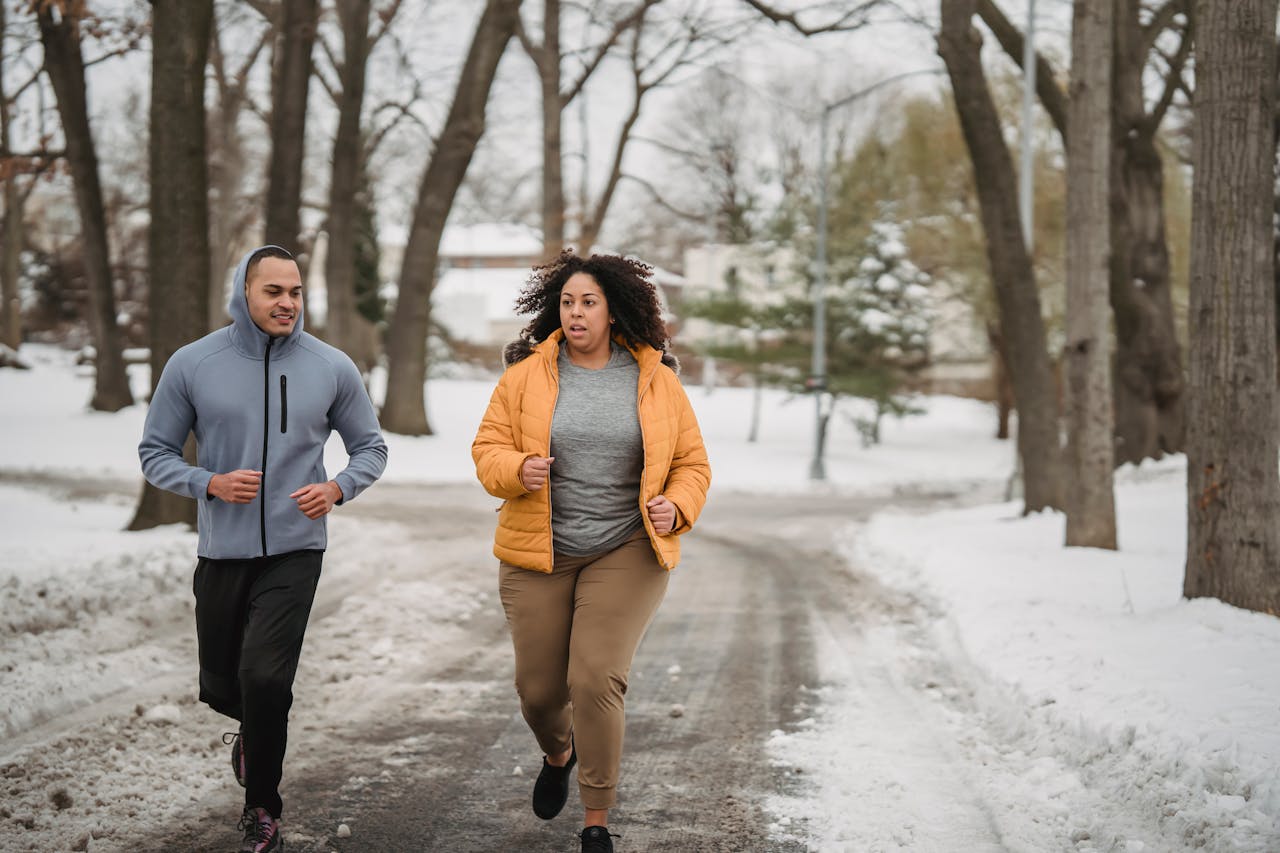
Exercising outdoors during the cold winter months can be an invigorating experience, but it requires extra attention to safety. Cold temperatures and shorter daylight hours—maybe even snow and ice—present unique challenges for outdoor enthusiasts. However, with the right precautions, you can enjoy outdoor activities while minimizing the risk of injury or health issues. This is the topic of my Health & Fitness column in the Aiken Standard this week.
One of the most important factors in exercising safely in the winter is proper clothing. When it’s cold outside, your body’s natural response is to conserve heat, which can lead to overheating during physical exertion. To counteract this, experts recommend layering clothing to help regulate body temperature and wick away sweat, which can increase the risk of hypothermia if it cools too much.
Wearing moisture-wicking fabrics as a base layer can help keep the skin dry, which is crucial when exercising in cold temperatures. The second layer should provide insulation, such as fleece or down, while the outer layer should be windproof and waterproof to protect against wind chill and precipitation. The layering system allows you to add or remove clothing based on your activity level and weather conditions, ensuring that your body stays warm without overheating.
Additionally, it’s essential to protect extremities like your hands, feet, and ears, as these areas are prone to frostbite. Wearing gloves, thermal socks, and a hat or headband can prevent heat loss from these vulnerable parts of the body.
Cold muscles are more prone to injury, so warming up becomes even more important during winter workouts. When temperatures drop, blood flow to muscles decreases, which can make them less flexible and more susceptible to strains or tears. A gradual warm-up before exercising in cold conditions can enhance muscle elasticity and reduce the likelihood of injury.
A good warm-up in cold weather should include light aerobic activity such as brisk walking or easy jogging, followed by dynamic stretches that focus on the muscles you plan to use. Dynamic movements like leg swings, arm circles, and walking lunges help prepare the body for more intense exercise by increasing blood flow to key muscle groups.
Many people assume that hydration is only a concern during hot weather, but it remains a vital part of cold-weather workouts. Dehydration can still occur in winter because cold air and dry indoor heating systems can increase fluid loss.
It’s important to drink water before, during, and after exercise, even if you don’t feel thirsty. For longer workouts, you might consider a sports drink with electrolytes to help replace minerals lost through sweat. Additionally, monitoring your body’s response to exercise is crucial. Be mindful of early signs of hypothermia, such as shivering, confusion, or numbness, and frostbite, which can cause tingling, redness, and numbness in the skin. If any of these symptoms appear, seek shelter and warmth immediately.
One final consideration when exercising in the cold is knowing when it’s safe to do so. Extreme cold temperatures (below -20°F or -28°C) can increase the risk of frostbite and hypothermia, so it’s important to adjust your exercise schedule based on the weather forecast.
Exercising outdoors during the winter months offers numerous physical and mental benefits, but it also requires special precautions. By dressing in layers, warming up properly, staying hydrated, being mindful of slippery surfaces, and knowing your limits, you can reduce your risk of injury and enjoy a safe and effective winter workout. With these safety strategies in mind, outdoor exercise can be a healthy part of your winter routine.
The holiday shopping season is underway, so you may be searching for that perfect gift for a friend or family member. You probably know someone who plans to start an exercise program, try to lose weight, or otherwise improve their health in the upcoming year. The right gift from you could help them get a good start on their New Year’s resolutions. With so many options for books, exercise equipment, apps, and other gadgets, it can be difficult to pick the right gift. This is the topic of my Health & Fitness column in the Aiken Standard this week.
Boo! Since Halloween is this week, it’s a good time to think about what makes this holiday so scary. It’s not the ghosts or zombies that come to your door in the evening seeking candy that you should be scared of, though. In fact, you don’t even need to wait until dark to get spooked. You are likely to see the scariest “costumes” on your breakfast table on Halloween morning—candy and soda dressed up as healthy food! Here are three common examples:
Fro-yo dressed as healthy yogurt
Most people would consider yogurt to be a healthy breakfast. And it is, provided you aren’t getting tricked! Low-fat and fat-free flavored yogurt is almost always sweetened with sugar. This is true for the yogurt tubes that kids love and much of the Greek yogurt that is so popular. Sure, it contains protein and beneficial bacteria, but the added sugar makes it equivalent to frozen yogurt or ice cream in terms of calories and sugar. Some of these yogurts even come with toppings, like bits of chocolate, just like fro-yo!
A healthier alternative is plain yogurt with real fruit. Sure, it’s not as sweet, but you will be getting the benefits of eating yogurt without all the added sugar.
Soda dressed as fruit juice
Many “fruit” drinks contain less than 5% juice but plenty of added sugar, so they are essentially soda without bubbles. For example, the orange drinks like Hi-C or Sunny D are a popular substitute for orange juice, but they are far from a nutritional equivalent. The same is true for other drinks, including juice boxes and pouches, which are commonly part of breakfast, lunch, or snacks. Even scarier is the fact that these drinks are much sweeter than real fruit. Children may develop an expectation that oranges or orange juice should taste as sweet as soda and prefer the sugar-sweetened version over the real fruit.
A better choice is to make real fruit and fruit juice, not soda disguised as juice, a part of meals and snacks
Candy bars and cookies dressed as cereal and breakfast bars
Many popular breakfast foods targeted at children include sugar-sweetened cereals, pastries, and bars. Some breakfast bars and cereals that seem healthy are really candy bars in disguise. Some even skip the disguise and actually look like candy or dessert. Pop Tarts and some granola bars are covered in chocolate or frosting, and favorite cereals often contain marshmallows or are shaped like cookies. No surprise that these foods are as high in calories and sugar as cookies or some candy bars. Worse, a child who is used to breakfast or snack foods that taste like candy or cookies may resist real food when it is offered. Now that’s scary!
When you think you are eating something healthy but it’s really not—I call this Candy and Soda for Breakfast. And it’s not just breakfast, it happens at every meal.
While the focus here is on food for kids, it really isn’t much different for adults. Breakfast foods like donuts and pastries are almost always topped with icing and it would be difficult to distinguish many muffins from cupcakes. For many people, coffee isn’t just coffee anymore, but a drink that contains as much sugar and as many calories as a milkshake, sometimes with whipped cream on top. What’s really scary is that this is how many people eat every day.
The good news is that you can make your breakfast healthier without too much effort. While there is much debate about what constitutes a healthy breakfast, there is agreement about what it doesn’t include—lots of added sugar! Look for cereals that are low in added sugars and high in fiber. Include real fruit, fruit juice, and milk (or soy milk) whenever possible. If you have time, eggs are an excellent source of protein and healthy fats. Yogurt is good, too, but watch out for added sugars in flavored yogurt. Whole grain toast or a bagel with peanut butter makes a good alternative to Pop Tarts or breakfast bars.
As a general rule, steer clear of foods that look like dessert. Frosting, marshmallows, chocolate chips, and sprinkles simply aren’t part of a healthy meal!
If you are worried about the big bags of candy that get brought home on Halloween night, keep this in mind. While eating a lot of candy is never healthy, a typical Halloween candy binge lasts a few days, after which time the candy is gone or the kids are literally sick of eating it. The long-term effects on your kid’s health (and teeth) can be offset by a good diet, regular activity, and diligent brushing and flossing. The same applies to you, too, if you find yourself digging into the big bowl of candy that is inevitably left over.
Many people in our area are still dealing with damage from Hurricane Helene and the overwhelming impact it is having on their lives. Hurricanes and other natural disasters can have a profound negative impact on our physical and mental health. From everyday pressures to the aftermath of natural disasters, finding effective coping mechanisms to deal with stress is crucial.
Exercise is a potent tool for stress relief and resilience, both in daily life and in the wake of catastrophic events. This is the topic of my Health & Fitness column in the Aiken Standard this week.
Now that cooler fall weather is here, being active outdoors is more enjoyable. October is a great time to get outdoors and go for a walk! That is the spirit of Walktober, an initiative adopted by health organizations, companies, and communities around the globe.
Walking is a great way to be active to help you control your weight, increase your fitness, and improve your health. The most common form of exercise for most people is walking, and for good reason: walking doesn’t require any special equipment (beyond comfortable shoes) or skills, and you can do it almost anywhere.
You can meet basic physical activity recommendations by walking briskly for 30 minutes most days of the week. Even this amount of walking can lead to a lower risk of diabetes, heart disease, and some cancers as well as improved mental health, cognitive function, and greater feelings of well being.
There are many tools, or ergogenic aids, athletes use to improve exercise performance. These include nutrients like protein and carbohydrates, drugs like caffeine, steroids, and techniques like blood doping. Some of these performance-enhancing substances are illegal or banned, so ergogenic aids often have a negative image. Furthermore, many only work for highly trained athletes.
But there is one ergogenic aid that has been shown to enhance performance in everyone. In fact, there is a good chance you use it when you exercise. That ergogenic aid is music. This is the topic of my Health & Fitness column in the Aiken Standard this week.
Music is a psychological ergogenic aid is known to affect mood, emotion, and cognition. More and more research also shows that music can also enhance exercise performance. In most gyms, there is music playing in the background and many people listening to music using headphones while they exercise. A practical reason, of course, is that listening to music makes the exercise more enjoyable by providing a mental distraction. It turns out that music has additional psychological and physiological effects that can improve exercise performance.
Not only can listening to music make exercise more enjoyable, it can also help you get a better workout. Research suggests that when exercise is coupled with motivational music, people tend to exercise at a higher intensity. They also tend to fatigue at a slower rate leading to longer exercise sessions. This is also associated with a lower rating of perceived exertion, meaning the exercise might feel easier!
Tempo is an important aspect of music that contributes to performance. People tend to prefer a tempo that matches the exercise intensity. Fast tempo music fits well with higher intensity exercise, like running, and music with a slower tempo is suited for lower intensity exercise, like yoga. But music tempo can also influence the intensity of exercise. Music with a faster tempo can promote more vigorous exercise, as measured by a higher heart rate, and a longer distance covered when running or cycling.
Listening to music before exercise can also affect performance. Studies have shown that listening to music prior to exercise can improve motivation, arousal, and focus. This is probably why you see athletes warming up before games and races wearing headphones. Research also suggests that listening to music during cool down can decrease recovery times, as measured by blood lactate levels.
While listening to music may increase exercise performance, the benefits vary based on the type of music. First of all, music that a person does not like is unlikely to elicit any positive impact on performance, so pick something you enjoy listening to. Another factor of music that can influence performance is whether it is synchronous or asynchronous. Synchronous is when a person matches their movements with the music they are listening to. This is particularly effective for running, cycling, and rhythmic exercises like aerobics. Asynchronous is when the music and the movements of a person do not match, which may still provide ergogenic benefits for certain types of exercise.
Listening to music during exercise can make your workouts more effective and enjoyable. Music you like can distract you from sensations of intensity and fatigue and lead to longer training sessions. Music played at a fast tempo can make you exercise harder and slower tempo music can help you relax. But you probably knew that already—sometimes sports science makes sense!
What if you prefer to exercise without music or other distractions? Like all ergogenic aids, the additional effect of music is small compared to the great benefits of the exercise itself, so keep doing what you are doing.
Physical labor jobs, ranging from construction work to manual lifting, demand a level of fitness that ensures efficiency, safety, and long-term health. The physical and physiological demands of these occupations necessitate specific fitness requirements that workers must meet to perform their duties effectively and safely. Since Labor Day is this week, it seems like a good time to explore the fitness requirements to better understand of their importance in physical labor jobs, which I explore in my Health & Fitness column in the Aiken Standard this week.
Cardiovascular fitness is crucial for physical laborers, as it directly impacts their ability to perform sustained work over extended periods. Cardiovascular endurance is vital for jobs that require prolonged physical activity, such as those in construction, agriculture, and warehousing. Workers with high cardiovascular fitness can maintain energy levels and reduce the risk of fatigue-related accidents. The ability of the heart and lungs to deliver oxygen efficiently to the muscles is a critical factor in sustaining physical performance throughout the workday.
Additionally, cardiovascular fitness contributes to overall health, reducing the risk of chronic diseases such as hypertension and cardiovascular disease, which can compromise a worker’s ability to perform physically demanding tasks. Regular aerobic exercise, such as running, cycling, or swimming, is recommended to enhance cardiovascular endurance and ensure that workers meet the physical demands of their jobs.
Muscular strength and endurance are foundational to the physical capabilities required in labor-intensive jobs. Muscular strength is important for preventing injuries, particularly in the lower back, shoulders, and knees. Workers engaged in lifting, carrying, or moving heavy objects must possess adequate strength to handle these tasks safely. Muscular endurance, on the other hand, allows workers to perform repetitive tasks without experiencing significant fatigue, thereby enhancing productivity and reducing the likelihood of errors or accidents.
Strength training exercises, such as weightlifting or resistance training, are essential for building the muscle mass and endurance needed for these jobs. Moreover, regular strength training helps in developing better posture and core stability, which are critical in preventing musculoskeletal disorders—a common issue in physical labor professions.
Flexibility and mobility are often overlooked in discussions about fitness requirements for physical labor, yet they play a crucial role in preventing injuries and maintaining efficiency on the job. Flexibility refers to the range of motion in a joint or group of joints, while mobility encompasses the ability to move freely and easily. Workers who lack flexibility and mobility are at a higher risk of experiencing strains, sprains, and other musculoskeletal injuries, particularly when engaging in activities that involve bending, twisting, or reaching.
Incorporating stretching exercises and mobility drills into a fitness routine can significantly enhance a worker’s range of motion, reducing the risk of injury and improving overall performance. Activities like yoga, dynamic stretching, and foam rolling are effective methods for improving flexibility and mobility, making them essential components of a physical laborer’s fitness regimen.
Maintaining an appropriate body composition is also a critical factor in the fitness requirements for physical labor jobs. Excess body weight, particularly in the form of fat, can increase the physical strain on the body during labor-intensive tasks, leading to quicker fatigue and a higher risk of injury. Individuals with higher body mass indexes (BMIs) are more susceptible to joint pain, reduced mobility, and other health issues that can hinder job performance.
Therefore, workers in physical labor jobs must manage their weight through a balanced diet and regular exercise. This not only helps in maintaining the necessary energy levels for demanding tasks but also reduces the strain on the cardiovascular and musculoskeletal systems.
The fitness requirements for physical labor jobs include cardiovascular endurance, muscular strength and endurance, flexibility and mobility, and appropriate body composition. Employers and workers alike should recognize the value of maintaining high fitness levels to prevent injuries, enhance productivity, and promote long-term health. Incorporating regular exercise, proper nutrition, and injury prevention strategies into daily routines is essential for meeting the physical demands of labor-intensive occupations.











 Dr Parr Says...