Second chance New Year’s resolutions for the whole family.

How are you doing on your New Year’s resolutions? Hopefully, you are still on track to meet your goals. If not, you are in good company. Research suggests that by this time well over halfof people who made New Year’s resolutions have either lost momentum or given up altogether and that only 8%will eventually achieve their goal.

It turns out that now is a perfect time to restart your stalled New Year’s resolution or finally get around to doing what you planned months ago. Since Labor Day marks the end of summer and the beginning of a new school year, so it is a natural time to set goals and make changes.


Here are some ideas for a few resolutions that your whole family can make that will help you all move, eat, and sleep better to make this new school year a happy and healthy one for everybody.

family-eating-at-the-table-

Continue reading

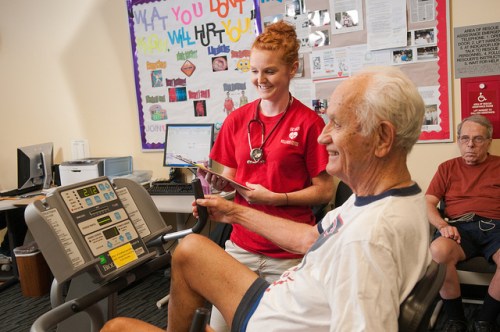
When you need it most, exercise can help. In fact, it may save your life!

Regular exercise is one of the most important things you can do for your health. A lower risk of weight gain, diabetes, heart disease, and some cancers are among a long list of positive health effects of exercise. Lesser known benefits include improved mental health, cognitive function, and greater feelings of wellbeing. Exercise is essential for development of children, maintaining health in adults, and can even reverse some of the effects of aging.

Despite these clear benefits, many people do not participate in regular exercise until they have a medical condition, like a heart attack or cancer, that motivates them to start.  This is the topic of my Health & Fitness column in the Aiken Standard this week.

usca-cardiac-rehab

Continue reading

It’s time to go back to school. Let’s make sure kids are ready to learn!

Physical activity and good nutrition have long been recognized as essential for promoting good health in adults and children. More and more research suggests that these health behaviors can have beneficial effects beyond health, including how we perform both physically and mentally. The emphasis here is on children in school, but it applies to adults, too. This is the topic of my Health & Fitness column in the Aiken Standard this week, just in time for the first day of school here.

children playing

Continue reading

How to stay healthy at work.

Many people are trying to create a healthier lifestyle by eating healthier, making time for exercise or other activity, and reducing stress. Frequently, the focus is on what they can do at home, from prepping meals to joining a gym or going to yoga class. But many people spend a major part of their day at work, where healthy options are often limited. From the box of donuts at a morning meeting to a quick fast food lunch, eating well at work can be difficult. And for people who have office jobs, it also likely means lots of time sitting at a desk.

Fortunately, there are things you can do to make your time at work a little less damaging to your health. Even better, these steps can also make you more productive and feel better throughout the day.

Parr at desk 2-11-16

Continue reading

From farm to table at your local farmer’s market

Today marks the beginning of National Farmer’s Market Week, a celebration of the benefits local markets have on our communities. From supporting local farmers to improving access to nutritious food, farmer’s markets can have positive effects on the environment, economy, and health. In fact, the availability of farmer’s markets is one of the criteria used in the American Fitness Index, an annual ranking of the fittest cities in the United States. Let’s explore some reasons why shopping at a farmer’s market makes good sense. This is the topic of my Health & Fitness column in the Aiken Standard this week.

farmers market

Continue reading

Should you go organic?

Organic food, including produce, milk, and meat, are becoming more popular among consumers each year. In fact, sales of organic foods now account for over $50 billion per yearand further growth is expected. There are many reasons to account for this increase, including potential health benefits and environmental impact. Despite the popularity of organic foods, there is little evidence that eating organic has significant health benefits. But organic foods may still be a good choice for you and your family. This is the topic of my Health & Fitness column in the Aiken Standard this week.

carrots-carrying-colorful-1389103

Continue reading

When fat attacks, use your muscle to fight back!

Everyone knows that fat is where the extra calories you eat end up and the reason your clothes fit too tightly. But beyond that, it doesn’t do much, right? While fat, or adipose tissue, is a place to store excess energy, research shows that it also plays an active role in health and disease. In fact, your fat may be keeping you fat!

The good news is that weight loss and regular exercise can reverse the negative health effects of excess body fat. This is the topic of my Health & Fitness column in the Aiken Standard this week.

Adipose tissue

Continue reading

It’s hot! So get fit and stay cool in the pool.

It’s hot! Whether you are swimming laps or splashing in a lake, swimming is a great way to stay cool. Swimming is also an excellent exercise for improving your fitness and helping with weight loss.

This is the topic of my Health & Fitness column in the Aiken Standard this week.

Swimmer

Continue reading

The caveman guide to health: Going Paleo means more than the diet.

What does a caveman know about nutrition and health? If you have been paying attention to a recent health trend, the popular Paleo diet, being more like a caveman might just be the answer to good health. It turns out that there is good reason to think that following at least some of the caveman’s advice is beneficial. This is the topic of my Health & Fitness column in the Aiken Standard this week.

Wooly Mammoth

Continue reading

Sports physiology in the Tour de France

This week marks the start of the 2019 Tour de France. This year the race covers 2100 miles in 21 days of racing, comprised of team and individual time trials as well as stages through the cities, countryside, and mountains of France, after beginning in Belgium. The Tour de France is interesting to me because it provides an excellent opportunity for a short lesson in sports physiology. This is the topic of my Health & Fitness column in the Aiken Standard this week.

Tour de France


All the riders in the Tour are exceptionally fit since their bodies have adapted to years of dedicated, intense training. Endurance sports like cycling are dependent on the delivery of oxygenated blood to the muscle to produce ATP, the energy needed to sustain exercise. The riders have large, strong hearts, resulting in the ejection of more blood to the muscle. Within the muscle there is an increase in the number of capillaries, the small blood vessels that deliver blood to the muscle, and mitochondria, the part of the cell that produces most of the ATP. Together, these adaptations allow the muscle to produce more ATP without fatigue, allowing the athlete to exercise at a higher intensity for a longer time.

But training isn’t the only reason these athletes can sustain such intense exercise for so long. Proper nutrition, especially what the athletes eat and drink before, during, and after each stage, also plays an important role. Intense endurance exercise like cycling relies on carbohydrates, in particular, muscle glycogen, as a fuel. Muscle glycogen is a storage form of glucose, sugar that the muscle converts into energy. During prolonged exercise that lasts several hours, muscle glycogen levels can be severely depleted.

Eating carbohydrates before exercise can boost muscle glycogen levels, so cyclists eat carbohydrate-rich foods for breakfast before each stage. They also consume carbohydrates in the form of sports drinks (think Gatorade) and energy bars prior to starting. In fact, they start replenishing their muscle glycogen immediately after finishing the previous day’s ride. This usually begins with a recovery beverage, which may contain some protein for more rapid muscle glycogen synthesis, and extends through carbohydrate-rich meals and snacksthat afternoon and evening.

During exercise it is crucial to maintain adequate blood glucose levels, which tend to drop since the muscle is using so much as a fuel. Failure to replenish blood glucose results in what cyclists call “hitting the wall” or “bonking,” which is like your car running out of gas. To prevent this, glucose must be replenished, typically with sports drinks, energy bars, or a sugary mixture called goo.

Prolonged, intense exercise, especially in the heat, results in a high sweat rate which can lead to dehydration. Sweat loss of several liters per hour is not uncommon during cycling, so fluid intake is essential. This means that cyclists spend a lot of time drinking water while they ride. Sports drinks are also commonly used since they contain carbohydrates and electrolytes in addition to water.

Endurance events like cycling, especially multi-stage events like the Tour de France, highlight important concepts of sports physiology. Even though you may never compete at that level, understanding how training can improve your endurance is relevant if you cycle—or run, walk, or swim—for exercise. Knowing how proper nutrition before, during, and after exercise can improve performance can help you make better decision about what to eat. Hopefully, it also gives you a greater appreciation for the science that goes into a performance like the Tour de France.


drparrsays blog footer