Category Archives: Uncategorized

How to win a gold medal at the Olympics

The famous (among exercise physiologists) exercise physiologist Per Olaf Åstrand once answered the question, “How does someone become and Olympic champion” this way: Pick the right parents! Of course, talent and skill developed through years of dedicated training are essential, but having the right genetics is a prerequisite for athletic performance at the elite level. My Health & Fitness column in the Aiken Standard this week explores the adaptations to training and the importance of genetics in making an Olympic-level athlete.
What you need to know about sports doping

With the Olympics starting this week—and the new accusations against cyclist Lance Armstrong—the use of performance-enhancing drugs among athletes is something we are sure to hear more about. In my Health and Fitness column in the Aiken Standard this week I write about sports doping, including examples of how and why athletes may engage in this practice.

You can learn more about sports doping from the United States Anti-Doping Agency (USADA), the organization responsible for research, education, testing, and sanctioning US Olympic athletes. The World Anti-Doping Agency (WADA) is the international body responsible for preventing doping in worldwide competition.

Both sites provide an excellent overview of the substances used to improve performance, how they work, and the potential negative effects of use. These are great resources for athletes and sports fans who are interested in learning more about sports supplements and performance.

Image

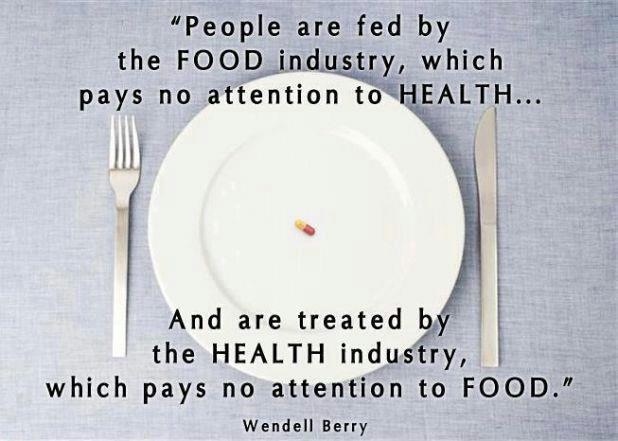
Sadly, this is the truth.

20120703-201007.jpg

It shouldn’t be food vs. health — it should be food AND health. I wonder when we will get this right?

How to exercise, work, and play safely in the summer heat

Image

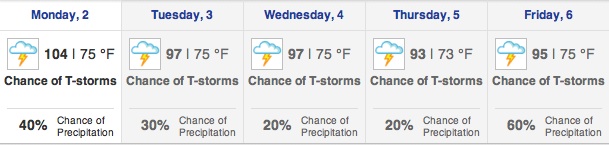
A look at the weather forecast for this week shows that the hot temperatures will continue. Even though it is actually cooler than the past few days, these temperature pose a challenge for people who exercise, work, and play outdoors. This is the topic of my Health & Fitness column in the Aiken Standard this week.

You can find more information about problems associated with exercise in the heat as well as suggestions for safe play in the heat from the American College of Sports Medicine here

Can supplements replace a healthy diet?

Several people have asked me if taking a multivitamin/mineral supplement can take the place of eating fruits and vegetables. The answer, or course, is no! There is more to food than vitamins and minerals. Fruits and vegetables are also a good source of fiber and some are good sources of protein. 

I address this question in my Health & Fitness column this week and provide additional examples of why eating healthy food is the best choice. Trying to make up for a poor diet by taking supplements simply won’t work.

That said, taking a multivitamin/mineral supplement is appropriate as a way to “top off” the vitamins and minerals you get from the food you eat. Most supplements contain levels that are at or above 100% of the recommended intake (the RDA) for most of the vitamins and minerals. In most cases this isn’t harmful and you will excrete the excess. But you should look for a multivitamin/mineral supplement that contains at most 100% of the RDA for each; there is really no benefit of taking in more. The key point is that the vitamin supplements your diet, so you don’t need to get 100% of your vitamins and mineral from the supplement. 

Exercise as a treatment for Parkinson’s disease

I was just watching a Frontline episode about Parkinson’s disease. It was an interesting show, but a segment about treating Parkinson’s disease with exercise really got my attention. Ongoing research is showing that exercise is beneficial for Parkinson’s patients, potentially more so than some medications. Obviously, more research is required to determine the mechanisms by which exercise acts on the brain and the optimal dose of exercise for treating PD.

I’m not surprised, though, since I believe that regular exercise plays a beneficial role in nearly every physiological process in the body. That doesn’t mean that exercise can prevent or cure every disease, but I think we will continue to learn that exercise has some benefit or, at the very least, doesn’t make any disease worse. It’s nice to see that research is being done in this area and that new benefits of exercise are being discovered.

You can watch the full Frontline episode here and learn more about the research in the area of exercise and Parkinson’s disease here

Aside

I like infographics and I like nutrition information, so I think this is pretty cool: Fat or Fiction. Maybe we would make better food choices if nutrition information was presented in a way that was both interesting and easy to understand.

Good news for coffee drinkers!

If you drink coffee you have probably heard that drinking coffee is bad for your health from your non-coffee drinking friends and colleagues. They probably couldn’t say why, but they may have mentioned the caffeine, or the fact that coffee is brown, or some other reason. The fact of the matter is that there was no good evidence that drinking coffee is associated with negative health outcomes. Nor was there a consensus that coffee has health benefits. Until now.

In a study published this week in the New England Journal of Medicine, coffee consumption was associated with a lower risk of death from heart disease, respiratory disease, stroke, and diabetes in over 400,000 men and women followed for 14 years.

The New York Times Well blog has a nice summary of this study. Read it while you enjoy a cup of coffee. 

America’s fattest cat has died from obesity-related complications

USA Today: Cat Meow dies of obesity complications

Imagine that! I wonder if people can die from obesity, too? Or is it just cats?

Exercise is Medicine

May is Exercise is Medicine month, so the topic for my Health & Fitness column in the Aiken Standard this week is information about the Exercise is Medicine initiative. A growing body of research suggests that the single best prescription any physician can give is for daily physical activity. But many (or most) physicians either do not make this recommendation or, if they do, do not provide the information or resources that patients need to embark on a program of regular activity. I will probably write about why this is the case — it’s not always the fault of the physician — and what can be done about it in a future column.

You can learn more about the Exercise is Medicine initiative here.