Category Archives: Health & Fitness

How What You Wear Can Affect Your Weight

If you have purchased new pants recently they may have an adjustable or expandable waist. Some men’s pants include up to two extra inches to allow you to “flex” or “move more freely.” Women’s pants might have elastic hidden in the waist band for extra “stretch.” While these pants are designed to be comfortable, they could be making you fat!

This is the topic of my Health & Fitness column in the Aiken Standard this week.
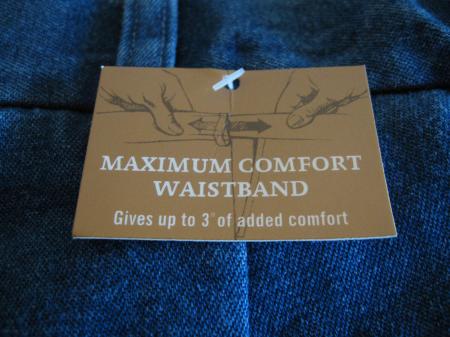

Most people gain weight as they age, typically a slow process that may not be immediately noticeable. If you have pants with a two-inch expandable waist you could easily gain weight while still wearing the same pants size. In fact, you could gain two inches of fat around your waist before you noticed. For many people, tight-fitting pants are a signal that they may have gained a few pounds. If you miss that cue you could easily gain significant weight, which requires a significant effort to fix.

This might sound like a minor issue, but external cues like this are important to help us recognize weight gain. In a classic example, a man puts on his favorite suit for the first time in over a year to find that the pants are too tight. Immediately he realizes that he has gained weight since he last wore the suit. Imagine, though, if his suit pants stretched to accommodate his larger waist. He might still think that, since the pants still fit, he hasn’t gained any weight.

This is important since people typically gain weight little by little over time, which may not be appreciated without these external cues. One way to prevent surprise weight gain is to weigh yourself regularly so that you can make adjustments to your diet and activity to prevent further weight gain. In fact, one common characteristic of the “successful losers” in the National Weight Control Registry is that they weigh themselves at least once a week. This is important because it’s easier to make adjustments to lose weight that’s gained in a week versus weight that is gained over a month or more.

This is also why people who lose weight should get rid of their “fat clothes.” Typically, these clothes get pushed to the back of the closet. But they are still readily available, so when the person regains some of the weight, it is easy to reach for a larger size. If those clothes had been packed away in a box in the attic, retrieving and unpacking them would be a noticeable sign that they had gained weight and may motivate them to get back on track.

Even small changes to our diet and activity patterns can lead to weight gain over time. Since this weight gain can often go unnoticed, it is important that we pay attention to external cues. The way our clothes fit is one such reminder, but there are others. Do you notice that you feel more out of breath doing routine activities, like climbing a flight of stairs? Is it more difficult to bend over and tie your shoes? These are both signs that your fitness may be declining and that it is time to start exercising.

These cues are easy to ignore, but they are important signs that it is time to make changes to your diet and activity habits. It is even easier to prevent weight gain or to stay fit than it is to lose weight or get in shape. So, don’t let your pants trick you! Pay attention to how your clothes fit and how you feel and use these cues to guide you to maintain good health.



How to stay healthy at work.

Many people are trying to create a healthier lifestyle by eating healthier, making time for exercise or other activity, and reducing stress. Frequently, the focus is on what they can do at home, from prepping meals to joining a gym or going to yoga class.

But many people spend a major part of their day at work, where healthy options are often limited. From the box of donuts at a morning meeting to a quick fast food lunch, eating well at work can be difficult. And for people who have office jobs, it also likely means lots of time sitting at a desk.

Fortunately, there are things you can do to make your time at work a little less damaging to your health. Even better, these steps can also make you more productive and feel better throughout the day. This is the topic of my Health & Fitness column in the Aiken Standard this week.

Parr at desk 2-11-16

Continue reading

Fitness for community service

Today is Martin Luther King, Jr. Day, a time to celebrate the birthday and reflect on the accomplishments and legacy of Mr. King. It is also a  on which people are encouraged to use their day off from work and school to volunteer in their community. Individuals and groups across the country participate in community service, with some making this their first-time volunteer effort and many more continuing a year-round commitment to service.

You can maximize your impact in community service activities by being fit and healthy. To be sure, there are ways that people of physical abilities can contribute, but many service opportunities require a baseline level of fitness to participate. And it is certainly more enjoyable to volunteer if you aren’t being pushed to your limits. In fact, some service activities are similar in exertion to many forms of exercise and some may be consistent with maximal exercise. Unfortunately, the common pattern of inactivity and obesity can limit people’s ability to function optimally at school, work, or in leisure-time activities, including community service.This is the topic of my Health & Fitness column in the Aiken Standard this week.

Photo by tear cordez from Pexels

Continue reading

Eat slow, then fast: When and how you eat matters as much as what you eat for weight control.

Maybe you set a goal to eat healthier in the new year. You already know that what you eat is an essential part of achieving and maintaining good health. What you may not know is that when and how you eat can be just as important. This is especially true if your goal is to lose weight. Here are two ways to change the way you eat to help you lose weight and keep it off. This is the topic of my Health & Fitness column in the Aiken Standard this week.

alcohol blur cuisine dining

Photo by rawpixel.com on Pexels.com


First, eating more slowly can help limit the amount of food you eat. Perhaps your mother admonished you to “slow down” at meals when you were young. This was good advice, for both practical and physiological reasons.

As an aside, your mother may also have told you to “chew your food.” too. This was probably to remind you to eat more slowly.  Almost 100 years ago Horace Fletcher recommended a process that involved chewing each bite of food 100 times. “Fletcherizing,” as it was called, was a way to reduce how much people ate, among other more dubious health claims.

Your appetite is regulated by a host of factors, including the presence of food in your stomach. As you eat, your stomach fills, triggering the release of hormones that signal your brain to reduce your appetite. The result is that as your stomach fills, you feel less hungry. Eating quickly, like many of us do, allows you to take in lots of calories before your brain gets the message that you are full.

Practically, eating slower means you will eat fewer calories during mealtime. If you slow down at meals, you start to feel full before you eat as much. Research shows that this can lead to lower calorie intake during the meal. In addition to controlling how much food you consume, eating more slowly is a good way to enjoy meals, both the food and the company, more fully.

Second, extending the time between meals or limiting eating to fewer hours per day may affect your metabolism in ways that may help with weight control. There are two main ways to incorporate fasting into your diet. Intermittent fasting involves having some days on which you don’t eat. An example is the 5:2 program, in which you include two water-only fasting days per week. While this is effective for modest weight loss and improved glucose and lipid metabolism, it isn’t easy to do.

Time-restricted feeding, in which you limit your eating to a 4 to 8 hour period each day with a 16–20 hour fast, may be easier to follow. the concept of not eating between meals, especially between dinner and breakfast, isn’t new, but research shows that having a longer fasting period each day may help you lose weight, even without counting calories.

According to a one study, people who followed a time-restricted feeding schedule in which they were allowed to eat anything they wanted for 8 hours each day for 12 weeks. They were compared to a group that could eat whenever they wanted but were instructed to maintain their weight.

After 12 weeks, the time-restricted feeding group ate about 300 fewer calories per day, leading to a modest six-pound weight loss. By contrast, the participants who were supposed to maintain their weight did just that, with no changes in calories consumed.

This suggests that limiting eating time without focusing on calories or the specific foods eaten can lead to some weight loss. One of the biggest problems people have with changing their diet to lose weight is figuring out what to eat to reduce calorie consumption. While making dietary changes is an essential part of weight loss and weight maintenance, a good first step might be to simply limit eating time to fewer hours per day.

Even without this evidence, adopting a fasting period between dinner and breakfast, which should be about 12 hours, seems prudent. At the very least, it will keep you from snacking in the evening, which almost certainly involves unhealthy choices. And as you try to make healthier food choices, consider eating more slowly and making dinner the end of your eating day.


drparrsays blog footer

Tips for Making Healthy Resolutions That Last

Have you made your New Year’s resolutions yet? If not, there is still time. Among the most common resolutions are changes to improve health, including quitting smoking, losing weight, and starting an exercise program. Making a resolution is one way to get yourself started on a journey toward better health.

However, it’s important to approach your resolutions with a clear and realistic mindset, as this can increase the chances of success and make the process more enjoyable. This is the topic of my Health & Fitness column in the Aiken Standard this week.

pexels-breakingpic-3237


Here are seven tips for sticking to your New Year’s resolutions:

  1. Set specific goals: Instead of resolving to “eat healthier,” try setting a specific goal such as “eat at least five servings of vegetables per day.” This makes it easier to track progress and celebrate small victories along the way.
  2. Make a plan: It’s important to have a clear plan in place to achieve your goals. This could include things like meal planning, finding a workout buddy, or scheduling time for self-care activities.
  3. Start small: It can be overwhelming to try to make too many changes at once. Instead, try focusing on one or two small goals and gradually build from there. This can help prevent burnout and increase the chances of success.
  4. Be realistic: While it’s important to challenge yourself, it’s also important to be realistic about what you can accomplish. Consider your current lifestyle and time commitments and set goals that are achievable given these constraints.
  5. Seek support: It can be helpful to have someone to share your journey with, whether it’s a friend, family member, or professional coach. Having someone to hold you accountable and offer encouragement can make all the difference.
  6. Be kind to yourself: It’s important to remember that setbacks and setbacks are a normal part of the process. Don’t get too hard on yourself if you don’t see progress as quickly as you’d like, or if you slip up. Instead, try to focus on the progress you have made and continue working towards your goals.
  7. Stay motivated: It can be easy to lose motivation as the year goes on. To keep yourself motivated, try setting small rewards for yourself as you reach specific milestones, or find ways to make your goals more enjoyable.

Making healthy New Year’s resolutions is a great way to improve your overall well-being and quality of life. By setting specific, achievable goals, making a plan, starting small, and seeking support, you can increase your chances of success and make the process more enjoyable. Remember to be kind to yourself and stay motivated, and you’ll be well on your way to a healthier new year!


Make Fitness Tech Work for You

Wearable fitness devices make great holiday gifts, so maybe you are getting started with a new gadget or app. From activity trackers and heart rate monitors to devices that do both and more, the newest “wearables” are sophisticated tools for recording your steps per day, distance you run, and calories you burn. But using these devices to help you get fit, lose weight, or otherwise improve your health requires that you use that information wisely. This is the topic of my Health & Fitness column in the Aiken Standard this week.

This is especially true when it comes to losing weight. Thanks to a host of wearable devices and mobile apps, counting calories has never been easier. This matters because losing weight almost always means reducing the calories that you eat and increasing the calories that you burn. This concept of “eat less, move more” is the foundation of nearly every effective weight loss program and explains why some diets and exercise programs seem to work better than others, at least for some people.

Modern wearable devices and mobile apps allow you to track your weight, what you eat, and your activity fairly accurately. Many apps can measure the intensity of exercise by using the GPS and accelerometer features of your phone itself and some include heart rate to make the estimates even more precise. Using this technology, you can count steps, measure how many miles you walk or run, and estimate how many calories you burn.

Other apps can help you track what you eat. Whether you are counting calories or concerned about your protein intake, dietary analysis apps can show you what you are really eating. Most require you to enter the foods you eat and the app calculates calories, nutrients, sugar, salt, and water intake based on standard databases. In order to get accurate results, it is important to estimate portion sizes accurately, something that is challenging even for experts. That said, these apps can be useful for tracking what you eat to help you learn about your eating patterns to develop healthier habits or meet specific goals, such as eliminating added sugar from your diet.

Activity trackers and exercise apps are especially popular for improving fitness and promoting weight loss. Both the physical activity that you do throughout the day and dedicated exercise are important for good health, physical fitness, and weight control. This technology can help you know what to do, when to do it, and how much you did at the end of the day.

While these tools can be helpful, it is important to emphasize the importance of developing healthy habits in order to improve fitness, lose weight, or keep it off. A focus on “micromanaging” steps or calories may cause you to lose sight of the “big picture” changes you want to make. For example, you should strive to be as active as you can throughout the day, even if you have already met your step or calorie goal.

Keep in mind that there are very few people who fail to meet their fitness or weight loss goal because they didn’t have the latest activity tracker or fitness app. Real success comes from making lifestyle changes to incorporate healthy eating and activity habits that you can maintain without constant reminders. While technology can help you make those changes, it does not replace the dedication needed to develop lasting eating and activity habits to promote good health. Finally, make sure to pick the device that meets your needs… and your budget, as they can get expensive!

Santa’s 2023 fitness report

Since Christmas is next week our attention is naturally focused on one person: Santa Claus. Have you ever wondered how Santa gets in shape for his yearly sleigh ride to deliver gifts to good boys and girls around the globe? Like many elite athletes, Santa does not publicly discuss his training or his fitness. There are certainly no published studies that report his one repetition maximum strength or his maximal oxygen uptake.

Given this lack of information, I attempted to make an educated guess about Santa’s training, fitness, and health. This is the topic of my Health & Fitness column in the Aiken Standard this week.


Continue reading

Too fat to fly! A North Pole weight loss plan that will work anywhere.

There is a problem at the North Pole! Santa’s reindeer are unable fly, putting his Christmas plans in jeopardy. It turns out that the reindeer are suffering from a common problem, one that you might be dealing with, too. Fortunately, Santa has a solution that can help his reindeer and save Christmas. This is the topic of my Health & Fitness column in the Aiken Standard this week.

toofattofly


According to the children’s book Too Fat to Fly by Doreen Belleville, Santa’s reindeer have gained weight in the “off season.” Too much sitting around and too many snacks and treats have resulted in weight gain to the point where the reindeer simply can’t do their job. Sound familiar?

Whether it comes during the holidays or gradually throughout the year, weight gain is common for many people. And, like the reindeer, it often goes unnoticed until it is too late—trying to fit into your old suit or favorite dress, for example.

It’s not just the weight that is the problem. The long, lazy vacation has allowed the reindeer to become unfit. They simply aren’t strong enough and don’t have the endurance to pull Santa’s sleigh. Again, a decline in fitness over time is something many of us experience and we may not notice it until we do something strenuous that makes it clear we are out of shape.

In the book we learn that the solution is both simple and well-known. Santa charges his elves with getting the reindeer back in shape, in terms of both fitness and fatness. The snacks are replaced with healthy meals containing lots of fruits and vegetables. And days spent lying around are now spent in the gym and going for walks outdoors.

Like many of us, the reindeer have a tough time adjusting to their new exercise routine. The treadmills are tricky for them, until they get the hang of it. For many of us, exercise equipment and new types of exercise can be intimidating. But with some guidance from the elves (or a personal trainer) you may find that trying new forms of exercise can really help you, just like it did for the reindeer.

The reindeer followed a diet that emphasized fruits and vegetables. Despite the controversy over which diet is the best, almost everyone agrees that more fruits and vegetables and fewer calories from added sugars will help you lose weight. These foods are lower in calories than many other options, contain fiber to help you feel full, and replace less healthy foods you might otherwise pick. Carrots and apples, what the elves picked for the reindeer, are excellent choices, but pretty much any fruits and vegetables will work. Of course, you should eat other foods in moderation, too, including whole grains, meat, and dairy.

The good news is that the diet and exercise program helped the reindeer lose weight and get back in shape in time for Christmas can work for you, too. While you may not see such rapid results, if you are careful with what you eat and dedicate time every day for exercise, you can lose weight relatively quickly. It’s not easy for people or for reindeer, but weight loss and improved fitness are achievable.

Looking forward, continuing to eat a healthy diet and exercising regularly can save you the trouble of trying to lose weight next year at this time. It is always easier to maintain weight and stay fit than it is to lose weight and get back in shape. I’m sure that’s a lesson Santa will teach his reindeer!


Maintain, don’t gain, this holiday season: Six tips for preventing holiday weight gain.

Now that Thanksgiving has passed, the holiday season is in full swing. In addition to spending time with family and friends, the big events of the season also seem to involve shopping and eating. This will almost certainly result in big numbers on your credit card bill. And, because holiday weight gain is a reality for most people, on your bathroom scale, too!

This is the topic of my Health & Fitness column in the Aiken Standard this week.

Christmas cookies


Research shows that, on average, people gain about one pound between Thanksgiving and the new year. The problem is that this extra weight may not be lost during the spring or summer, meaning that holiday weight gain can be a contributor to the gradual increase in weight, about one pound per year, that most people experience over time.

The good news is that the weight gain that typically occurs during the holidays can be prevented. Since people tend to gain less than one pound, even small changes to what you eat and your activity can make a difference, without taking away from your holiday cheer. Here are some strategies:

Stay active. The average holiday weight gain could be prevented by walking about one mile, or about 20 minutes, per day. Since time may be a factor, you can turn a shopping trip into a chance to be active by taking an extra lap around the mall or parking further away in the parking lot. Go for a walk when you have free time—and take your family and friends (and dog) with you.

Stay away from the food. Most holiday parties include lots of food, and usually not the healthiest choices. You can reduce the amount you eat by limiting your time near the food—literally, fill your plate and move away from the food. Using a smaller plate will reduce the amount of food you take, too. Getting rid of the candy dish on your desk at work or the plate of treats on the countertop at home are also smart ideas.

Don’t drink your calories. Alcoholic beverages, soda, and juice all contain calories and can add up to a big part of your total calorie intake. Many beverages, including hot chocolate and coffee drinks, can easily contain hundreds of calories. This doesn’t mean you can’t enjoy your favorite drinks, but enjoy them in moderation.

Plan ahead. If you are trying to watch what you eat, have a healthy snack before you go to a party. You will feel less hungry so you will probably be less inclined to eat as much. If you are bringing a dish to the party, make it something healthy that you like.

Focus on family and friends, not food. The holidays are a time to enjoy special meals and events with family and friends, and that should be your focus. You should enjoy your favorite foods and drinks, just do it in moderation.

Give yourself a break! Healthy eating and exercise are always important, but they are more difficult to do around the holidays. In research, even people who said they were trying to lose weight over the holidays ended up gaining about a half pound. So, do your best maintaining your healthy habits, accept that you may struggle, and make a commitment to get back on track after the holidays!

The bottom line is that you can prevent holiday weight gain by watching what you eat and staying active. It is easier to keep the weight off than it is to lose it later, so a little extra effort now is worth it in the long run. Considering that many people plan to exercise and lose weight after the holidays, you could get a jump-start on your New Year’s resolutions along with making this a happy and healthy holiday season.


drparrsays blog footer

Give thanks for a healthy meal this Thanksgiving

Happy Thanksgiving week! While this Thanksgiving may different when it comes to gathering together with family and friends, food will certainly be a part of the holiday. Even though many of our favorite dishes are not the healthiest choices, they make an appearance on the table each year. For many of us, Thanksgiving dinner is a day marked by overindulgence and poor nutrition choices.

In an effort to make Thanksgiving dinner healthier, recommendations for modifying or replacing traditional dishes are a common theme in magazines, on the morning TV shows, and on the web. While these suggestions are meant to be helpful, I’m not sure they actually serve to make a significant impact on health. In fact, the foods we eat and the way we eat them may be the healthiest part of a traditional Thanksgiving dinner. This is the topic of my Health & Fitness column in the Aiken Standard this week.


Photo by Karolina Grabowska from Pexels

Continue reading