Category Archives: Health & Fitness

Preseason sports safety

It’s hard to believe, but preseason practice for high school sports is well underway. Not only does this indicate that summer is winding down, it also means that area athletes are getting ready for the fall sports season. This is an exciting time of year for athletes, coaches, and fans alike. Unfortunately, even the fittest young athletes can suffer injuries (or worse) during preseason training and competition during the season. Among the biggest concerns are the rigorous training schedule, exercise in the heat, and head injury. Fortunately, there are steps that coaches and parents can take to ensure the safety of young athletes during practice and games. This is the topic of my Health & Fitness column in the Aiken Standard this week.
https://www.flickr.com/photos/virtualsugar/4084734655


Preseason practices typically emphasize conditioning—getting athletes in shape for the season. While coaches may expect players to arrive at practice already in shape, the reality is that many athletes still need to improve their strength, endurance, and flexibility. Preseason conditioning usually consists of vigorous exercise designed to improve fitness rapidly. Many coaches also use this time to “toughen up” the players or to weed out those who are not suited for the sport. For most young athletes this approach is safe and effective, but there is a risk of injury or, more rarely, collapse or death with intense training.

The risk of injury or death is made worse by the high heat and humidity that is common at this time of the year. For this reason, many coaches hold conditioning sessions in the morning or evening, when it is cooler. Even then, exercise alone poses a challenge to maintain a normal body temperature. Adding equipment such as pads and helmets for football players increases the risk for hyperthermia, which is even greater in the sun on a hot day. A high sweat rate makes dehydration more likely, so frequent water breaks are essential. Unfortunately, some coaches may be tempted to limit water breaks in a misguided effort to build toughness. This is absolutely inappropriate! Dehydration and hyperthermia can lead to heat stroke, which can be deadly.

This topic was covered in an NPR  interview  with Dr. Douglas Casa of the Korey Stringer Institute at the University of Connecticut in Storrs, Connecticut. You can also watch a video in which Dr. Casa discusses hydration and preventing heat illness in young athletes.

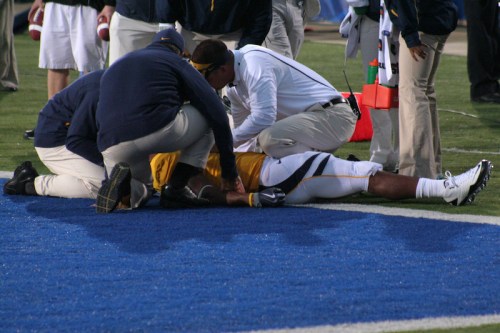
Another concern, especially among football players, is the risk of concussion. It turns out that concussions are more common than previously thought in football players and repeat concussions, even “minor” ones, can cause long-term problems. New recommendations for all levels of football call for better assessment of athletes who suffer head injuries and prevent injured athletes from returning to play. This in important during practices as well as games. While the focus is on football, nearly all sports that involve contact have a risk for concussion.

The topic of concussion is addressed in this video of a lecture given by Dr. Kevin Guskiewicz, Professor of Exercise and Sport Science at UNC-Chapel Hill and MacArthur Foundation “Genius” award winner.

These risks can be reduced by good year-round conditioning, altering practices to reduce heat injury risk, education to reduce the likelihood of concussion, and careful assessment when concussion is suspected. These responsibilities fall on the coaching staff and the certified athletic trainers who should be present at all practices and competitions. Certified athletic trainers have the knowledge and skills to assess environmental conditions and monitor athletes for signs of heat stroke, concussion, and other injuries. You can learn more about sports injury prevention and the role of certified athletic trainers in keeping young athletes safe from the National Athletic Trainers Association (NATA). All athletic trainers working in our area at certified by the NATA.

All players should also undergo a physical exam prior to participation in sports. The risk of injury can be further reduced by making sure all players are in shape prior to the start of practice. Coaches should find incentives to motivate their players to build strength and endurance in the off-season. Parents should make sure their young athletes are prepared for the physical requirements of their sport and aware of the risks of participation.

While injury is always possible, the risks can be minimized through careful planning and communication among coaches, parents, athletic trainers, and the athletes themselves.


Nutrition, exercise, and health information can be confusing. 
But it doesn't have to be that way.
What can I help you with?
 drbrianparr@gmail.com | http://twitter.com/drbrianparr

Mindfulness matters for making meaningful and lasting health behavior changes

Mindfulness can be described as an awareness of thoughts, feelings, bodily sensations, and the surrounding environment. This is most commonly explored through mindful meditation, a practice that is credited with improving physical and mental health. Beyond meditation, being mindful can help to improve attention and focus in nearly every aspect of life. This is important for making meaningful and lasting health behavior changes. This is the topic of my Health & Fitness column in the Aiken Standard this week.

Mindful brain


Thinking about your actions and the effect they have on your health and the health of others can be good for you and those around you. It turns out that we engage in many health behaviors that are driven more by habit than conscious decision-making. This includes what, when, and how much we eat as well as how active we are, two of the most important determinants of health.

When was the last time you thought about what you were eating? Not just which restaurant to go to or what time to eat, but really thought about what and how much you ate? Chances are, at least some of the time you eat when you aren’t hungry or keep eating even when you are full. You probably also eat foods you know you shouldn’t or don’t intend to, sometimes without even realizing it.

This concept was explored in-depth by Brian Wansink in the 2006 book, Mindless Eating. Based on his research, this book helped to explain the hidden reasons behind what, why, and how much we eat, often without being aware of it. This includes marketing tricks as well as environmental factors, many of which operate outside of our consciousness, that drive our food choices and prompt us to eat.

This is where mindfulness comes in. By making an effort to be cognizant about your own thoughts and sensations as well as the environment you are in, you can at least decrease the instances of overeating and making poor food choices.

Furthermore, we should be aware of how our food choices influence others around us. Research shows that children of parents who eat more fruits and vegetables tend to eat more of these foods than kids without such influence. Mindful eating includes accounting for how our actions and choices can influence the decisions of other family members and friends.

The same is true for how active or sedentary we are. Being active is a choice, sometimes a difficult one, that is influenced by other people and the environment. Most people spend the majority of the day sitting at work and at home, often without thinking about it. This sedentary lifestyle has been linked to an increased risk of obesity and heart disease, so it is relevant.

Sure, it feels good to sit on the couch to watch television. Think about it: is that really the best way to spend your time? At work, taking short breaks to get up from your desk and move can make you feel more alert and energized. Isn’t that worth it?

Similar to eating, our activity choices can influence the actions of those around us. A suggestion to walk to lunch can increase your own activity and that of your friends. Planning to go for a walk or bike ride with your family after dinner is a great way to share the benefits of activity.

When it comes to health, mindfulness matters. Being mindful about what you eat and making a choice to be more active allows you to have a positive effect on your health and the health of those around you.


Nutrition, exercise, and health information can be confusing. 
But it doesn't have to be that way.
What can I help you with?
 drbrianparr@gmail.com | http://twitter.com/drbrianparr

Back to school: Make sure kids are ready to learn

Physical activity and good nutrition have long been recognized as essential for promoting good health in adults and children. More and more research suggests that these health behaviors can have beneficial effects beyond health, including how we perform both physically and mentally. The emphasis here is on children in school, but it applies to adults, too. This is the topic of my Health & Fitness column in the Aiken Standard this week, just in time for the first day of school here.

school lunch


Unfortunately, taking time for activity and good nutrition is seen as a luxury or a distraction to learning in most schools. Far from being a distraction, physical activity and healthy eating are prerequisites for learning and academic achievement. In short, these often ignored factors can help make sure children are ready to learn.

Regular physical activity is essential for good health, growth, and physical development, including maintaining a healthy body weight. This last point is important given the epidemic of childhood obesity and related health problems, including “adult” diseases like high blood pressure and type 2 diabetes.

Current recommendations call for all children to get at least 60 minutes of activity per day. This can include activity at school from physical education classes, recess, other classroom activities as well as games, sports, and unstructured play. Unfortunately, most kids don’t get nearly enough activity at school and many aren’t active at home.

Physical activity is also important for academic performance. Research shows that children who participated in an activity program had better executive control, which includes resisting distractions and maintaining focus, improved memory, and doing better switching between tasks. This is particularly relevant for children with ADHD, but the effects can be seen in all kids. These positive changes can maximize class time and lead to improvements in academic achievement, especially math and reading test scores.

Similarly, good nutrition is also essential for health, growth, development, and academic achievement. Eating a good breakfast improves cognitive function, alertness, and academic performance in students of all ages. It should be no surprise, then, that skipping breakfast impairs cognitive function and academic achievement. This is one reason that many schools offer breakfast to start the day or include a healthy mid-morning snack.

The same is true for lunch, too. A good lunch can support learning in the afternoon and gives a chance to teach kids about good nutrition by providing healthy food that, unfortunately, many children may not get at home.

Schools have a unique opportunity to use physical activity and nutrition to promote health, support academic achievement, and teach healthy habits. Since formal nutrition education is missing from most curriculums and PE programs are being reduced or cut completely, schools must be creative to incorporate these essential subjects.

A way around this problem is to make sure children get a chance to move and play, ideally multiple times during the day. This is what recess is for. Teachers can also incorporate activity and nutrition education in the classroom and get away from the idea that kids must be sitting still to learn. As research shows, quite the opposite is true!

Schools are often hesitant to teach about nutrition and activity because it is thought of as a responsibility of parents, not schools. But most parents don’t teach these good habits at home, which affects what happens at school. Despite the obvious benefits, it will probably take years of effort to change this view.

In the meantime, parents can encourage their kids to be active and make smarter food choices at home so they are ready to learn in school.


Nutrition, exercise, and health information can be confusing. 
But it doesn't have to be that way.
What can I help you with?
 drbrianparr@gmail.com | http://twitter.com/drbrianparr

What you need to know about sports doping

The use of performance-enhancing drugs has been a serious issue in competitive sports for some time. Notably, the American cyclist Lance Armstrong was found to have “doped” during the years he won seven consecutive Tour de France races and, as a consequence, was stripped of those titles. With the Olympics underway, sports doping is something we are sure to hear even more about. The purpose of this column, which was published in my Health & Fitness column in the Aiken Standard this week, is to explain what is meant by sports doping and describe how a few commonly used substances work to improve performance.
syringe


The use of performance-enhancing substances, also known as sports doping, is nothing new. Sports organizations around the world have launched a concerted effort to catch and penalize athletes, coaches, trainers, and physicians who use or promote the use of banned drugs and techniques to unfairly improve performance. Athletes are tested randomly, and those who are found guilty can be disqualified from events, have previously awarded wins and medals revoked, and even be banned from competing in future events.

The specific substance an athlete might use depends largely on the sport. Endurance athletes may use substances that improve oxygen delivery to the muscle, allowing them to exercise at a higher intensity for a longer time. Oxygen is transported through the blood by red blood cells (RBCs). Increasing the number of RBCs is called “blood doping.” Traditionally, this required an athlete to remove a unit of blood and then reinfuse that blood later, closer to the event. The body replaced the donated RBCs, so the reinfused blood carried extra oxygen to the muscle and improved performance.

There is a newer way for athletes to get the same result without having to donate, store, and reinfuse blood. After a blood donation, the blood oxygen level is lower than normal, causing the release of a hormone called EPO, short for erythropoietin. EPO causes an increase in RBC production. EPO can also be produced as a prescription drug that has the same effect. In fact, most cases of blood doping involve EPO administration rather than RBC reinfusion.

Athletes in events that depend primarily on strength and power need to develop a high level of muscle mass. Anabolic steroids like testosterone have been used for decades to build muscle. This works since testosterone promotes protein synthesis, the key step in muscle hypertrophy. Growth hormone (GH) is another natural hormone that, as its name suggests, promotes muscle growth. Both testosterone and GH can be injected to enhance the response to resistance training. Hormone precursors such as androstenedione or “andro,” which was famously used by the baseball player Mark McGuire when he broke the single season home run record, can also be used to achieve the same effect.

Knowing that the penalties for sports doping can be severe, why would an athlete take the risk and use performance-enhancing drugs? Athletes train year-round, usually for decades, to compete on an elite level. After this much training, additional gains in strength, speed, and endurance can be difficult to achieve. Considering that in most elite-level competition the difference between winning and losing can be as small as a few seconds or inches, depending on the event. Some athletes feel that the only way to gain an edge over the competition is to use performance-enhancing drugs.

Athletic competitions like the Olympics are a celebration of human strength, power, endurance, and skill. Hopefully, cases of sports doping in the news won’t overshadow the incredible accomplishments of so many athletes who succeed because of their talent, training, and dedication. We should be inspired, not made suspicious, by their performance.


Nutrition, exercise, and health information can be confusing. 
But it doesn't have to be that way.
What can I help you with?
 drbrianparr@gmail.com | http://twitter.com/drbrianparr

Could you be an Olympic champion? Here’s how to do it.

The Olympics are an excellent opportunity to see some of the world’s fittest athletes in action. Endurance events like the marathon, power events like sprints, team sports like soccer or basketball, and exhibitions of individual skill in gymnastics all highlight the dedication and training of these elite athletes. You may wonder what it takes to become an Olympic champion. In my Health & Fitness column in the Aiken Standard this week that the answer is a combination of focused, intense training and some good luck.

Olympic rings


First, the training. The key to performance in long-duration events like distance running, cycling, swimming, and rowing is for the muscle to contract repeatedly and forcefully without fatigue. In order to do so, the muscle must have a steady supply of oxygen and nutrients (primarily fats and carbohydrates). These nutrients are delivered through the blood which is pumped to the muscle by the heart. The muscle takes up and uses these nutrients to produce ATP, the form of energy used by the muscle.

After months and years of endurance training the heart gets bigger and blood volume expands, resulting in the ejection of more blood to the muscle. Within the muscle there is an increase in the number of capillaries, the small blood vessels that deliver blood to the muscle, and mitochondria, the part of the cell that produces most of the ATP. Together, these adaptations allow the muscle to produce more ATP without fatigue, permitting the athlete to sustain a higher intensity (running speed, for example) for a longer time without fatigue. These adaptations are consistent with a change in muscle fiber type from fast (type IIx) to slow (type I and IIa) fibers, which are rich in capillaries and mitochondria, making them resistant to fatigue.

These adaptations occur to some extent in everyone who participates in regular exercise. Olympic-level athletes who train for years or decades can maximize these changes. But is training alone sufficient for Olympic-level performance? Could anyone who trains enough make it to the Olympics? The answer is no, because there is another important factor in athletic performance—luck. Luck refers genetics, which play an important role in performance. As much as 50% of performance in some events is attributed to genetics. Elite endurance athletes were fortunate to be born to parents who bestowed them with large hearts and muscle that was composed of a high percentage of slow fibers (the average person has about 50% slow fibers). Of course, years of training amplifies these attributes to result in a large, strong heart that can pump lots of blood to muscle that is made up of slow, fatigue-resistant fibers.

Genetics and training are the two major factors that lead to success in every other Olympic event, too. Sprinters and other power athletes have more fast (IIx) muscle fibers to generate high levels of force for a short duration. Genetics can provide a foundation of more fast fibers, upon which specialized training can build. Other events require a certain body type for optimal performance, which can be seen in female gymnasts (petite but strong) and swimmers (Michael Phelps’ arm span, for example). And beyond the physiological adaptations, years of training builds skill, technique, and mental focus that is essential for competition.

It is too late for most of us to become Olympic champions. But we can all experience many of the same benefits of training as Olympic athletes. And we can certainly appreciate the training, dedication, and good luck that the athletes bring to the games.


Nutrition, exercise, and health information can be confusing. 
But it doesn't have to be that way.
What can I help you with?
 drbrianparr@gmail.com | http://twitter.com/drbrianparr

Can supplements replace a healthy diet?

It’s no secret that eating lots of fruits, vegetables, whole grains, and lean protein sources such as fish, soy, and legumes (beans) is good for you. In addition to providing carbohydrates, protein, and healthy fats, these foods are rich in vitamins, minerals, and fiber.

For example, Vitamins A and C act as antioxidants, reducing cellular damage from free radicals that may lead to heart disease and some cancers. Calcium, a mineral primarily found in dairy products, is important for bone health. Fiber in fruits, vegetables, and whole grains is important for digestive health and lowering blood cholesterol.

In addition to the foods we eat, we can also get these nutrients from supplements. In fact, many of us probably take vitamin and mineral supplements already. But does taking supplements mean that you don’t have to eat a variety of healthy foods? The answer is no! In my Health & Fitness column in the Aiken Standard this week I provide several reasons why replacing healthy foods with supplements is not recommended.

supplement pills


First, foods contain components beyond the nutrient you wish to supplement. For example, citrus fruits are high in vitamin C, as well as other vitamins, minerals, and fiber. Taking a vitamin C supplement instead of eating an orange means that you will miss out on those other nutrients.

Second, replacing foods with supplements may lead to making less healthy food choices. For example, you may not eat as many fruits, vegetables, or whole grains if you are getting adequate fiber through supplements or other fiber-fortified foods.

The best sources of fiber in the diet are fruits, vegetables, legumes, and whole grains; meat, dairy, and refined grains contain little fiber. You can also get fiber from supplements, which can be added to foods and beverages, and fiber-fortified foods, in which fiber is added to foods that typically wouldn’t contain fiber.

But the health benefits are greater if you get fiber through healthy foods. For breakfast you could eat a healthy whole grain cereal or you could eat a chocolate chip granola bar that is fortified with fiber. Both contain fiber, but the granola bar has a lot more sugar, making it the less healthy choice.

Another example is fish and fish oil supplements. Many fish contain high levels of a type of fat called omega-3 fatty acids. These healthy fats improve blood lipids, lower inflammation, and reduce blood clotting, leading to a lower risk of heart attack and stroke. For this reason, eating at least two servings of fish per week, especially including salmon, mackerel, and tuna, is recommended.

You could also get these healthy fats by taking fish oil or other omega-3 fatty acid supplements. However, the health benefits of this approach are not as great as actually eating fish. In fact, most of the research showing benefits of fish oils involved studying people actually eating fish; the results for fish oil supplements are less consistent. It appears that you simply don’t get the same benefit from taking a fish oil supplement as you do from eating certain types of fish.

(You can find a good low-sci explanation of this research here: Source: Fish Oil Is Hugely Popular—But Should You Take It? | TIME)

The bottom line is that a healthy diet consisting of fruits, vegetables, whole grains, and fish and other lean protein sources is the best way to get the essential nutrients you need. There is no harm in taking a multivitamin/multimineral supplement to make up for inadequacies in your diet, but you shouldn’t replace healthy foods with supplements.


Nutrition, exercise, and health information can be confusing. 
But it doesn't have to be that way.
What can I help you with?
 drbrianparr@gmail.com | http://twitter.com/drbrianparr

 

Stay cool and get fit by going for a swim

It’s hot! Whether you are swimming laps or splashing in a lake, swimming is a great way to stay cool. Swimming is also an excellent exercise for improving your fitness and helping with weight loss.

This is the topic of my Health & Fitness column in the Aiken Standard this week. You can also find more information about the fitness and health benefits of swimming from something I wrote previously.

Swimmer


There is nothing that feels better on a hot summer day than going for a swim. But beyond being a fun way to cool down, swimming is a great way to get in shape. Swimming is also an excellent exercise for injury rehabilitation or for people with certain conditions like arthritis.

The fitness benefits of swimming are well established. Since swimming is a whole-body exercise it uses all of your major muscle groups, building strength, endurance, and aerobic fitness. Highly trained swimmers have VO2max values, considered the best measure of aerobic fitness, that are similar to runners and cyclists. If you have doubts about the fitness benefits of swimming, think about how muscular and lean Olympic swimmers are.

Depending on the stroke and speed, swimming ranges between 5 to 10 METs. (METs are units used to measure the intensity of activity; one MET is equivalent to sitting at rest) For example, doing the backstroke at a moderate speed is about 5 METs while swimming laps freestyle with vigorous effort is about 10 METs.

This range is similar to walking at 4 mph up to jogging at a 9 minute per mile pace. What if you are just spending time in the pool or lake rather than swimming laps? Swimming leisurely is 6 METs, still a decent workout.

Swimming is a great way to burn calories, too. Even at a moderate pace, swimming laps for 30 minutes can burn over 200 calories. The exact energy expenditure depends on the stroke (butterfly is highest, backstroke is lowest) and the speed, but for most people swimming will burn as many calories as spending the same amount of time exercising on land.

There are two major reasons for this. First, water is more dense than air, so you need to expend more energy to move your body through the water. Second, swimming is a whole-body exercise which requires more muscle activity compared to walking or jogging which mostly involve the legs.

You may be surprised to learn that novice swimmers expend more energy per lap than elite swimmers. For example, one study showed that competitive swimmers expend only 280 calories to swim a mile, while less experienced swimmers burn about 440 calories to cover the same distance. The reason for this is that experienced swimmers are more efficient, so they expend less energy.

Aquatic exercise is popular for both therapeutic and fitness purposes, especially for people who don’t tolerate exercise on land well. When you are submerged up to your waist, 50% of your weight is supported; when you are up to your chest, about 75% is supported. This reduces the impact of exercise in the water, perfect for people who have arthritis, osteoporosis, severe obesity, or who are recovering from injuries.

Exercise in the water doesn’t have to mean swimming laps. Water aerobics, aqua walking or jogging, and resistance training using foam “weights” or webbed gloves offer safe ways to increase strength and endurance for almost everyone. Most fitness facilities that have a pool offer group aquatic exercise classes and you can find instructions online for exercises that you can do in your own pool.

The hot summer weather makes swimming and other water exercise appealing. But even if you don’t use the time for exercise, spending time playing in the pool or lake can still burn as many calories as going for a walk and is a great way to have fun and cool down!

Should you go organic?

Organic food, including produce, milk, and meat, are becoming more popular among consumers each year. In fact, sales of organic foods now account for over $40 billion per year and further growth is expected. There are many reasons to account for this increase, including potential health benefits and environmental impact. Despite the popularity of organic foods, there is little evidence that eating organic has significant health benefits. But organic foods may still be a good choice for you and your family. This is the topic of my Health & Fitness column in the Aiken Standard  this week.

Good food display


A review of over 200 studies of organic foods published in 2012 suggests that organic produce, milk, and meat are not necessarily healthier. This study received a great deal publicity, much of it critical of the conclusions of the report. There are some studies that show that organic fruits and vegetables contain higher levels of vitamins and antioxidants, but this finding is not consistent. Organically produced milk and meat may have higher level of omega-3 fats, which are associated with heart health.

These differences may not be completely attributable to organic farming techniques. The higher vitamin content in some fruits and vegetables may be due to ripeness, since organic produce might be more likely to be picked at peak ripeness than conventional fruits and vegetables. This is not always the case, though, since some organic food is shipped a great distance—literally halfway around the world in some cases—meaning it was picked before it was ripe. The elevated omega-3 fats in organic milk and meat may be due to the fact that most of these cows get more time to graze on grass than cows on conventional farms that eat more grain.

The American Academy of Pediatrics issued a report on organic foods for children which presents a balanced review of organic foods and sensible advice for adults and children. After reviewing the research, they concluded that there is no direct evidence that consuming organic food improves health or lowers the risk for disease. But they do note that organic foods, with lower pesticide levels, may be a smart choice for children who are more likely to be harmed by chemical exposures.

The take-home message is that organic foods are at least as healthy as conventional foods. But there are other reasons why you may choose to buy organic beyond the potential health benefits. Organic farming may be better for the environment due to reduced water contamination by pesticide run-off and healthier soil. Pesticide application also poses potential risks for farm workers. Additionally, there are issues of animal welfare that some consider important. Many people also feel that organic farming is more traditional and the way food “should be” produced.

Given that this information about organic food, what should you do? First, eat fruits and vegetables in abundance, whether they are organic or not. There is substantial evidence that fruit and vegetable consumption is essential for good health. The same is true for whole grains and lean meat. Second, given that organic foods tend to be more expensive, be selective about what you buy, such as organic versions of foods that tend to be higher in pesticides (you can find lists of the “dirty dozen” and the “clean fifteen” online). Wash all produce before you eat it whether it is organic or not. Finally, make sure your food choices, organic or otherwise, are part of a lifestyle that includes a healthy diet and regular physical activity.


Nutrition, exercise, and health information can be confusing. 
But it doesn't have to be that way.
What can I help you with?
 drbrianparr@gmail.com | http://twitter.com/drbrianparr

How to survive an alien invasion. And other more likely threats to your health.

The film Independence Day: Resurgence, the sequel to the 1996 film, opened in theaters last week. The movie is about an alien attack that threatens to destroy the earth. The film has all the makings of a summer blockbuster and will certainly have people talking about alien invaders. It may even prompt some to prepare for an alien attack. This is the topic of my Health & Fitness column in the Aiken Standard this week.

Alien invasion


All evidence suggests that an alien invasion is highly unlikely. Just in case, though, the Centers for Disease Control and Prevention (CDC) Office of Public Health Preparedness and Response has provided advice for surviving a host of disasters that are common in Hollywood blockbusters, including an alien attack. The intention is that preparing for epic disasters also means that you will be prepared for more realistic natural and man-made catastrophes.

I would like to share some health and fitness-related steps you can take to help you survive an alien invasion as well as other more likely threats to your health. After all, you are far more likely to suffer a heart attack than an alien attack, but it makes sense to prepare for both.

The first thing that is clear is that you need to be physically fit to escape or fight alien invaders. Roads and other transportation infrastructure tends to get destroyed in an extraterrestrial strike, so you may have to travel on foot and carry a heavy load of supplies, likely over long distances.

Building speed and endurance through prolonged aerobic exercise and high-intensity interval training can give you an advantage. Developing muscular strength through resistance training would certainly help, too. A comprehensive fitness program at a gym or at home can help you achieve these goals. Even going for a brisk walk everyday will help.

What you eat now can also help you prepare for the aftermath of an alien assault. Both running away from alien attackers and walking for days to a safer place requires that you have adequate stores of carbohydrate and fat. A high carbohydrate diet will increase your storage of muscle and liver glycogen, the primary fuels used for intense exercise so you will have more energy available to sprint and run.

Don’t overeat, though. Maintaining a healthy body weight is beneficial, too. The heavier you are, the more weight you have to carry in your escape, which is likely to slow you down.

Even though the possibility of an extraterrestrial apocalypse is remote, preparing now makes sense. Just as the CDC recommends that you be prepared for aliens in an effort to make sure you are ready for other more likely disaster scenarios, getting in shape to fight or flee attacking aliens also increases your chances of surviving more probable health threats.

Regular aerobic and strength exercise, maintaining a healthy body weight, and eating a healthy diet are the best ways by which you can reduce your risk of a host of health problems. The benefits of these healthy habits include a lower risk of heart disease, stroke, and some cancers along with prevention and treatment of high blood pressure, high cholesterol, and diabetes. These are exactly the type of risks you should be preparing for.

So, as you watch Independence Day: Resurgence think about what you can be doing now to prepare for both an alien invasion and more realistic threats to your health. Visit the CDC website to learn how to prepare for Hollywood-sized disaster scenarios as well as credible information about exercise, nutrition, and health. Then, get started on getting yourself in shape—the aliens will probably attack without warning!


Nutrition, exercise, and health information can be confusing. 
But it doesn't have to be that way.
What can I help you with?
 drbrianparr@gmail.com | http://twitter.com/drbrianparr


What’s in your grocery cart?

The next time you go grocery shopping, take a look at what is in your cart. Since the first step toward a healthy diet is buying nutritious food, what you put in your cart says a lot about what you and your family are eating. Most of us know that eating out increases the chance that we will consume too many calories and too much fat, sugar, and salt. For this reason, shopping for groceries and eating meals at home can lead to a healthier diet, as long you are buying healthy food to begin with. Your shopping cart, what’s in it—and what’s not in it— is the topic of my Health & Fitness column in the Aiken Standard this week.

grocery cart


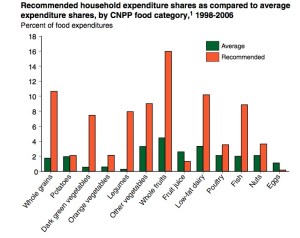
If you are like the typical American, your grocery cart falls short of recommendations for good health. In fact, according to a USDA report, food purchases have less than a 60% adherence with current dietary recommendations. The report also shows that people who live in the Northeast and West tend to make healthier choices than people living in the South and Midwest, where obesity is more common.

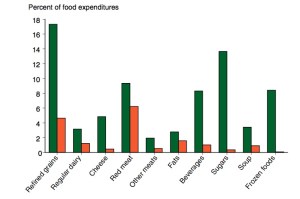
This report also reveals that we are purchasing almost the opposite of what is recommended. People bought four times as much refined grains as recommended but only one-quarter of the recommended whole grains. Our carts are missing fresh vegetables and fruits but contain too many processed frozen foods. We buy less fish and poultry and more red meat than we should. And, finally, we bring home far more beverages and foods containing added sugars than is recommended.

What we should be buying (but aren’t):

What we should eat

What we are buying (but shouldn’t):

What we do eat

The contents of our shopping carts closely mirrors the typical American diet, suggesting that we eat what we buy. A diet high in refined grains, red meat, and added sugars and low in whole grains, fruits, vegetables, and lean sources of protein is linked to obesity, heart disease, and some cancers. Shopping habits can have a big impact on health, so changing what we buy can be beneficial.

The good news is that there are a few simple steps you can take to improve the healthfulness of your grocery purchases. First, plan your meals before you go shopping, make a list, and stick to it. Impulse purchases, the things we see and just can’t pass by, are likely to be unhealthy foods. Second, shop the perimeter of the store. This is where you find most of the fruits, vegetables, dairy, and meat. The interior aisles contain primarily packaged and processed foods that tend to be high in sugar, salt, and fat. Third, buy fresh fruits and vegetables when you can. Frozen vegetables are a good alternative, too. Be careful with canned vegetables which can be high in salt and fruit juices which may contain added sugars.

Of course, this is easier said than done. Grocery stores are designed to get you to buy more of the most profitable foods, from the floor plan to the displays and placement of the food items. You have to be vigilant to avoid temptation and make good choices, but you don’t have to be perfect. Even relatively small purchasing changes can improve your diet and your health. Try buying more fresh vegetables this week and focus on whole grains next week. Over time, you will find that your cart will be filled with healthier foods for you and your family.


Nutrition, exercise, and health information can be confusing. 
But it doesn't have to be that way.
What can I help you with?
 drbrianparr@gmail.com | http://twitter.com/drbrianparr