Tag Archives: fitness

The importance of youth sports for health and fitness.

Since May is National Physical Fitness and Sports Month, it’s a good time to think about the vital role of youth sports in promoting fitness and health. This is the topic of my Health & Fitness column in the Aiken Standard this week.

pexels-kampus-8813564

Continue reading

Understanding Training Zones

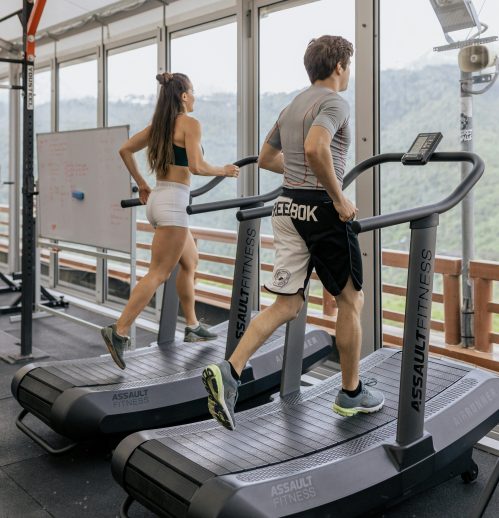
Aerobic exercise is essential for fitness, weight loss, and overall health. One way to optimize your exercise routine is to understand the concept of “training zones.” These zones are based on your heart rate and reflect different levels of intensity. By tailoring your workouts to these zones, you can achieve more specific fitness goals, from fat burning to improving athletic performance. This is the topic of my Health & Fitness column in the Aiken Standard this week.

Continue reading

Start saving in your fitness bank for when you need it most.

Saving money for emergencies is good advice and important for maintaining quality of life in the event of a lost job or other financial crisis. While this may seem like common sense, many people have been caught without enough savings when they needed it and found it difficult to meet basic needs.

This principle can also be applied to fitness. When you are healthy, you can maintain a high level of fitness. This makes your day-to-day activities easier and serves as a reserve or “bank” to draw on when you need it. Your good fitness now can get you through a health crisis just like saving money can help you through a financial crisis. This health crisis could come in the form of an injury or illness that keeps you from being active for several days or a hospitalization that keeps you in bed for a week, a month, or longer. This is the topic of my Health & Fitness column in the Aiken Standard this week.

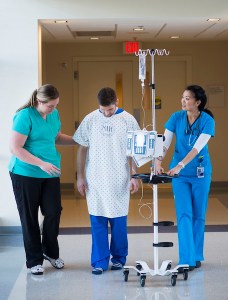
Patient walking in hospital


The problem with periods of inactivity, like bed rest or hospitalization, is that there are severe physiological effects that occur within days and get worse over time. You may have noticed this as weakness and fatigue after spending a few days in bed with a cold. Muscle strength declines with each day of bed rest, and can be 50% lower following as little as three weeks. That reduction in strength could limit a person who was already deconditioned to a point where he or she would have difficulty completing the most basic activities of daily living.

A person who was fit and strong when they went into the hospital would certainly be better off when released. And older adults fare worse than younger individuals. According to one study, the decline in strength seen in older men in just 10 days was equivalent to the change measured after 28 days in men 30 years younger.

It’s not just the muscles that are affected, the bones get weaker, too. In fact, 12 weeks of bed rest can reduce bone density by as much as 50%, exposing patients to a greater risk of fracture. This is due to the reduced stress on the bone from not standing and walking as well as the lack of muscle activity. Two of the most effective ways to build bone density are putting stress on bones through weight-bearing activity and the action of the muscles pulling on the bones from resistance training. Because bed rest eliminates both of these stresses, bone density declines rapidly.

One unique study from the 1960s had healthy young men complete three weeks of bed rest. They all experienced a rapid decline (over 20%) in their aerobic fitness, but recovered quickly after the experiment ended. These individuals also had their fitness tested again 30 years later. It turns out that the decline in fitness in those young men in three weeks of bed rest was greater than the decline in fitness that occurred over 30 years of aging!

The good news is that most patients are encouraged to move around as much as possible. Some receive in-patient physical therapy or rehab, even after major surgery, to help lessen the effects of prolonged bed rest. It is important to take advantage of these opportunities if you, or a loved one, are hospitalized.

There are many reasons to exercise and be fit, but an important reason may be to develop a fitness “bank” you can draw on if you become injured or hospitalized. Since the effects of bed rest are seen in people of all ages, everyone can benefit from a good fitness foundation. Just like putting money in the bank, doing a little now can have great benefits later when you need it most.

Finally, some smart advice: First, achieve and maintain a high level of fitness now, just as you would save money for a rainy day. You never know when you will need it. Second, if you are hospitalized, take advantage of opportunities to move, whether that is limited to moving from bed to a chair or if it includes short walks or even inpatient exercise–if the medical staff approves, of course. While many well-meaning friends and family members will tell you to rest and not move, true bed rest is almost the worse thing you can do.

For example, inpatient cardiac rehabilitation targets patients who are recovering from heart attacks and even open heart surgery. The goal is to get these patients up and moving as quickly as possible to prevent long-term consequences of bed rest.


drparrsays blog footer

Exercise for stress management and resilience

Many people in our area are still dealing with damage from Hurricane Helene and the overwhelming impact it is having on their lives. Hurricanes and other natural disasters can have a profound negative impact on our physical and mental health. From everyday pressures to the aftermath of natural disasters, finding effective coping mechanisms to deal with stress is crucial.

Exercise is a potent tool for stress relief and resilience, both in daily life and in the wake of catastrophic events. This is the topic of my Health & Fitness column in the Aiken Standard this week.

hurricane copy

Continue reading

Celebrate Walktober by going for a walk outdoors.

Now that cooler fall weather is here, being active outdoors is more enjoyable. October is a great time to get outdoors and go for a walk! That is the spirit of Walktober, an initiative adopted by health organizations, companies, and communities around the globe.

Walking is a great way to be active to help you control your weight, increase your fitness, and improve your health. The most common form of exercise for most people is walking, and for good reason: walking doesn’t require any special equipment (beyond comfortable shoes) or skills, and you can do it almost anywhere.

You can meet basic physical activity recommendations by walking briskly for 30 minutes most days of the week. Even this amount of walking can lead to a lower risk of diabetes, heart disease, and some cancers as well as improved mental health, cognitive function, and greater feelings of well being.

father and son walking in woods

Continue reading

Exercise musicology

There are many tools, or ergogenic aids, athletes use to improve exercise performance. These include nutrients like protein and carbohydrates, drugs like caffeine, steroids, and techniques like blood doping. Some of these performance-enhancing substances are illegal or banned, so ergogenic aids often have a negative image. Furthermore, many only work for highly trained athletes.

But there is one ergogenic aid that has been shown to enhance performance in everyone. In fact, there is a good chance you use it when you exercise. That ergogenic aid is music. This is the topic of my Health & Fitness column in the Aiken Standard this week.

Exercise music

Music is a psychological ergogenic aid is known to affect mood, emotion, and cognition. More and more research also shows that music can also enhance exercise performance. In most gyms, there is music playing in the background and many people listening to music using headphones while they exercise. A practical reason, of course, is that listening to music makes the exercise more enjoyable by providing a mental distraction. It turns out that music has additional psychological and physiological effects that can improve exercise performance.

Not only can listening to music make exercise more enjoyable, it can also help you get a better workout. Research suggests that when exercise is coupled with motivational music, people tend to exercise at a higher intensity. They also tend to fatigue at a slower rate leading to longer exercise sessions. This is also associated with a lower rating of perceived exertion, meaning the exercise might feel easier!

Tempo is an important aspect of music that contributes to performance. People tend to prefer a tempo that matches the exercise intensity. Fast tempo music fits well with higher intensity exercise, like running, and music with a slower tempo is suited for lower intensity exercise, like yoga. But music tempo can also influence the intensity of exercise. Music with a faster tempo can promote more vigorous exercise, as measured by a higher heart rate, and a longer distance covered when running or cycling.

Listening to music before exercise can also affect performance. Studies have shown that listening to music prior to exercise can improve motivation, arousal, and focus. This is probably why you see athletes warming up before games and races wearing headphones. Research also suggests that listening to music during cool down can decrease recovery times, as measured by blood lactate levels.

While listening to music may increase exercise performance, the benefits vary based on the type of music. First of all, music that a person does not like is unlikely to elicit any positive impact on performance, so pick something you enjoy listening to. Another factor of music that can influence performance is whether it is synchronous or asynchronous. Synchronous is when a person matches their movements with the music they are listening to. This is particularly effective for running, cycling, and rhythmic exercises like aerobics. Asynchronous is when the music and the movements of a person do not match, which may still provide ergogenic benefits for certain types of exercise.

Listening to music during exercise can make your workouts more effective and enjoyable. Music you like can distract you from sensations of intensity and fatigue and lead to longer training sessions. Music played at a fast tempo can make you exercise harder and slower tempo music can help you relax. But you probably knew that already—sometimes sports science makes sense!

What if you prefer to exercise without music or other distractions? Like all ergogenic aids, the additional effect of music is small compared to the great benefits of the exercise itself, so keep doing what you are doing.


drparrsays blog footer

SaveSave

Sports physiology in the summer Olympics

The summer Olympics started last week so we are already seeing some remarkable athletic performances. The competitors are among the fittest and most highly trained athletes in the world, both in terms of laboratory measures of fitness and in subjective evaluations of skill. Competing in the Olympics requires years of focused, intense training, and some good luck.

 This is  the topic of my Health & Fitness column in the Aiken Standard this week.

2024 olympic rings

First, let’s look at the fitness. This is most evident in the endurance events like distance running, cycling, swimming, and rowing. The key to performance in long-duration events like these is for the muscle to contract repeatedly and forcefully without fatigue. In order to do so, the muscle must have a steady supply of oxygen and nutrients. These nutrients are delivered through the blood, which is pumped by the heart. The muscle takes up and uses these nutrients to produce ATP, the form of energy used by the muscle.

After months and years of endurance training the heart gets bigger resulting in the ejection of more blood to the muscle. Within the muscle there is an increase in the number of capillaries, the small blood vessels that deliver blood to the muscle, and mitochondria, the part of the cell that produces most of the ATP. Together, these adaptations allow the muscle to produce more ATP without fatigue, allowing the athlete to sustain a higher intensity (running speed, for example) for a longer time without fatigue.

While all Olympic athletes are very physically fit, some events rely more heavily on skill, including gymnastics, shooting, and skateboarding. The athletes who are able to successfully complete these complex maneuvers have practiced for years to develop the skill and confidence needed to perform them consistently in competition. These are some of the most obvious displays of athletic skill, but all events require good technique. The development of skill in addition to fitness is the main reason why athletes specialize in one area, and you don’t see people competing in both track and swimming events, for example.

Of course, there is a psychological aspect to Olympic performances. The motivation to put in the training time alone is remarkable. Even more impressive is the ability to focus on an event despite the distractions of the crowds, media, and pressure of competition. This combination of physical and mental preparation is rare—as rare as Olympic gold medalists!

But is training alone sufficient for Olympic-level performance? Could anyone who trains enough make it to the Olympics? The answer is no, because there is another important factor in athletic performance—luck. Luck refers to genetics, which determine potential for attributes like heart size and muscle characteristics. Sprinters and other power athletes have more fast muscle fibers to generate high levels of force for a short duration. Other events require a certain body type for optimal performance, which can be seen in female gymnasts (petite but strong) and swimmers (arm span). As much as 50% of performance in some events is attributed to genetics. Genetics can provide a foundation upon which specialized training can build.

Even though most of us will never become Olympic champions we can still experience many of the same benefits of training. All athletes train to develop strength, endurance, and flexibility, which is exactly what we should do, too. And those attributes will help us perform better at work (and play) and help us live a longer healthier life. It will also help us appreciate the training, dedication, and good luck that the athletes bring to the Olympic games.


drparrsays blog footer

The importance of summer camp for health, fitness, and FUN!

Many kids are spending at least part of their summer at a camp. Summer camps are more than just a break from school. They play a crucial role in shaping children’s physical activity levels, overall health, and wellbeing. In our increasingly digital world, where sedentary behaviors among children are on the rise, summer camps offer a vital opportunity to counteract this trend and foster active lifestyles.  This is  the topic of my Health & Fitness column in the Aiken Standard this week.

kids-jumping

Summer camps provide a structured environment where children engage in various physical activities throughout the day. This is important because structured physical activity programs during childhood are essential for developing fundamental motor skills, coordination, and cardiovascular fitness.

Camps offer a diverse range of activities such as swimming, hiking, team sports, and outdoor games, which not only keep children physically active but also expose them to different forms of exercise they may not experience otherwise. This variety helps in developing a lifelong interest in physical fitness and encourages children to explore their physical capabilities.

Additionally,  regular physical activity during childhood is linked to numerous health benefits, including reduced risk of obesity, cardiovascular diseases, and improved mental health. Summer camps play a pivotal role in addressing these health concerns by providing opportunities for children to meet recommended physical activity guidelines.

Centers for Disease Control and Prevention recommends that children and adolescents engage in at least 60 minutes of moderate to vigorous physical activity daily. Summer camps often exceed this recommendation through structured sessions and active play, contributing significantly to children’s physical health.

Beyond physical health, summer camps also support children’s overall wellbeing. Engaging in outdoor activities and spending time in nature have been associated with lower stress levels and improved mood. Camp experiences foster social connections and teamwork, which are essential for emotional development and building resilience. The camp environment encourages positive peer interactions and helps children develop interpersonal skills, empathy, and self-confidence. These social and emotional benefits contribute to a holistic sense of wellbeing among camp participants.

Furthermore, summer camps serve as a platform for promoting lifelong habits of healthy living. The skills and habits children learn at camp, such as teamwork, sportsmanship, and the enjoyment of physical activity, can translate into sustained behaviors beyond the camp environment.

Research suggests that early exposure to enjoyable physical activities increases the likelihood of continued participation in adulthood. By instilling a positive attitude towards physical activity and health at an early age, summer camps play a preventative role in combating sedentary lifestyles and associated health risks later in life.

Summer camps are important for promoting children’s physical activity, health, and overall wellbeing. Through structured activities, exposure to outdoor environments, and fostering social connections, camps create a conducive environment for children to thrive physically, emotionally, and socially. Research underscores the importance of such experiences in laying the foundation for a healthy lifestyle and reducing the risk of chronic diseases.

Therefore, investing in summer camps and ensuring access to quality programs is not only beneficial for individual children but also for public health initiatives aimed at combating childhood obesity and promoting wellbeing. Summer camps represent more than just a recreational opportunity; they are a cornerstone in nurturing active, healthy, and resilient children.


drparrsays blog footer

The importance of youth sports for health and fitness.

Since May is National Physical Fitness and Sports Month, it’s a good time to think about the vital role of youth sports in promoting fitness and health. This is the topic of my Health & Fitness column in the Aiken Standard this week.

pexels-kampus-8813564

Continue reading

Celebrate Walktober by going for a walk outdoors.

Now that cooler fall weather is finally here (at least in our area), being active outdoors is more enjoyable. October is a great time to get outdoors and go for a walk! That is the spirit of Walktober, an initiative adopted by health organizations, companies, and communities around the globe.

Walking is a great way to be active to help you control your weight, increase your fitness, and improve your health. The most common form of exercise for most people is walking, and for good reason: walking doesn’t require any special equipment (beyond comfortable shoes) or skills, and you can do it almost anywhere.

You can meet basic physical activity recommendations by walking briskly for 30 minutes most days of the week. Even this amount of walking can lead to a lower risk of diabetes, heart disease, and some cancers as well as improved mental health, cognitive function, and greater feelings of well being.

father and son walking in woods

Continue reading