Category Archives: Uncategorized

A healthy body weight is in your genes!

Earlier this month I was at the annual meeting for the Southeast chapter of the American College of Sports Medicine. The keynote address was by a genetic researcher, Dr. Molly Bray, who spoke about the role of genes in health behaviors. While heredity has been linked to body composition (muscularity, body fatness) for some time, the idea that genes can influence health behaviors such as eating and physical activity habits is somewhat new.

I thought this was interesting and a good way to explain individual differences and family similarities in diet, exercise, and obesity so it is the topic of my Health & Fitness column in the Aiken Standard this week. Many people, including many of my colleagues, are uncomfortable with the idea that genetics plays a role in health behaviors. This idea calls into question our traditional belief that people who obese, unfit, or eat poorly simply lack the motivation or willpower that people who maintain a healthy body weight and who eat a healthy diet have. It seems that genes explain at least a portion of these differences.

Does this mean that we are not responsible for our health?  Absolutely not! While genes may influence our appetite, food preferences, physical activity level, and responses to diets and exercise, ultimately we are in control of what we eat and how active we are. But knowing the role of genes in health can help us understand why some people struggle more than others to adopt healthy behaviors. It also helps explain why some people fare better than others in our obesogenic environment.

In my column I mentioned the Heritage Family Study which examined the genetic factors associated with body fatness, fitness, and other health factors. You can learn more about this important study here. I also cited a recent study that reported the discovery of two genes that regulate appetite. You can read a low-science article about that study here or read the hi-sci paper in the American Journal of Clinical Nutrition here.
Simplifying calorie calculations for weight loss

Setting realistic weight loss goals and determining how many calories you should include in your diet requires estimating how many calories you eat and how many you burn each day. Sometimes these calculations can get a bit tedious.

The website Lifehacker just posted an article simplifying these calculations. Their approach is useful because a rough estimate of calories is enough to guide your eating and exercise habits. There really is no practical need for more precise calculations.

I would add one more number to know: 100. Walking or running one mile burns approximately 100 calories. The exact number depends on several factors including body weight and speed, but using 100 calories per mile makes calculations simple. For example, how many miles will you have to walk to burn off the the double mocha latte you had this morning?

By the way, Lifehacker regularly publishes articles on exercise and nutrition. I like the way they simplify sometimes complicated concepts and come up with practical solutions to common problems. From what I have seen, their interpretation and advice is consistent with the science, too.

There are no shortcuts—you actually have to exercise to get the benefits of exercise.

There are many people who would be thrilled to find a way to get the benefits of exercise without having to be active. Unfortunately, the only way to get the health and fitness benefits of exercise is to actually exercise. But there are some ways you can minimize the time you need to spend to get these benefits. You can learn more about this in my Health & Fitness column in the Aiken Standard this week.

In my column I wrote about the popular “10 minute” exercise routines that can promote strength and endurance gains that are greater than some longer-duration exercise programs. I have written about the advantages and disadvantages of these short, intense workouts previously.

I also included a bit on spot reduction, the claim that you can burn fat from a certain area of the body by exercising just that part. Abdominal exercises are often thought to burn fat from your midsection and a variety of exercise devices are based on this claim. Unfortunately, spot reduction doesn’t work. Here’s proof: If spot reduction did work, you would never see people with chubby cheeks chewing gum!

I also mentioned research into an exercise pill—a drug that would mimic the muscular adaptations to exercise. While there is great interest in this type of drug to treat certain muscle disorders as well as to eliminate the need for exercise, it doesn’t exist at this time. You can read more about this research here and here.

How will you celebrate heart month? Here are some suggestions.

February is American Heart Month, a time to raise awareness about heart disease, the leading cause of death in the United States. My Health & Fitness column in the Aiken Standard this week includes four simple steps you can take to assess and lower your risk for heart disease. If you aren’t sure where to begin, these four steps should be a good start to prevent and treat heart disease.

You can learn more about heart disease and what you can do to prevent heart attack and stroke from the American Heart Association.


Expert weight loss advice (but not from me)

I was invited to speak to the Augusta Family Y Team Lean weight loss challenge participants last evening. The topic was exercise for weight loss. I put together a nice presentation that included important facts, practical advice, and a few funny (to me, at least) jokes. Since this is something I talk and write about a lot, I imagined that I would come off as a real expert.

Before I began, a couple who won the Team Lean competition last year shared their story and their secrets for success. Together they have lost 220 pounds in the past year (100 lbs. for her, 120 lbs. for him). They explained how they changed their diet and started exercising. Their emphasis was on how beneficial exercise was to their weight loss and their overall health. Their journey from dedicated non-exercisers to a couple who runs half marathons (her) and completes triathlons (him) was inspiring and taught a valuable lesson about the importance of exercise in losing weight and keeping it off. The true experts had spoken!

And then I took the stage and shared important facts, practical advice, and a few funny (to me, at least) jokes about exercise and weight loss.

Lance Armstrong and doping: What, how, and why

I wrote about Lance Armstrong, the doping allegations against him, and his admission that he used performance-enhancing substances during his professional cycling career in my Health & Fitness column in the Aiken Standard this week.

While he and his teammates used a variety of banned substances, the one that gets the most attention is blood doping through transfusions and EPO. You can learn more about this process and how it improves performance in cycling and other endurance events from Wikipedia and, if you are motivated,  a 2011 article in the journal Blood.

The evidence that Armstrong and his teammates engaged in an elaborate doping conspiracy is outlined in detail in the U.S. Anti-Doping Agency “Reasoned Decision” report.

What’s in your cart?

Eating out less frequently and having more meals at home is a good way to make your diet more healthy. Restaurant and take-out meals tend to be high in calories due to large portion sizes and high fat and sugar content. With a little effort, preparing meals at home allows you to include healthier foods like whole grains, fruits, vegetables, and lean meats and limit processed foods with added fats and sugars.

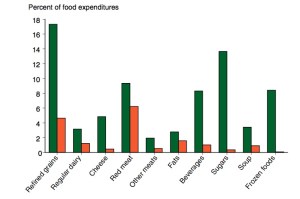
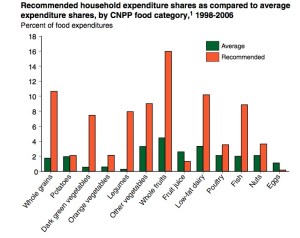
Of course, this assumes that you are purchasing healthy foods when you shop. But are you? This is the topic of my Health & Fitness column in the Aiken Standard this week. In it, I cite a report from the USDA’s Economic Research Service which offers some insight into what the average American buys at the market.  The following figures tell pretty much the whole story:

What we should be buying (but aren’t):

What we should eat

What we are buying (but shouldn’t):

What we do eat

You can access the full USDA report here: Assessing the Healthfulness of Consumers’ Grocery Purchases

You can learn more about what we should be eating and tips for making healthy choices in the Dietary Guidelines for Americans

The best diets, ranked by experts

Earlier this week I wrote about what to consider when choosing a diet. I noted that there was no best diet for everyone, but that there were some characteristics that someone should look for in a diet.

For example, a weight loss diet should be low (but not too low) in calories, restrict portion sizes as a way to reduce calories, include healthy foods like fruits, vegetables, and whole grains, and, perhaps most importantly, foster healthy eating habits. Additionally, some form of support, group or otherwise, is helpful and regular exercise is absolutely required. I also recommended a diet that is good for both healthy eating and weight loss — the DASH diet.

Almost simultaneously, US News and World Report published their Best Diets rankings. Categories include the best overall diet and the best diets for weight loss (including best commercial plans and easiest to follow diets), heart-health, diabetes, and healthy eating. The rankings were made by a panel of nutrition and health experts and are an excellent resource for learning more about these diets and healthy eating in general.

The top diet overall was the DASH (Dietary Approaches to Stop Hypertension) diet, followed closely by the TLC (Therapeutic Lifestyle Changes) diet. While these were designed to prevent and treat high blood pressure and high cholesterol, respectively, both are healthy eating plans that can also lead to weight loss. In fact, both of these diets show up in several of the other categories. Since these diets were developed by the National Institutes of Health, information and resources are available for free.

I’m still not sure that there is a true BEST diet, but there are several good options to choose from. Each person really needs to find an eating plan that will work for them, not just now but in the long run. The goal is to develop healthy eating habits that last a lifetime. The US News rankings are a good place to start.

How to pick the best diet

Finding the right diet can help you lose weight and make it easier to keep it off. But what is the best diet?

As I write in my Health & Fitness column in the Aiken Standard this week, there is no best diet. But there are some things you should look for—and avoid—if your goal is long-term weight loss.

While there is no best diet, there is one that I recommend for everyone: the DASH diet. This diet was originally developed to treat high blood pressure—DASH stands for Dietary Approaches Stop Hypertension—but research showed that it led to weight loss. The DASH diet is low in red meat, added sugar, and fat, and emphasizes whole grains, fruits, vegetables, and low-fat dairy foods. It is widely considered to be a healthy diet and has been shown to lower blood pressure, blood cholesterol, and blood glucose in addition to promoting weight loss. Best of all, everything you need to get started on the DASH diet is available for free at http://www.nhlbi.nih.gov/health/public/heart/hbp/dash/.

Image

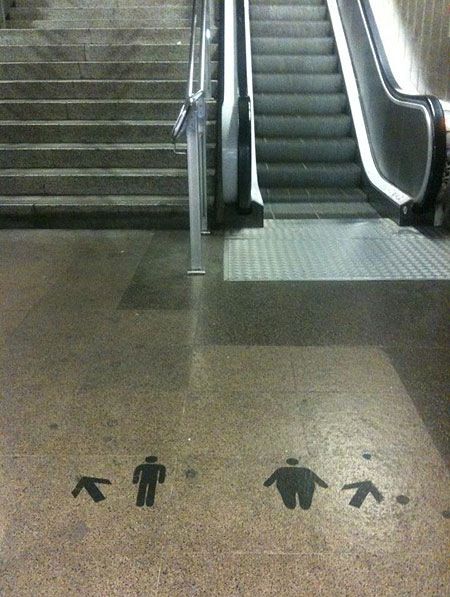
Stairs vs. escalator

Stairs vs. escalator

Yes, you should take the stairs.