Tag Archives: marathon

Get ready to run. How to prepare for the Run United race (or your next road race).

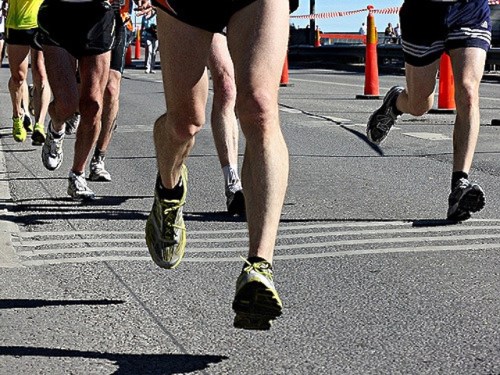
The Run United event, which consists of a 5K (5 kilometers or 3.1 miles), 10K (10 kilometers or 6.2 miles), a half marathon (13.1 miles), and a kids fun run, is this weekend. Maybe you are among the people in our area have been training for that or another event. As the event approaches, there are still some things you can do to make it a success, whether that means completing your first race or trying to set a personal best.

This advice is more relevant for people who are doing longer races but is general enough that it can help everyone. Keep in mind that it also applies to any event that involves running, walking, cycling, swimming, rowing, or hiking. This is the topic of my Health & Fitness column in the Aiken Standard this week.

119016_9950972_enm1264046533ram


You should cut back on your training in the week leading up to the event. This is called tapering, and it is helpful to promote recovery and reduce the risk of injury before the race. You should still stay active, but your training runs should be shorter and less intense during this time. And give yourself a rest day the day before the event.

What you eat before and during the race can also help you feel and perform better. You may have heard of carbohydrate loading, the practice of eating lots of carbohydrates before a race. This is important because it can help boost levels of muscle glycogen, an important fuel for exercise. Realistically, this process should involve more than a pasta dinner the night before the race and include a more carbohydrates for several days.

On race day, you should have something to eat and drink to make sure you are hydrated and to top off your carbohydrate stores. You should drink plenty of water leading up to the race, but not right before you start. You don’t want water sloshing around in your stomach while you run and should give yourself time to use the restroom, so you don’t need to go during the race.

If you chose to eat a small meal, it should be at least two hours before the race to make sure everything is digested and absorbed. Closer to race time, liquids are a better choice. The emphasis should be on carbohydrates, but realistically, most food will be fine.

What you do during the race mostly depends on the time you will be running and the weather conditions. If you are exercising for an hour or more, especially if it’s hot and humid,  you will certainly need water and taking in some carbohydrates is a good idea. Aid stations along the race course will have water and a sports drink like Gatorade, but you may also want to bring your own gel or other carbohydrate supplement. For events lasting less than an hour, drinking water is a good idea and even though carbohydrates may not help you, there is no reason not to have some if you want.

Something to keep in mind: Race day, and probably the evening before, is not the time to try new foods, drinks, or supplements. You definitely don’t want to learn that something you ate disagrees with you before the start or, worse, while you are running. This includes your clothing, too. A new pair of shoes or clothing can rub you the wrong way, causing blisters or chafing that, at the very least, will make your run less enjoyable. Always try out your shoes, clothes, and anything you will eat or drink during the race ahead to time to avoid an unpleasant race day surprise.

The most important thing is to have fun! Participating in a race is a celebration of your dedicated training and a chance to be part of an active, healthy community. Crossing the finish line is always a thrill whether this is your first race or not. Plus, you’ll get a cool t-shirt!


drparrsays blog footer

Sports Science in the News: The 2-hour marathon

There was a great article in the New York Times recently about a sports scientist who is on a quest to train a runner to complete a marathon in under two hours. Even though the world record right now is just under 2 hours and 3 minutes, a sub two-hour marathon is a bit like the four-minute mile once was—many people think it is impossible (or at least not likely to happen anytime soon). What I appreciated about the article was the way it explained some key concepts in exercise physiology. Since I am preparing to teach my summer Exercise Physiology course in June, I thought this was particularly relevant and worth sharing in my Health & Fitness column in the Aiken Standard this week.

Marathon feet


First, let’s put a two-hour marathon in perspective. To do it would require sustaining a running speed of over 13 miles per hour for two hours! Most runners I know would be hard pressed to complete the 285 yards at that pace…forget about the 26 miles that come first. It is also more than twice as fast as the average marathon time of over 4 hours. If you are brave you can see how fast this is yourself by getting on a treadmill and cranking the speed up to 13 miles per hour. Hang on, though, because you won’t last long!

The article mentions the training method known as “live high, train low.” This technique involves athletes spending time at high elevations but doing much of their training at sea level. This works because the key to endurance performances like a marathon is getting as much oxygen as possible to the muscles to use to produce energy. Living at high altitude causes the body to produce more red blood cells, increasing oxygen delivery to the muscles. But because there is less oxygen in the air at altitude, athletes can’t train as hard, which may offset the gains in red blood cells. Because of the lower training intensity, which is essentially doing less work, some athletes realize little benefit from this technique. So, a perfect solution is to live (or spend lots of time) high, but train low to maximize the benefits of both altitude and intense training.

The article also mentions another interesting phenomenon related to oxygen delivery to the muscle. As the heart pumps blood to the muscles it also sends blood returning from the muscles to the lungs to pick up oxygen from the air we breathe. As the red blood cells pass by the air sacs of the lungs (the alveoli), oxygen molecules bind so that the blood is fully saturated with oxygen before it is pumped back to the muscles. But the harder the heart beats during exercise the faster the blood flows. In some elite athletes, the blood flows so fast that the red blood cells don’t have enough time to pick up enough oxygen. This can reduce oxygen delivery to the muscles and impair performance in these athletes. (Fortunately, it isn’t a problem for the rest of us)

Admittedly, I am a bit of a physiology geek, so this is fascinating to me. If you are curious about exercise physiology and sports performance, check out the New York Times article from May 11—it’s a sneak peek into the world of sports science. The article also touches on nutrition, especially carbohydrates, biomechanics, temperature regulation, and training as important factors in reducing marathon times. All of these are topics that I cover in my Exercise Physiology course, too. And in case any of my students are reading this—yes, it will be on the exam!


Nutrition, exercise, and health information can be confusing. 
But it doesn't have to be that way.
What can I help you with?
 drbrianparr@gmail.com | http://twitter.com/drbrianparr