
Social
-
Recent Posts
Categories
-
Join 518 other subscribers
drparrsays
Meta

Breakfast is the most important meal of the day, right? A healthy breakfast can help kids pay attention and do better in school. In adults, a good breakfast can reduce hunger and help with weight control. That’s probably not new.
You may be surprised to learn that many popular breakfast foods for children—and adults—are anything but healthy. In fact, many of these choices more closely resemble candy and soda than a healthy start to the day!
This is the topic of my Health & Fitness column in the Aiken Standard this week. It was also a project that one of my students, Brittney Austin, worked on this semester. While some of the results clearly showed that some breakfast foods were essentially candy, like frosted Pop-Tarts which have nearly as many calories and as much sugar as a Reese’s Peanut Butter Cup.
In other cases, the comparison is more complicated. For example, Sunny D orange drink contains only 5% juice but has as much added sugar as a Coke. It is essentially orange soda without the bubbles. But when you consider that 100% orange juice has as much sugar as the Sunny D, maybe the “orange soda without bubbles” isn’t so bad.
But it is! While it is true that the sugar content is essentially the same, the real orange juice also contains vitamins and minerals. And even though some “juice” drinks have added vitamins and minerals, the real juice is still better. Here’s why: children who drink the artificially sweetened juice flavored drinks may become accustomed to the unnaturally sweet taste and find that they don’t like naturally sweetened juice or whole fruit. So even if the nutrients are the same as real juice, the “juice” drinks can lead kids away from eating fruit—a bad outcome!
Take a close look at what your children eat for breakfast. Is it a healthy meal or candy and soda in disguise? And take a good look at your own breakfast. It may not be much better!
My friend Shannon is a few weeks into her remodeling project. She is seeing some nice results of her efforts. At the same time, she is finding that the road to success can be bumpy. But she is making some good decisions that will help her succeed in the long run
The good news:
Shannon says, “I have definitely noticed an improvement in my body. I lost an inch in my waist and 3/4 of an inch on my hips, yay! My pants are looser and I can actually see a little bit of weight loss in my stomach, which gives me the drive I need to keep going.”
This is exactly what Shannon needs right now. Many people who make big changes to their diet and exercise find that it is relatively easy stay motivated for the first few weeks. But after that, the newness of the project wears off and “real life” creeps back in, so it becomes more difficult to make time for exercise, shop for and prepare healthy meals, and make difficult choices. But the fact that she not only feels better but has evidence that her efforts are paying off is the best motivation!
The bad news:
Shannon had a few sick days recently, which interrupted her exercise. She says, “Feeling sick has been a set back. The last day I worked out was last Friday and I haven’t felt well since then so I haven’t been able to work out at all since that time. I have, however, been watching what I eat. In the past, I have used sickness to splurge on whatever would make me happy at the moment (Dr. Pepper, chips, cheese, candy, etc). This time, I’ve tried to really watch what I’m drinking and eating because I know the lack of exercise is already working against me. I don’t want to make it worse by also packing on the extra calories with unhealthy food.”
Posted in Uncategorized
How strict does your diet need to be? Do you need to take the approach of my colleague and limit your self to a small assortment of foods, making eating out very difficult? Or can you get away with more flexibility? This is the topic of my Health & Fitness column in the Aiken Standard this week.
To be sure, the more carefully you plan and follow your diet, the bigger results you will see. This is true if you are trying to lose weight, lower your cholesterol or blood pressure, or control your blood glucose. Research suggests that the stricter your diet (and exercise—don’t forget about exercise!) the greater benefits you will see.
But do you have to be perfect? Probably not. There really isn’t any evidence to suggest how flexible you can be with your diet and still see the same results, but several people I consider to be experts in this area suggest an 80/20 approach. If you follow your diet and exercise plan faithfully 80% of the time, you can get away with “cheating” 20% of the time.
I think this is true, and people I have seen be successful with lifestyle changes seem to follow this recommendation. You don’t have to be perfect, but you do have to be good most of the time.
If the majority of your diet consists of fruits, vegetables, whole grains, and low-fat protein sources, you can get away with a burger, fries, and a milkshake every once in a while. You probably have more leeway with your diet if you exercise regularly, too.
In other words, all things in moderation, but some things in more moderation than others!
Posted in Uncategorized
I saw an ad for Burger King the other day showing their new turkey burger. This is good, since turkey burgers are supposed to be healthy, right?
The ad also featured their new Loaded Tater Tots, which are stuffed with bacon and sweet onions. The impression was that you could get a meal consisting of the turkey burger, loaded tater tots, and a drink.
Since I am skeptical about pretty much everything, I wondered if this meal was any better than ordering a Whopper, fries, and drink. So I checked it out.
Actually, I asked one of my students, Amanda, to do it. She recently made the mistake of telling me that she was interested in learning more about nutrition and might like to do a research project with me next year. So naturally, I gave her this assignment. Here is what she found:
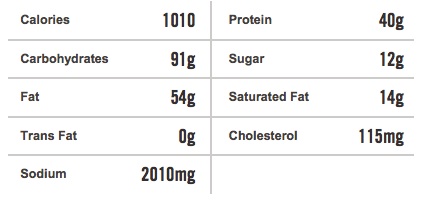
Turkey burger with medium loaded tater tots (10 pieces)
Whopper with medium fries
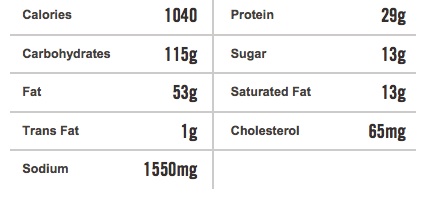
Looking at total calories, grams of fat and saturated fat, and sugar these two meals are virtually identical. The turkey burger alone is lower in calories (100 fewer), fat (9 g), and saturated fat (5 g) than the Whopper, but the loaded tots make up for the difference. And the turkey burger is higher in sodium than the Whopper (1210 mg vs. 980 mg).
Let’s say you are going to Burger King for lunch and you are hungry for a burger and fries. The turkey burger isn’t really the healthiest choice. But there is an option that isn’t quite so bad…a Whopper Jr. with small fries:
Whopper Jr. with small fries
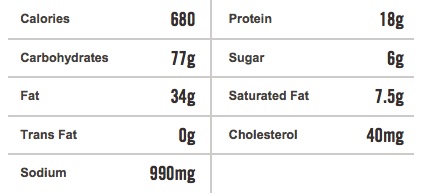
It’s not the healthiest lunch, but it is about 40% fewer calories and almost half the saturated fat of the other options.
Of course, you could skip the burger and order a salad. But be honest, if you really wanted a salad you wouldn’t be considering Burger King, right?
Posted in Uncategorized
My friend Shannon is doing a little remodeling. Since she knows that I am involved with weight loss and exercise in my teaching and professional life, she has been sharing her thoughts and progress on her diet and exercise program. Like this recent update she sent to me:
I have more will power than I thought I did: I didn’t eat at Burger King. I turned down my husband’s offer to go out to eat and ate a healthy meal at home instead. I’m working out regularly (meaning I rarely skip more than 1 day at a time) I have really controlled my intake of Dr. Pepper since starting my nutrition plan. I’ve also learned that backsliding isn’t something I need to beat myself up over, I just need to push forward and work harder. Today has been a huge cheat day for me because of the stress of helping finish a report that’s due tonight. But, tomorrow is another day and I’ll do better then. When I started this process I had daydreams of losing several inches in my waist in a matter of a few weeks, shrinking my arm flab to get toned triceps in a hurry and loving the way I look. I’ve learned that it takes time and hard work and I have to really stick with it even though I don’t see the results yet. I feel better about myself than I have in years and really like the fact that I’m approaching weight loss in a healthy manner (exercising and eating right) instead of just trying to lose weight by any means necessary. My thought processes have really changed and I hope this is the beginning of a new lifestyle for me as opposed to a temporary phase.Posted in Uncategorized
Diets don’t work!
Exercise will make you gain weight!
This supplement will melt fat away while you sleep!
Unfortunately, claims like these are not an April Fools joke. They are repeated so frequently that diets and exercise are avoided by many in favor of supplements to promote weight loss. Also unfortunately, they aren’t true. My Health & Fitness column in the Aiken Standard this week busts these common weight loss myths. Here is a bit more about each.
1. Diets don’t work! This is a common claim, usually to explain why most people who lose weight end up gaining it back. But diets do work. Almost every diet leads to weight loss in the short-term and some lead to long-term weight loss. I have written about selecting the “best” diet and why the diet you pick isn’t the most important predictor of weight loss previously. And it is possible to lose weight and keep it off. But it is difficult, as this article explains so elegantly. Difficult, not impossible.
2. Exercise will make you gain weight! This is another popular myth about weight loss. The good news is that exercise does work to promote weight loss. In fact, weight loss by exercise alone results in greater fat loss and preserves muscle compared to weight loss by diet. It’s true. But you probably shouldn’t try to lose weight by exercise alone. The best results will come from combining diet and exercise.
3. Melt fat away while you sleep by taking supplement X! This sounds great, which explains why Americans spend billions of dollars on dietary supplements each year. Unfortunately, most of these supplements have not been researched either adequately or at all to determine their effectiveness or safety, or they have been shown to be ineffective, as shown here. A conservative conclusion is that there are no supplements that have been shown to safely promote long-term weight loss.
Posted in Health & Fitness
Tagged aiken standard, april fools joke, diet, exercise, fitness column, health, supplements, weight loss
To wrap up National Nutrition Month, I finished my series about the major nutrients in my Health & Fitness column in the Aiken Standard. This week I wrote about protein.
In my experience, people tend to worry more about their protein intake than they really need to, especially athletes. The typical adult gets more protein than they actually require. This is true for most athletes, too. You can get general information about protein, including dietary requirements, here.
You can learn more about nutrition for athletic performance from the American College of Sports Medicine here and about protein specifically in this article in Physician and Sportsmedicine. These are both pretty scientific, but you can find good, low-sci information here.
Vegetarian and vegan diets are becoming more popular. The restrictive nature of vegan diets, in particular, is associated with both health benefits and potential health concerns. However, through careful meal planning, both vegetarian and vegan diets are healthy, even for athletes.
Posted in Uncategorized
One of the problems with making nutrition recommendations is that the information is often either too complicated for people to understand or it isn’t delivered in simple, compelling message. Problem solved!
A friend sent me this link this morning. I thought it was funny, creative, and (mostly) correct. Fair warning, it is R-rated for language, so look over your shoulder to make sure your kids or your boss aren’t looking before you click:
My friend Shannon recently started an ambitious diet and exercise program. She has been talking to me about her progress and I thought that her experience making these behavior changes was worth sharing. In fact, her experience is similar to that of almost everyone who tries to make these changes and she has some helpful thoughts about the progress. She agreed to let me share her thoughts and experiences in this blog (anonymously, since Shannon is not her real name).
Shannon is in her 30s and has two children. Like many women in this situation, she realized that she had not been focusing on her health in recent years. While she doesn’t need to lose a lot of weight, she does want to improve her diet and get fit. Her main goal is to feel better about herself by doing what I call remodeling—not really losing much weight, but shedding fat and building muscle.
She is following the Insanity exercise and nutrition program. Since this is an intense exercise program, she was smart and started off by not pushing herself too much by doing parts of the workouts and taking a few rest days early on. Over time she has been able to increase the amount she does. This was a big adjustment for Shannon. Before she began, she was active throughout the day but did not dedicate time to exercise. Now she is doing 45–60 minutes most days of the week.
Her diet has changed, too. She is eating more fruits and vegetables, drinking water instead of soda (Dr. Pepper is her favorite), and eating out less, especially fast food. This hasn’t been easy, especially because of how convenient restaurant meals were for her family. But she has learned to make smarter choices when eating out and has found that eating a healthy snack before she goes out can help her avoid overeating at a restaurant. But mostly, she misses the Dr. Pepper since she cut back to one can per day (but sometimes goes without).
So, as Shannon shares stories about her progress with me, I will share them here.
Posted in Uncategorized

 Dr Parr Says...